
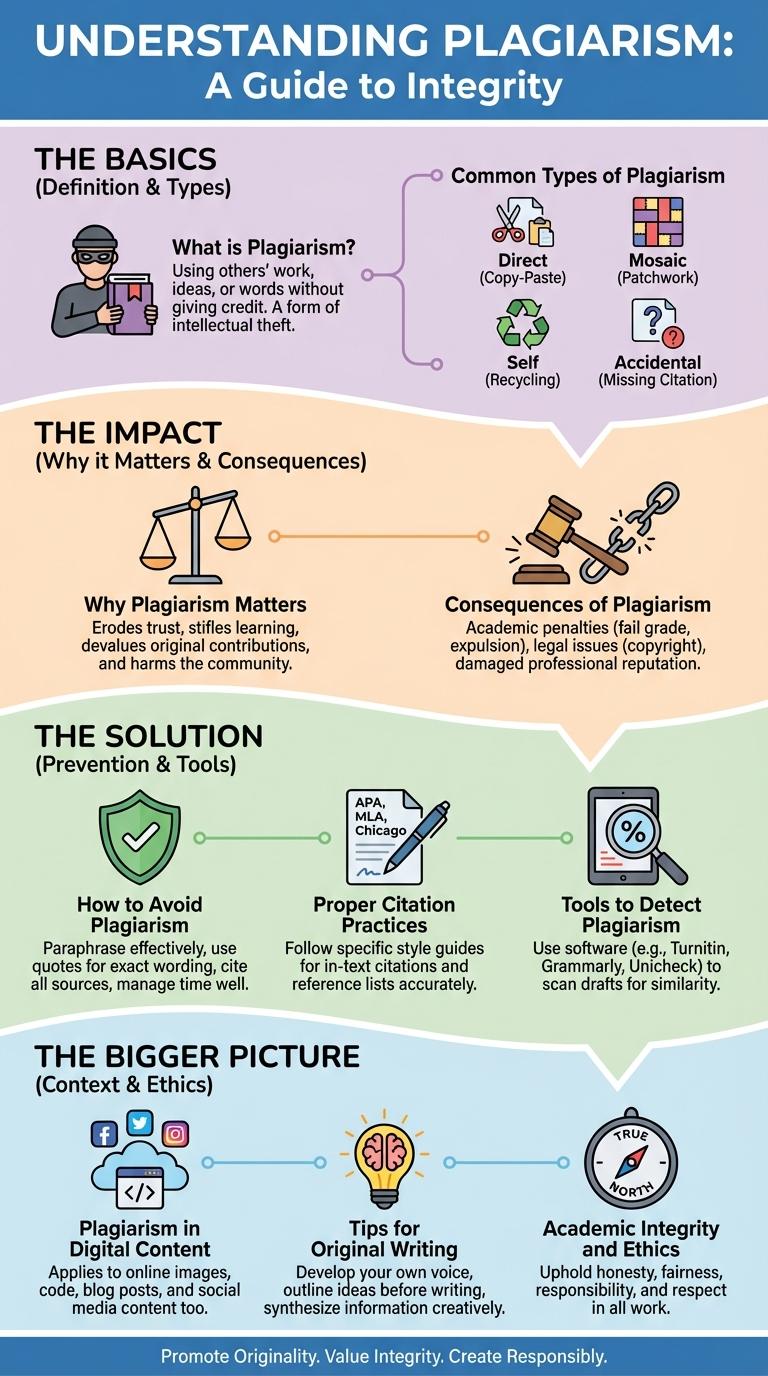
Plagiarism undermines academic integrity by presenting someone else's work as your own, leading to serious ethical and legal consequences. Understanding the different types of plagiarism and how to avoid them is crucial for maintaining originality and credibility in any form of writing. This infographic highlights key facts, common pitfalls, and best practices to help you steer clear of plagiarism effectively.
What is Plagiarism?
What is plagiarism?
Plagiarism is the act of using someone else's work or ideas without proper attribution. It involves presenting another person's writing, thoughts, or data as your own, which is considered unethical and can lead to serious consequences.
Common Types of Plagiarism
Plagiarism occurs when someone presents another person's work or ideas as their own without proper acknowledgment. Understanding common types of plagiarism helps prevent academic and professional misconduct.
- Direct Plagiarism - Copying text word-for-word from a source without quotation marks or citation.
- Self-Plagiarism - Reusing one's previously submitted work without permission or disclosure.
- Paraphrasing Plagiarism - Rewriting someone else's ideas without proper citation.
Why Plagiarism Matters
Plagiarism undermines the integrity of academic and creative work by presenting someone else's ideas as your own. It damages reputations and diminishes trust in educational and professional environments.
Understanding why plagiarism matters helps individuals uphold ethical standards and respect intellectual property. Avoiding plagiarism promotes originality and supports the advancement of knowledge.
Consequences of Plagiarism
Plagiarism results in serious academic and professional consequences, including failing grades, suspension, or expulsion. Legal repercussions may arise if copyrighted material is used without permission, leading to fines or lawsuits. Reputation damage is often irreversible, affecting future opportunities in education and career.
How to Avoid Plagiarism
Plagiarism is the act of using someone else's work or ideas without proper acknowledgment. Avoiding plagiarism is essential for maintaining academic integrity and credibility.
- Use Quotations - Enclose exact words from a source within quotation marks and cite the author.
- Paraphrase Properly - Rewrite information in your own words while still crediting the original source.
- Cite All Sources - Provide accurate references for all materials and ideas that are not your own.
Following these practices ensures respect for intellectual property and strengthens the originality of your work.
Proper Citation Practices
Proper citation practices are essential to maintain academic integrity and avoid plagiarism. Accurate citations give credit to original authors and allow readers to verify sources.
- Use Standard Citation Styles - Follow formats such as APA, MLA, or Chicago to ensure consistency and clarity in references.
- Include All Source Details - Provide author names, publication dates, titles, and page numbers where applicable for complete citations.
- Cite All Borrowed Content - Reference all paraphrased ideas, direct quotes, and data obtained from other works to avoid plagiarism.
Tools to Detect Plagiarism
| Plagiarism Detection Tool | Key Features |
|---|---|
| Turnitin | Comprehensive text-matching, widely used in academic institutions, detailed originality reports. |
| Grammarly | Real-time plagiarism checker, integrates with writing assistant, database includes academic and web sources. |
| Copyscape | Specialized in web content plagiarism, quick URL comparison, useful for website owners and content creators. |
| Quetext | DeepSearch technology, interactive citation assistant, intuitive interface for easy plagiarism detection. |
| Plagscan | Multi-language support, customizable reports, suitable for educators and businesses, integration options available. |
Plagiarism in Digital Content
Plagiarism in digital content involves copying or closely imitating text, images, or videos without proper attribution, leading to ethical and legal issues. The rise of online publishing and social media platforms has increased the risk and prevalence of content theft. Tools like plagiarism checkers help detect unauthorized use and maintain originality in digital works.
Tips for Original Writing
Plagiarism undermines the integrity of original writing and can lead to serious academic and professional consequences. Understanding how to create unique content is essential to avoid this issue.
Use your own words to express ideas and avoid copying text verbatim from sources. Properly cite any references or quotations to give credit to original authors. Developing a clear outline and conducting thorough research helps produce authentic and well-supported writing.