
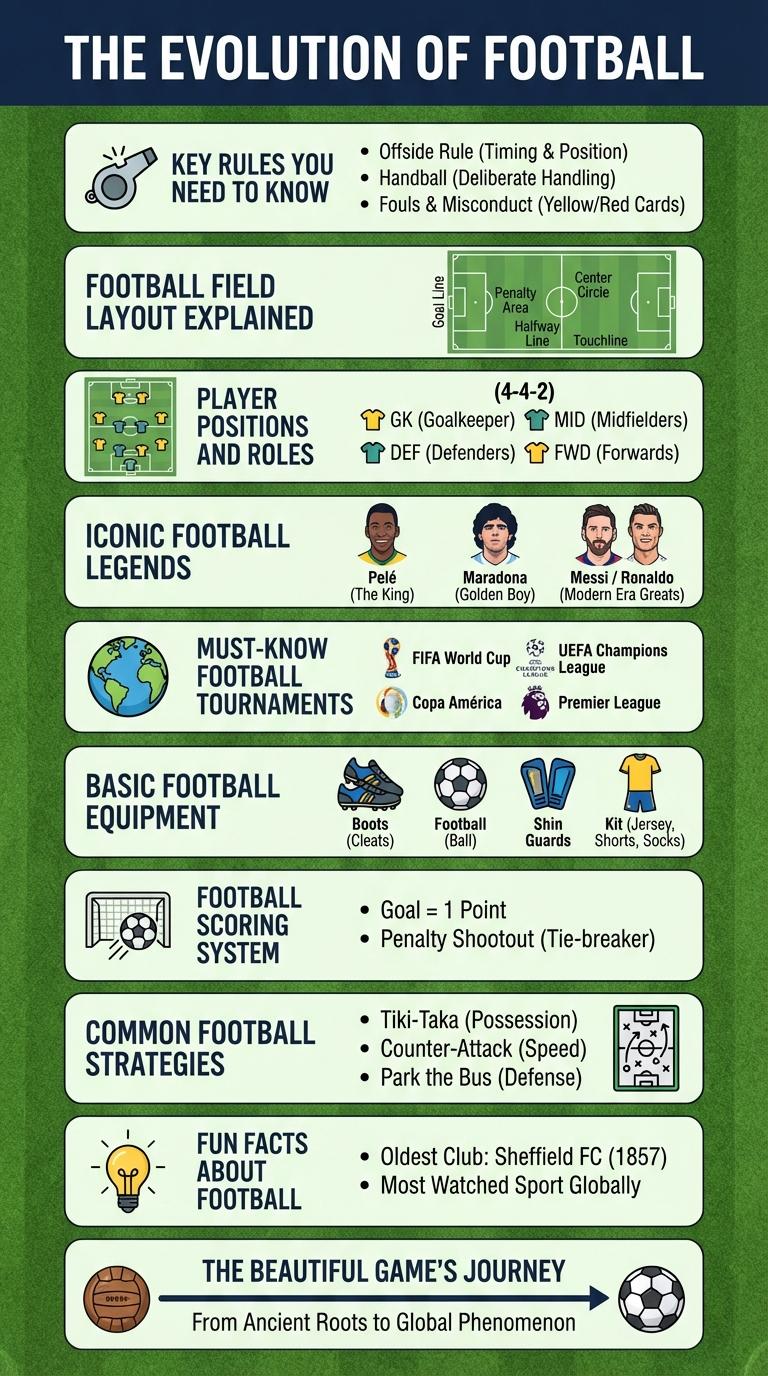
Visualizing key football statistics and player performances enhances understanding of the game's dynamics. Infographics effectively present complex data such as team formations, scoring trends, and player comparisons in a clear and engaging format. This approach aids fans, analysts, and coaches in making informed decisions and deepening their appreciation of football.
The Evolution of Football
Football has evolved significantly since its origins in the 19th century, transitioning from simple regional games to a global sport with standardized rules. Innovations such as the introduction of the forward pass, advanced training techniques, and technological aids like VAR have transformed gameplay and strategy. Modern football combines athleticism, tactics, and technology to captivate millions worldwide.
Key Rules You Need to Know
| Key Rule | Explanation |
|---|---|
| Number of Players | 11 players on each team are allowed on the field at one time. |
| Match Duration | Two halves of 45 minutes each, with added stoppage time. |
| Offside Rule | A player is offside if they are nearer to the opponent's goal line than both the ball and the second-to-last defender when the ball is played. |
| Fouls and Misconduct | Direct free kicks or penalties awarded for physical fouls, and yellow/red cards issued for misconduct. |
| Scoring | A goal is scored when the ball fully crosses the goal line between the goalposts and beneath the crossbar. |
Football Field Layout Explained
The football field is a rectangular playing surface measuring 100 yards in length and 53.3 yards in width. It features marked zones crucial for gameplay, including end zones and yard lines.
The layout ensures clear boundaries and distance measurements to regulate player positioning and scoring opportunities.
- End Zones - Located at each end of the field, each end zone extends 10 yards deep where teams score touchdowns.
- Yard Lines - Marked every 5 yards across the field, these lines help measure progress and determine first downs.
- Hash Marks - Short lines near the center that denote yard positions for ball placement after plays.
Player Positions and Roles
Football player positions define distinct roles on the field, each crucial for team strategy and success. Understanding these positions helps in appreciating the complexity and tactics of the game.
- Goalkeeper - Protects the goal by blocking shots and organizing the defense.
- Defenders - Prevent opposing players from scoring by intercepting passes and tackling.
- Midfielders - Connect defense and attack, distributing the ball and controlling the game's tempo.
- Forwards - Primary attackers responsible for scoring goals and creating offensive opportunities.
- Wingbacks - Combine defensive duties with wide offensive support, often delivering crosses into the box.
Each position requires specific skills and contributes uniquely to the overall team dynamics and game outcome.
Iconic Football Legends
Football has been shaped by legendary players whose skills and achievements continue to inspire fans globally. Iconic football legends epitomize excellence and have set records that define the sport.
- Pele - Known as "The King of Football," Pele won three FIFA World Cups with Brazil and scored over 1,000 career goals.
- Diego Maradona - Famous for his "Hand of God" goal, Maradona led Argentina to victory in the 1986 World Cup with extraordinary talent.
- Johan Cruyff - A pioneer of "Total Football," Cruyff transformed the game with his vision and skill, influencing generations of players and coaches.
Must-Know Football Tournaments
Football hosts a variety of must-know tournaments that captivate millions worldwide. The FIFA World Cup stands as the most prestigious international competition, held every four years. Other key events include the UEFA Champions League, Copa America, and the Africa Cup of Nations, each showcasing top teams from their regions.
Basic Football Equipment
Football requires essential equipment to ensure player safety and enhance performance. Basic football gear includes a helmet, shoulder pads, cleats, a mouthguard, and a football.
Helmets protect the head, while shoulder pads absorb impact during tackles. Cleats provide traction, and mouthguards safeguard teeth and reduce concussion risk.
Football Scoring System
Football scoring is primarily based on touchdowns, field goals, extra points, and safeties. Each scoring method contributes differently to the team's total points during the game.
A touchdown scores 6 points, followed by an opportunity for extra points or a two-point conversion. Field goals are worth 3 points, while safeties add 2 points to the defense's score.
Common Football Strategies
Football is a dynamic sport where strategy plays a crucial role in determining the outcome. Teams employ various tactics to gain an advantage on both offense and defense.
Common football strategies include the Zone Defense, where players cover specific areas of the field to limit opponents' passing options. The Blitz strategy involves sending additional players to pressure the quarterback, aiming for a sack or hurried throw. On offense, the Spread Formation maximizes field coverage to create openings for receivers.