
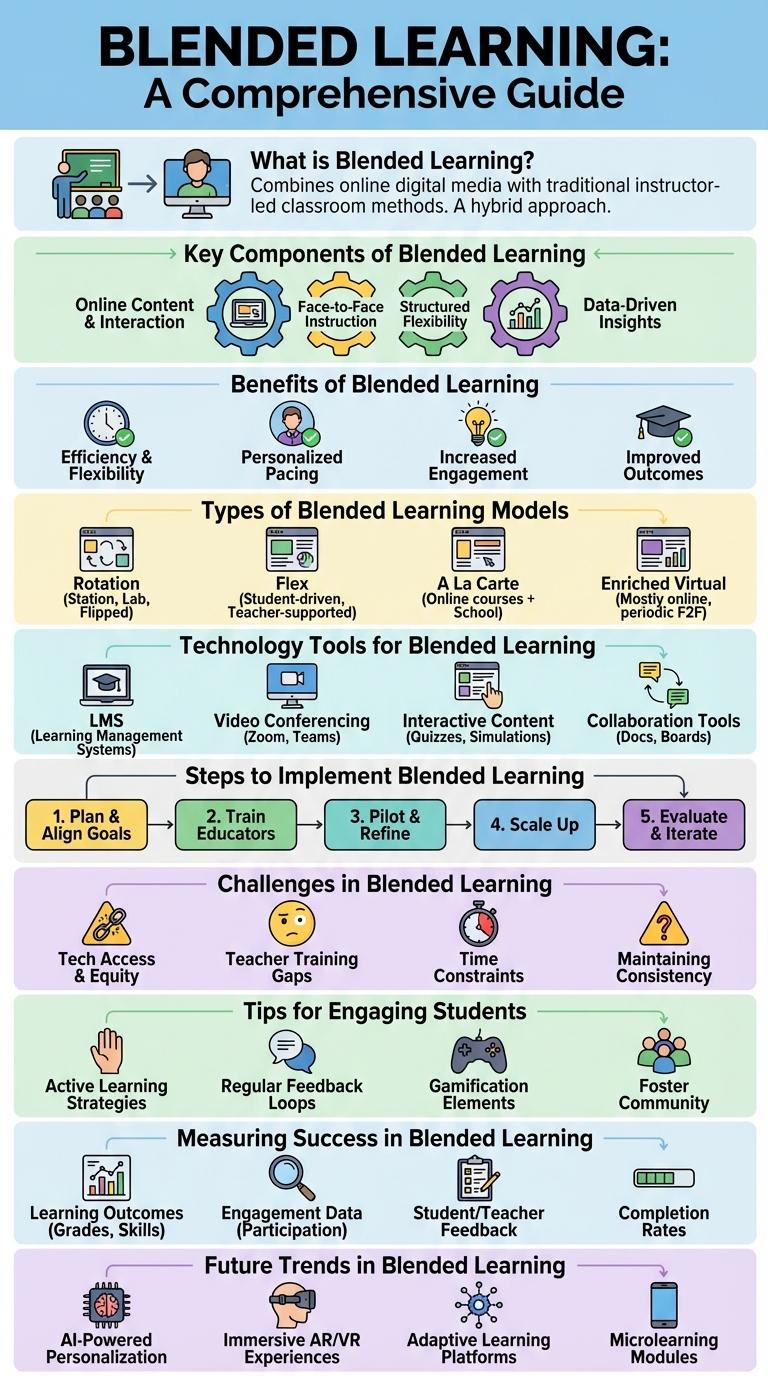
Blended learning combines traditional face-to-face instruction with digital technology to create a dynamic educational experience. This approach enhances student engagement by integrating interactive online resources with classroom activities. Visualizing blended learning through an infographic helps clarify its components and benefits for educators and learners.
What is Blended Learning?
| Aspect | Description |
|---|---|
| Definition | Blended learning combines traditional face-to-face classroom methods with online educational materials and interactive digital approaches. |
| Core Components | Integration of in-person instruction, e-learning platforms, and self-paced study resources. |
| Learning Flexibility | Allows students to access content anytime and anywhere, supporting diverse learning styles and schedules. |
| Benefits | Enhances learner engagement, offers personalized learning paths, and improves knowledge retention. |
| Common Tools | Learning management systems (LMS), video lectures, quizzes, and collaborative discussion forums. |
Key Components of Blended Learning
Blended learning combines traditional classroom methods with online educational materials to create a more flexible and personalized learning experience. It leverages technology to enhance student engagement and improve educational outcomes.
- Face-to-Face Instruction - Direct interaction between teachers and students fosters immediate feedback and personalized guidance.
- Online Learning - Digital platforms provide access to diverse resources and self-paced study opportunities.
- Collaborative Activities - Group projects and discussions promote critical thinking and teamwork skills.
Benefits of Blended Learning
Blended learning combines traditional classroom methods with online educational materials, creating a flexible and engaging learning environment. This approach caters to diverse learning styles, enhancing student understanding and retention.
Students benefit from personalized pacing and immediate feedback through digital platforms, leading to improved academic performance. Educators can track progress in real time, allowing for tailored instruction and efficient use of class time.
Types of Blended Learning Models
Blended learning combines traditional classroom methods with digital media and online activities to create a flexible, student-centered approach. Various models of blended learning cater to different educational needs and environments.
- Rotation Model - Students rotate between online learning and face-to-face instruction in a fixed schedule or at the teacher's discretion.
- Flex Model - Most content is delivered online, with teachers providing support and guidance as needed in a physical space.
- A La Carte Model - Students take some courses entirely online while attending others in a traditional classroom setting.
Each blended learning model offers unique advantages tailored to optimize student engagement and learning outcomes.
Technology Tools for Blended Learning
What are the essential technology tools for effective blended learning? Blended learning integrates digital tools to enhance traditional classroom experiences, promoting flexibility and engagement. Key technology tools include Learning Management Systems, video conferencing software, and interactive content platforms, which support both synchronous and asynchronous learning.
| Technology Tool | Purpose |
|---|---|
| Learning Management System (LMS) | Organizes courses, tracks progress, and facilitates assignment submissions. |
| Video Conferencing Software | Enables live virtual classes, student collaboration, and real-time interaction. |
| Interactive Content Platforms | Offers multimedia lessons and activities to boost engagement and retention. |
| Assessment Tools | Allows for quizzes, surveys, and instant feedback to monitor learning outcomes. |
| Collaboration Apps | Facilitates group projects, discussion forums, and peer learning opportunities. |
Steps to Implement Blended Learning
Blended learning combines online digital media with traditional classroom methods to create an effective educational experience. Implementing this approach involves planning curriculum integration, training instructors, and deploying the necessary technology. Clear communication and continuous evaluation ensure successful adaptation and improved student engagement.
Challenges in Blended Learning
Blended learning integrates online digital media with traditional classroom methods, offering flexibility and personalized education. However, it presents unique challenges that can impact both educators and learners.
One major challenge is ensuring consistent student engagement across both online and face-to-face components. Technical difficulties and lack of digital literacy can hinder effective participation in blended learning environments.
Tips for Engaging Students
Blended learning combines traditional classroom methods with online educational materials, fostering flexible and personalized learning experiences. Engaging students effectively in this environment requires innovative strategies that cater to diverse learning styles.
- Incorporate Interactive Content - Use multimedia elements like videos, quizzes, and simulations to maintain student interest and participation.
- Foster Collaborative Activities - Promote group projects and discussions both online and offline to enhance peer learning and social interaction.
- Provide Timely Feedback - Offer immediate and constructive feedback through digital platforms to support students' progress and motivation.
Measuring Success in Blended Learning
Blended learning combines traditional face-to-face instruction with online educational materials, creating a dynamic and flexible learning environment. Measuring success in blended learning requires evaluating both student engagement and academic performance across different platforms.
Key metrics include attendance rates, participation in online discussions, and completion of digital assignments. Assessment scores and skill mastery should be tracked consistently to compare blended methods with traditional teaching outcomes. Regular feedback from students and educators helps refine instructional strategies for improved effectiveness.