
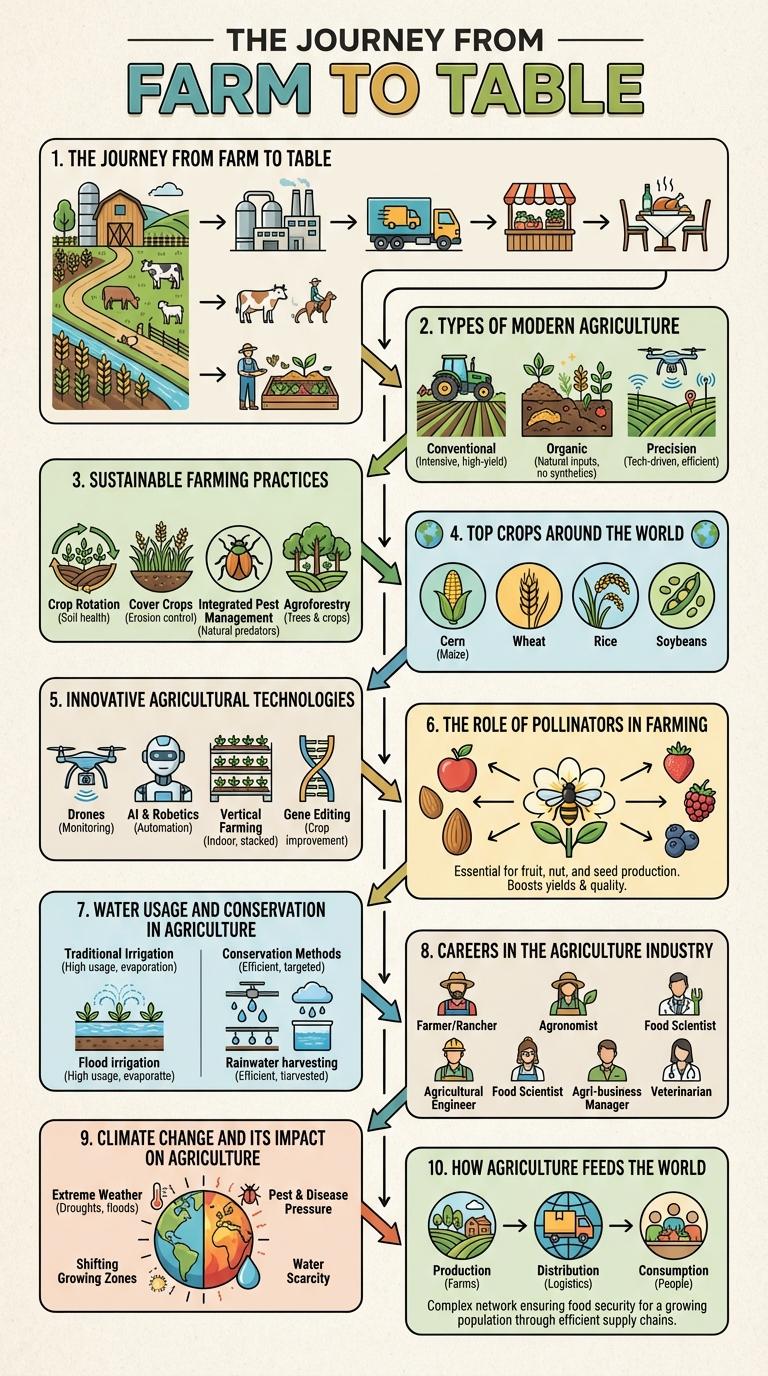
Agriculture plays a crucial role in providing food, fiber, and raw materials essential for daily life. Understanding the stages of crop production, livestock management, and sustainable farming practices helps students appreciate the complexity of this vital industry. This infographic presents key agricultural concepts in a clear, visual format designed to engage young learners.
The Journey from Farm to Table
Agriculture plays a vital role in delivering food from farms to our tables. Understanding this journey helps students appreciate the hard work behind every meal.
The journey begins with planting seeds in fertile soil, where crops grow under careful care. Farmers harvest the mature produce and transport it to processing centers, ensuring quality and safety. Finally, food reaches markets and stores, ready for consumers to purchase and enjoy.
Types of Modern Agriculture
| Type of Modern Agriculture | Description |
|---|---|
| Precision Agriculture | Uses GPS, sensors, and drones to optimize crop yields by monitoring soil and crop health precisely. |
| Hydroponics | Soilless farming technique where plants grow in nutrient-rich water solutions, saving space and resources. |
| Vertical Farming | Cultivates crops in stacked layers within controlled environments to maximize production in limited spaces. |
| Organic Farming | Focuses on natural processes, avoiding synthetic chemicals and emphasizing sustainable and eco-friendly methods. |
| Genetically Modified Crops (GMC) | Uses biotechnology to enhance crop resistance, yield, and nutritional value through gene editing techniques. |
Sustainable Farming Practices
Sustainable farming practices help protect the environment while producing healthy food. These methods focus on maintaining soil health, conserving water, and reducing pollution for future generations.
- Crop Rotation - Rotating different crops in the same field prevents soil depletion and controls pests naturally.
- Organic Farming - Using natural fertilizers and pest control methods avoids harmful chemicals and improves biodiversity.
- Water Conservation - Techniques like drip irrigation reduce water waste and ensure crops receive adequate moisture.
Top Crops Around the World
Agriculture supplies essential food crops that sustain populations worldwide. Understanding the top crops helps students appreciate global food production and diversity.
These crops are cultivated across various climates and regions, shaping economies and diets everywhere.
- Wheat - Wheat is a staple grain grown on more land area than any other crop globally, key for bread and pasta.
- Rice - Rice feeds over half the world's population, especially vital in Asia as a primary carbohydrate source.
- Corn (Maize) - Corn is versatile, used for food, animal feed, and biofuel, with major production in the Americas and China.
Innovative Agricultural Technologies
Innovative agricultural technologies are transforming farming practices worldwide. These advancements increase crop yields, reduce environmental impact, and improve food security for growing populations.
Key innovations include precision farming, drone monitoring, and genetically modified crops. These technologies optimize resource use, detect issues early, and enhance plant resistance to pests and diseases.
The Role of Pollinators in Farming
Pollinators such as bees, butterflies, and birds play a crucial role in agriculture by enabling the reproduction of many crops. These creatures transfer pollen from one flower to another, facilitating fruit and seed production.
About 75% of the world's leading food crops depend on pollinators for successful harvests. Without pollinators, farmers would face significant reductions in crop yields and biodiversity would decline.
Water Usage and Conservation in Agriculture
How much water does agriculture use globally? Agriculture accounts for approximately 70% of freshwater withdrawals worldwide, making it the largest water-consuming sector. Efficient water use and conservation in agriculture are essential to ensure sustainable food production and protect water resources.
What are common methods of water conservation in agriculture? Techniques such as drip irrigation, rainwater harvesting, and soil moisture monitoring help reduce water waste and improve crop yield. These methods optimize water use, lower costs for farmers, and minimize environmental impact.
Careers in the Agriculture Industry
Agriculture offers diverse career opportunities beyond traditional farming, including roles in agronomy, agricultural engineering, and food science. Professionals in this industry work on crop production, livestock management, environmental conservation, and advanced technology applications. Students interested in agriculture can explore careers in research, machinery design, sustainable farming, and agribusiness management.
Climate Change and Its Impact on Agriculture
Climate change significantly affects agriculture by altering temperature patterns, rainfall distribution, and increasing the frequency of extreme weather events. These changes disrupt crop growth cycles, reduce yields, and threaten food security globally. Farmers must adapt through sustainable practices, crop diversification, and innovative technologies to mitigate these impacts.