
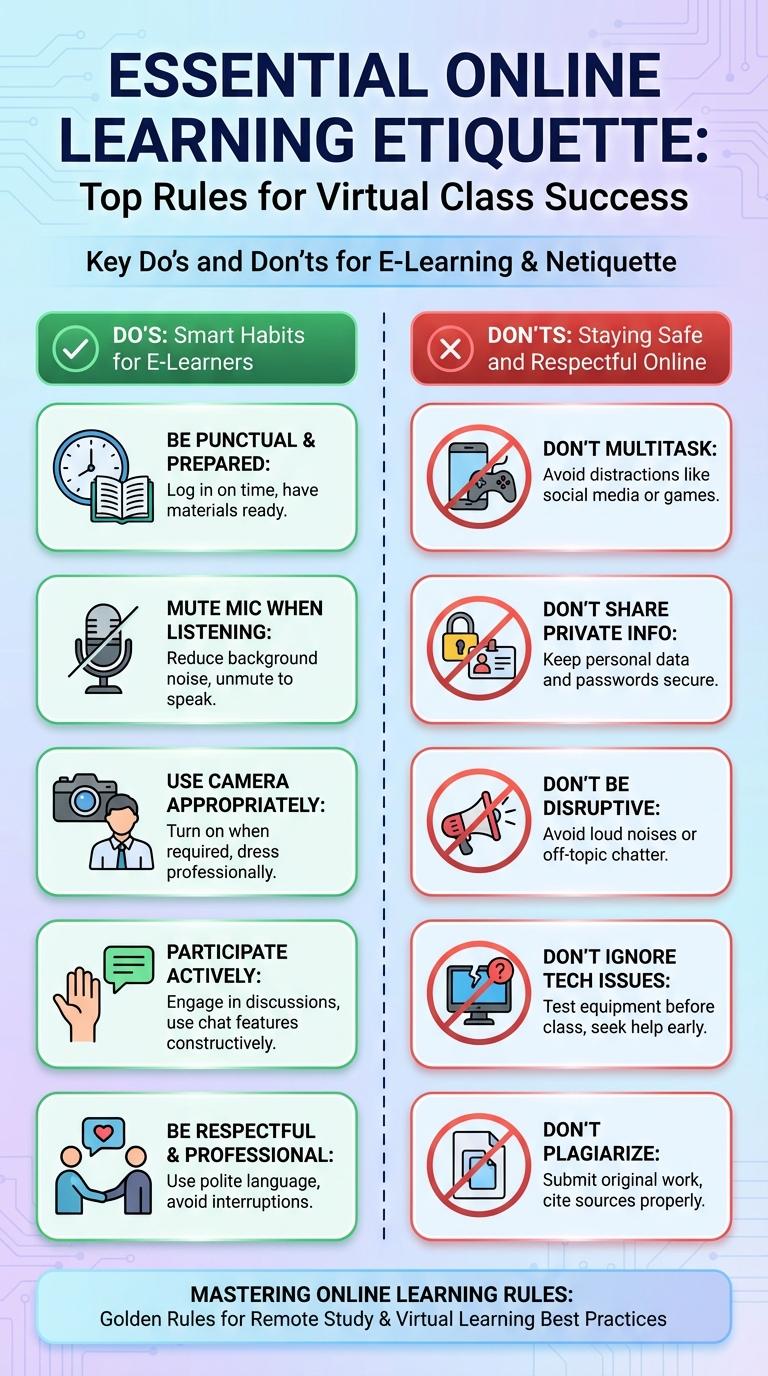
Following online learning rules ensures a productive and respectful virtual classroom environment. Clear guidelines help students focus, participate actively, and avoid distractions. Understanding proper online etiquette fosters collaboration and enhances the overall educational experience.
Essential Online Learning Etiquette
Online learning requires clear communication, punctuality, and active participation to create an effective virtual environment. Respectful interaction with instructors and peers ensures a positive and productive experience. Maintaining a distraction-free workspace and following platform guidelines are key to successful remote education.
Top Rules for Virtual Class Success
Mastering the top rules for virtual class success enhances your online learning experience. Key principles include maintaining a distraction-free environment, actively participating in discussions, and managing your time effectively. Following these guidelines helps ensure academic achievement and personal growth in virtual settings.
Key Do's and Don'ts for E-Learning
Online learning offers flexibility and access to diverse resources but requires discipline to succeed. Understanding key do's and don'ts improves engagement and learning outcomes in virtual classrooms.
- Do Establish a Dedicated Study Space - Create a quiet, organized area free from distractions to enhance concentration and productivity.
- Do Stick to a Schedule - Consistent study times help maintain routine and prevent procrastination.
- Don't Multitask During Lessons - Avoid simultaneous activities to ensure full attention and better information retention.
- Don't Ignore Technical Requirements - Check software, hardware, and internet stability beforehand to prevent disruptions.
- Do Participate Actively - Engage with instructors and peers through questions and discussions to deepen understanding.
Online Classroom Guidelines to Follow
Online classroom guidelines ensure a productive and respectful learning environment. Following these rules helps students stay engaged and achieve academic success.
Always mute your microphone when not speaking to minimize background noise. Use the chat feature appropriately for questions and avoid distractions during class. Respect your classmates and instructors by being punctual and prepared for each session.
Golden Rules for Remote Study
Mastering remote study requires discipline and effective strategies. Following key guidelines ensures a productive and engaging online learning experience.
- Set a Consistent Schedule - Establish daily study hours to create routine and improve focus during remote learning.
- Create a Dedicated Workspace - Designate a quiet, organized area free from distractions to enhance concentration.
- Engage Actively in Classes - Participate in discussions and ask questions to deepen understanding of the material.
- Manage Time Efficiently - Prioritize tasks and break study sessions into manageable segments to avoid burnout.
- Utilize Technology Wisely - Leverage digital tools and resources to support learning and stay connected with peers and instructors.
Adhering to these golden rules transforms remote study into a successful and rewarding endeavor.
Netiquette: Online Student Code
Netiquette, or online etiquette, refers to the set of rules and guidelines that students follow to communicate respectfully and effectively in virtual learning environments. Adhering to these standards fosters a positive and productive online classroom experience.
Respectful communication includes using polite language, avoiding all caps, and refraining from offensive remarks in discussions or messages. Timely participation and following assignment deadlines are essential to maintain engagement and mutual respect among online peers and instructors.
Virtual Learning Best Practices
Effective virtual learning requires clear guidelines to enhance engagement and retention. Following established best practices promotes a productive online educational environment.
Adhering to virtual learning best practices improves focus, interaction, and knowledge absorption in online classrooms.
- Establish a Dedicated Study Space - Create a quiet, organized area free from distractions to enhance concentration during virtual lessons.
- Maintain Regular Attendance - Consistently join online classes on time to keep up with course material and participate actively.
- Engage Actively with Content - Participate in discussions, ask questions, and complete assignments promptly to reinforce learning.
Smart Habits for E-Learners
Smart habits are essential for successful online learning. They help e-learners stay focused, organized, and motivated.
Setting a dedicated study space and creating a consistent schedule improve concentration. Taking regular breaks boosts productivity and prevents burnout.
Staying Safe and Respectful Online
How can you stay safe while learning online? Protect your personal information by using strong passwords and avoiding sharing sensitive details. Always ensure the websites you visit are secure and trustworthy.
What does being respectful online mean? Treat others with kindness and avoid posting harmful or offensive comments. Remember, your words impact the online learning community positively or negatively.
Why is it important to follow online learning guidelines? It creates a safe and welcoming environment for everyone. Adhering to rules prevents distractions and promotes effective learning.
How do you recognize reliable sources during online learning? Check the credibility of the author and the publication date. Use educational websites and verified platforms to obtain accurate information.
What steps should you take if you encounter cyberbullying? Report the behavior to your instructor or platform moderators immediately. Protect yourself by blocking or avoiding interaction with the offending user.