
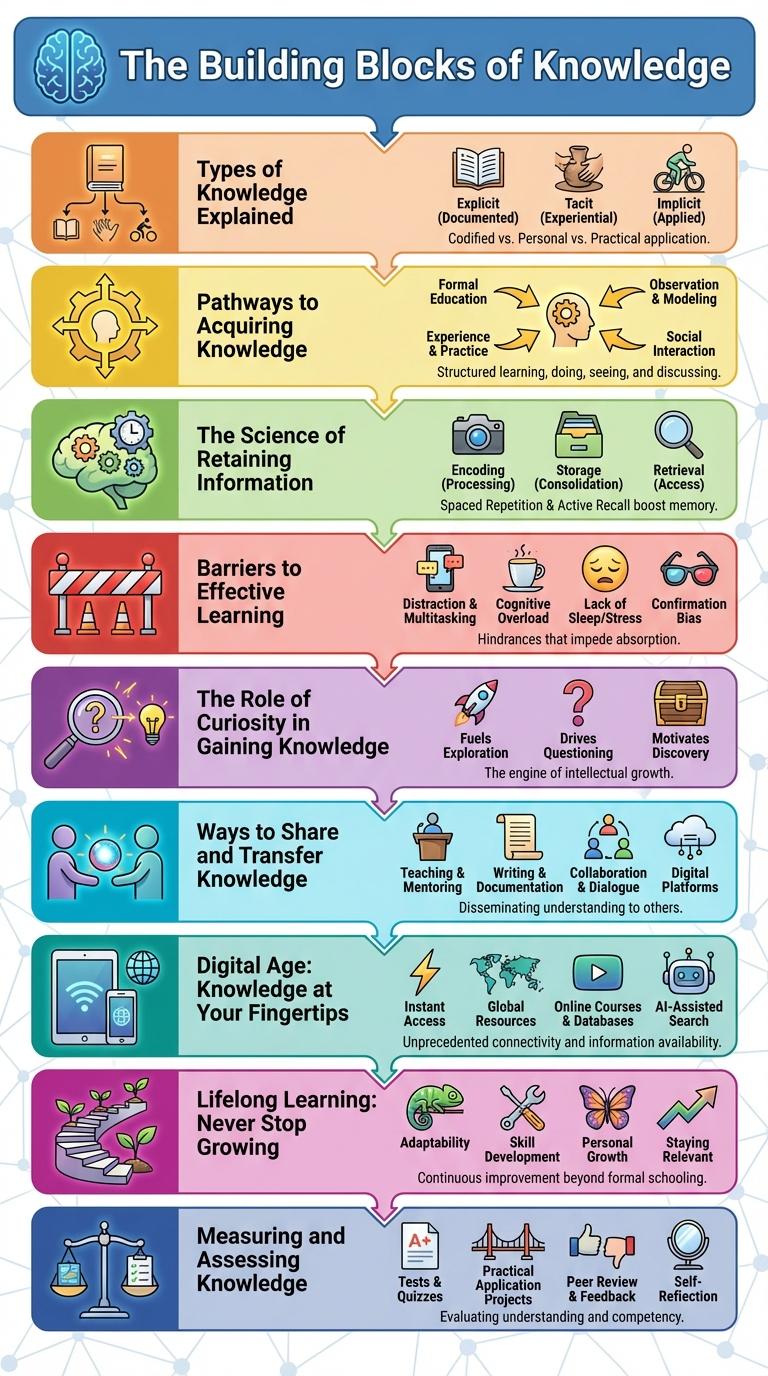
Visual representations simplify complex knowledge by transforming data into easily understandable graphics. Infographics enhance information retention through engaging visuals and concise text. This combination effectively communicates insights and fosters better learning outcomes.
The Building Blocks of Knowledge
Knowledge is composed of fundamental building blocks that form the foundation for learning and understanding. These elements include facts, concepts, principles, experiences, and skills.
Facts provide raw information, while concepts organize these facts into meaningful groups. Principles offer guidelines based on patterns, and experiences integrate personal insights to enhance comprehension.
Types of Knowledge Explained
Knowledge encompasses various forms that shape our understanding and skills. Identifying types of knowledge helps in targeting learning and application effectively.
- Explicit Knowledge - Information clearly expressed and easily shared through documents and manuals.
- Tacit Knowledge - Personal, experiential knowledge often difficult to communicate directly.
- Implicit Knowledge - Knowledge that is not formally documented but can be inferred from actions and experiences.
Pathways to Acquiring Knowledge
Knowledge acquisition involves diverse methods that enhance understanding and skill development. These pathways enable individuals to gain information from multiple sources and experiences.
- Formal Education - Structured learning through schools, colleges, and universities provides foundational and specialized knowledge.
- Experiential Learning - Gaining insights and skills through hands-on activities and real-world experiences.
- Self-Directed Study - Independent exploration using books, online courses, and research fosters personalized knowledge growth.
Combining these pathways strengthens cognitive abilities and supports lifelong learning.
The Science of Retaining Information
| Aspect | Details |
|---|---|
| Memory Types | Short-term memory holds information briefly; long-term memory stores data for extended periods. |
| Encoding Process | Converting sensory input into a format usable by the brain; involves attention and meaningful association. |
| Spaced Repetition | Technique of reviewing information at increasing intervals to enhance retention and recall. |
| Active Recall | Practice of retrieving information from memory, strengthening neural connections and retention capacity. |
| Neuroplasticity | Brain's ability to reorganize pathways and form new connections, crucial for learning and memory consolidation. |
Barriers to Effective Learning
Barriers to effective learning include cognitive overload, lack of motivation, and inadequate learning environments. These obstacles hinder information retention and skill development, impacting overall academic and professional success. Addressing these barriers through personalized strategies and supportive resources enhances learning outcomes.
The Role of Curiosity in Gaining Knowledge
Curiosity drives the quest for knowledge by motivating individuals to explore new ideas and seek deeper understanding. It sparks asking questions, experimenting, and critical thinking, which are fundamental processes in learning. Cultivating curiosity leads to continuous growth and adaptation in an ever-changing world.
Ways to Share and Transfer Knowledge
How can knowledge be effectively shared and transferred within an organization?
Sharing and transferring knowledge ensures that valuable insights and skills are accessible to all members. It enhances collaboration, innovation, and improves decision-making throughout the organization.
| Method | Description |
|---|---|
| Document Sharing | Centralized repositories like intranets or cloud storage hold manuals, reports, and guides. |
| Training Sessions | Workshops and seminars provide hands-on learning experiences and skill development. |
| Mentoring | Experienced employees guide less-experienced staff through direct interaction. |
| Communities of Practice | Groups with shared interests collaborate to solve problems and share best practices. |
| Knowledge Bases | Online databases collect frequently asked questions, policies, and troubleshooting tips. |
Digital Age: Knowledge at Your Fingertips
In the Digital Age, access to knowledge has become instant and ubiquitous. Information is now available anytime, anywhere through digital devices and online platforms.
- Online Learning Platforms - Websites and apps provide millions of courses and tutorials for self-paced education.
- Search Engines - Powerful tools enable users to find precise information within seconds from vast data sources.
- Cloud Storage - Digital repositories store and organize knowledge for easy retrieval across devices.
Lifelong Learning: Never Stop Growing
Lifelong learning is the continuous pursuit of knowledge and skills throughout an individual's life. It fosters personal growth, adaptability, and professional development in a rapidly changing world.
Embracing lifelong learning enhances critical thinking, creativity, and problem-solving abilities. It empowers individuals to stay relevant and competitive in diverse industries and life situations.