
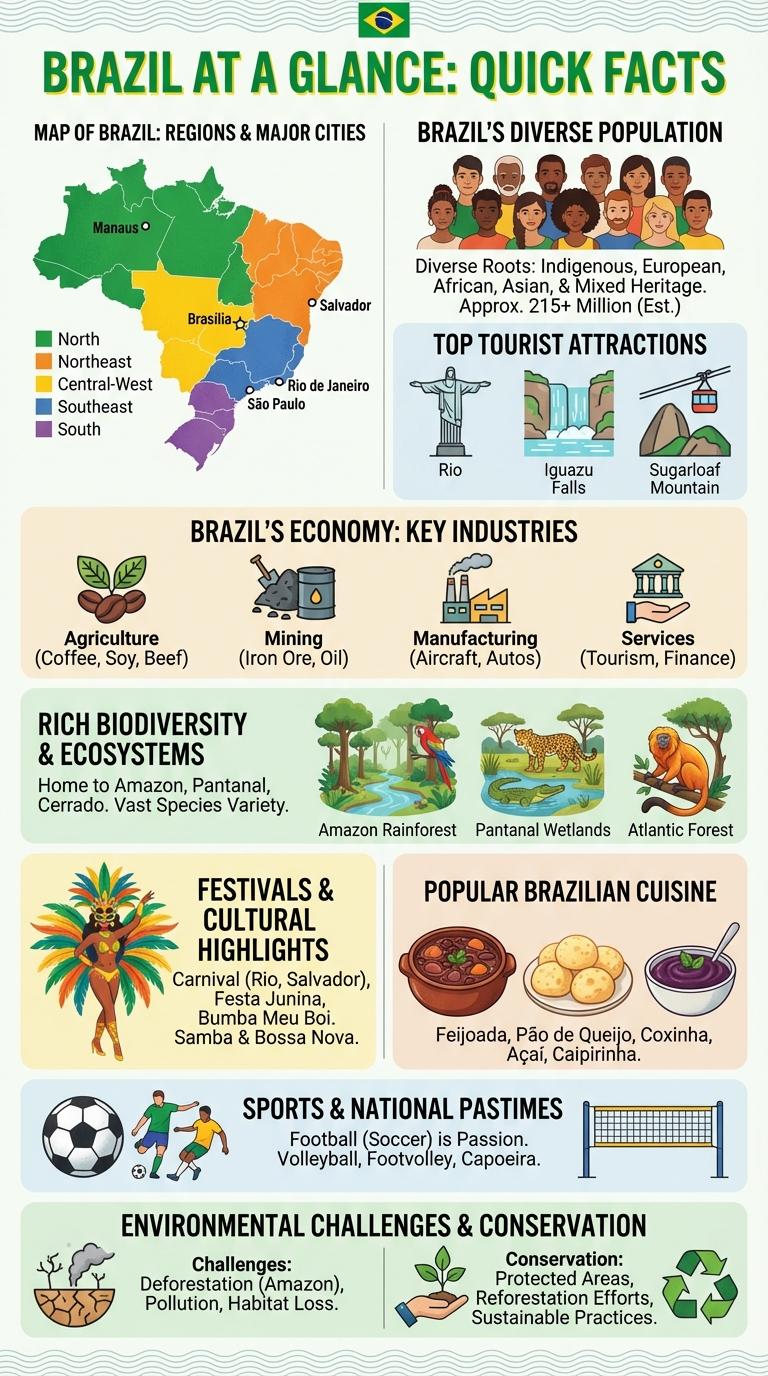
Brazil showcases a vibrant culture and diverse ecosystems, making it one of the most dynamic countries in South America. From the Amazon rainforest to iconic landmarks like Christ the Redeemer, Brazil's rich heritage and natural beauty captivate millions worldwide. Exploring these highlights through an infographic offers a clear and engaging overview of the nation's unique attributes.
Brazil at a Glance: Quick Facts
Brazil is the largest country in South America, known for its diverse culture and vast natural landscapes. It ranks as the fifth-largest country in the world by both area and population.
The official language is Portuguese, making Brazil the largest Portuguese-speaking country globally. It is home to the Amazon Rainforest, the world's largest tropical rainforest, which covers over 5.5 million square kilometers. The capital city is Brasilia, while Sao Paulo and Rio de Janeiro are the most populous and economically significant cities.
Map of Brazil: Regions & Major Cities
Brazil is divided into five geographic regions, each with distinct cultural and economic characteristics. Major cities such as Sao Paulo, Rio de Janeiro, and Brasilia serve as important cultural, financial, and political hubs across these regions.
- North Region - The largest region, dominated by the Amazon rainforest, including cities like Manaus and Belem.
- Northeast Region - Known for its beautiful coastline and historic cities such as Salvador and Recife.
- Central-West Region - Home to Brazil's capital, Brasilia, and rich agricultural zones.
- Southeast Region - The most populous region, containing economic centers Sao Paulo and Rio de Janeiro.
- South Region - Characterized by a temperate climate and important cities like Curitiba and Porto Alegre.
Brazil's Diverse Population
Brazil is home to one of the most diverse populations in the world, shaped by Indigenous peoples, European colonization, African heritage, and waves of immigration. This cultural melting pot creates a rich tapestry of languages, traditions, and ethnic backgrounds.
- Ethnic Composition - Brazil's population includes a mix of Indigenous, White, Black, Pardo (mixed), and Asian ethnic groups, reflecting centuries of migration and intermarriage.
- Indigenous Peoples - Over 300 Indigenous ethnic groups live in Brazil, preserving distinct languages and cultural practices across the country.
- Immigration Impact - Waves of immigrants from Europe, Asia, and the Middle East have significantly influenced Brazil's demographic and cultural landscape.
Top Tourist Attractions in Brazil
| Tourist Attraction | Description |
|---|---|
| Christ the Redeemer | Iconic statue overlooking Rio de Janeiro, one of the New Seven Wonders of the World. |
| Iguazu Falls | Massive waterfall system located on the border of Brazil and Argentina, featuring over 270 cascades. |
| Amazon Rainforest | World's largest tropical rainforest with unparalleled biodiversity and eco-tourism opportunities. |
| Copacabana Beach | Famous beach in Rio de Janeiro known for vibrant nightlife, festivals, and golden sands. |
| Pelourinho, Salvador | Historic colonial district with colorful buildings, Afro-Brazilian culture, and lively music scene. |
Brazil's Economy: Key Industries
Brazil's economy is driven by diverse key industries, including agriculture, mining, manufacturing, and services. The country is a leading global exporter of soybeans, coffee, and iron ore, contributing significantly to its GDP. Industrial sectors such as automotive production and aerospace also play crucial roles in Brazil's economic landscape.
Rich Biodiversity & Ecosystems
Brazil hosts the largest variety of flora and fauna on the planet. Its vast landscapes support unparalleled ecosystems that sustain global biodiversity.
- Amazon Rainforest - Covers over 5.5 million square kilometers and contains approximately 10% of known species on Earth.
- Pantanal Wetlands - The world's largest tropical wetland, home to diverse aquatic and terrestrial species.
- Cerrado Biome - One of the richest savanna regions globally, with thousands of endemic plants and animals.
Conservation efforts in Brazil are essential to preserving these unique habitats and their biodiversity for future generations.
Festivals & Cultural Highlights
Brazil hosts vibrant festivals that showcase its rich cultural heritage, with Carnaval being the most famous. This world-renowned event features samba parades, colorful costumes, and street parties attracting millions of visitors annually.
Other cultural highlights include Festa Junina, celebrated with traditional dances, bonfires, and regional foods in June. The Parintins Folklore Festival in the Amazon region features indigenous myths through music, dance, and elaborate costumes, highlighting Brazil's diverse traditions.
Popular Brazilian Cuisine
What makes Brazilian cuisine so unique? Brazilian cuisine is a vibrant mix of indigenous, Portuguese, African, and immigrant influences. Popular dishes often feature rich flavors, diverse ingredients, and traditional cooking methods.
| Dish | Description |
|---|---|
| Feijoada | A hearty black bean stew with pork, considered Brazil's national dish. |
| Pao de Queijo | Cheesy bread rolls made from tapioca flour, crispy outside and soft inside. |
| Coxinha | Chicken croquettes shaped like drumsticks, a common street food snack. |
| Brigadeiro | Chocolate truffle sweets made with condensed milk, cocoa powder, and butter. |
| Acaraje | Deep-fried black-eyed pea fritters, typical of Afro-Brazilian cuisine in Bahia. |
Sports & National Pastimes
Brazil is renowned worldwide for its passion for football, with iconic clubs like Flamengo and Santos shaping the sport's culture. Volleyball and mixed martial arts also hold significant popularity, contributing to Brazil's diverse athletic landscape. Traditional pastimes such as capoeira and samba dancing reflect the nation's rich cultural heritage and community spirit.