
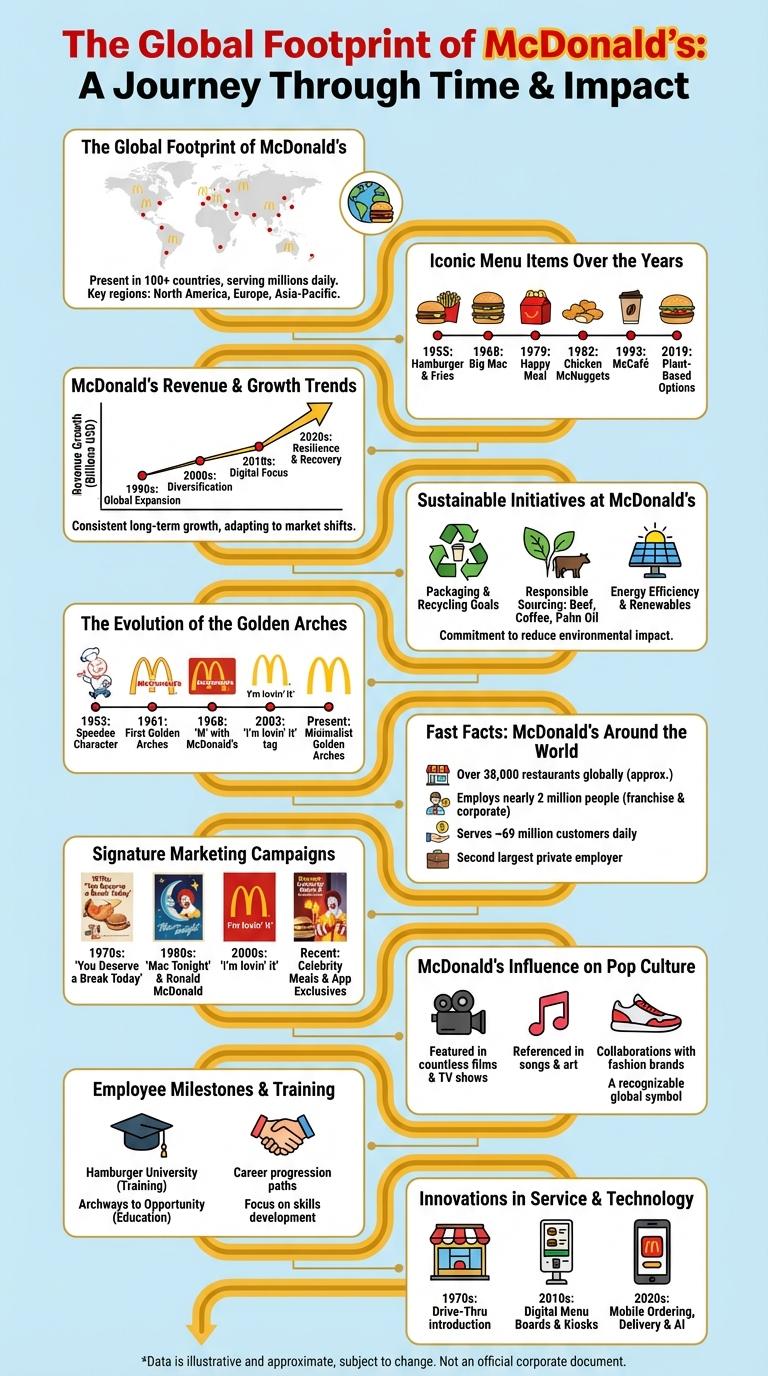
McDonald's has revolutionized the fast-food industry with its iconic branding and global presence. Infographics provide a visually engaging way to explore McDonald's history, menu offerings, and market impact. These data-driven visuals highlight key statistics and trends that define the company's success worldwide.
The Global Footprint of McDonald's
| Aspect | Details |
|---|---|
| Number of Countries | Over 120 countries worldwide |
| Total Restaurants | Approximately 40,000 locations as of 2024 |
| Annual Customers | More than 68 million served daily |
| Employee Count | Over 205,000 employees globally |
| Market Share | Leading fast-food chain with 7% global market share |
Iconic Menu Items Over the Years
McDonald's has introduced several iconic menu items that have defined its brand over the decades. These offerings reflect the evolution of consumer tastes and fast-food innovation.
- Big Mac Launch (1967) - The Big Mac, featuring a triple-layered bun and special sauce, became a signature burger loved worldwide.
- Filet-O-Fish Introduction (1965) - Created to attract Catholic customers during Lent, this sandwich combines a fried fish fillet with tartar sauce and cheese.
- Happy Meal Debut (1979) - Targeted at children, it includes a main item, side, drink, and a toy, driving family visits.
- McNuggets Release (1983) - Chicken McNuggets introduced a convenient, shareable option that quickly became a menu staple.
- McCafe Expansion (2009) - McDonald's expanded into specialty coffee products to compete with cafe chains and diversify offerings.
McDonald's Revenue & Growth Trends
McDonald's revenue has demonstrated consistent growth over the past decade, driven by global expansion and menu innovation. In 2023, the company reported annual revenues exceeding $24 billion, reflecting strong consumer demand and operational efficiency.
Growth trends highlight increased digital sales channels and delivery services as key contributors to revenue expansion. Market data shows that international markets, especially in Asia-Pacific, have been pivotal in accelerating McDonald's overall growth trajectory.
Sustainable Initiatives at McDonald's
McDonald's is committed to sustainability through various eco-friendly initiatives that reduce environmental impact. The company focuses on responsible sourcing, waste reduction, and energy efficiency across its global restaurants.
McDonald's sources sustainable beef, coffee, and palm oil, ensuring suppliers meet strict environmental and social standards. The chain has implemented recycling programs and reduced single-use plastics to minimize waste. Energy-saving technologies and renewable energy investments help lower carbon emissions in many locations worldwide.
The Evolution of the Golden Arches
How has the McDonald's Golden Arches logo evolved over the years?
The Golden Arches started as a simple architectural feature in McDonald's 1953 restaurant design. Since then, it transformed into a globally recognized symbol representing fast food culture and brand consistency.
| Year | Logo Evolution |
|---|---|
| 1953 | Simple golden arches appeared as part of the building design. |
| 1961 | The arches formed an "M" symbol, becoming the official logo. |
| 1975 | The logo was modernized with a bold yellow "M" on a red background. |
| 2003 | Introduction of a 3D effect for a contemporary look. |
| 2020 | Simplified flat design reflecting modern branding trends. |
The Golden Arches became a symbol of fast food worldwide, adapting to cultural and design changes. Their continuous evolution reflects McDonald's focus on innovation and global identity.
Fast Facts: McDonald's Around the World
McDonald's is a global fast-food leader with thousands of restaurants serving millions daily. Its international presence illustrates the brand's broad appeal and cultural adaptability.
- Global Locations - McDonald's operates over 38,000 restaurants across more than 100 countries worldwide.
- Daily Customers - Approximately 69 million people visit McDonald's each day, showcasing its widespread popularity.
- Menu Variations - Local menus often include unique items tailored to regional tastes and cultural preferences.
Signature Marketing Campaigns
McDonald's signature marketing campaigns have revolutionized fast food advertising by creating iconic global branding. Campaigns like "I'm Lovin' It," launched in 2003, emphasize emotional connection and brand loyalty through catchy jingles and multicultural appeal. Seasonal promotions and collaborations, such as the Monopoly Game and celebrity endorsements, continuously engage diverse audiences and drive sales worldwide.
McDonald's Influence on Pop Culture
McDonald's has significantly shaped global pop culture through its iconic branding, memorable slogans, and product innovations. The Golden Arches symbolize fast food worldwide, making McDonald's a cultural touchstone from movies to music.
Collaborations with celebrities and nostalgic marketing campaigns keep McDonald's relevant across generations. Its impact extends beyond food, influencing fashion, art, and social trends globally.
Employee Milestones & Training
McDonald's invests significantly in employee milestones and training to foster career growth and enhance operational excellence. The company's comprehensive training programs include the Hamburger University, which offers advanced leadership courses and skill development. Recognizing achievements through milestone awards motivates staff and reinforces a culture of continuous improvement.