
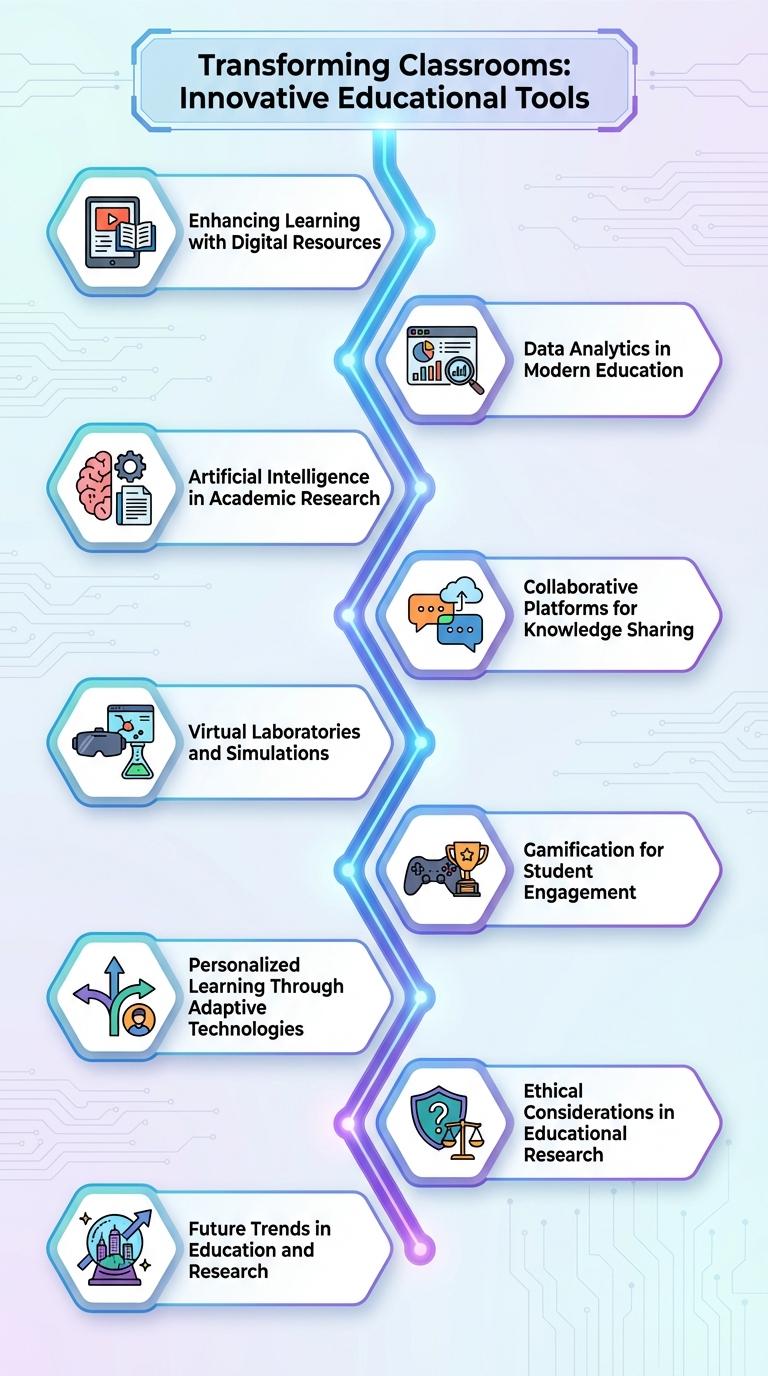
Educational and research applications harness data visualization to simplify complex concepts and enhance learning efficiency. Infographics serve as powerful tools that present information visually, enabling easier comprehension and retention of knowledge. Integrating infographics into educational and research settings promotes engagement and facilitates the communication of key findings effectively.
Transforming Classrooms: Innovative Educational Tools
Innovative educational tools are revolutionizing classrooms by integrating technology to enhance interactive learning experiences. These tools support personalized education, enabling students to learn at their own pace through adaptive software and multimedia content. Research applications benefit from data-driven insights gathered through these technologies, advancing educational methodologies and outcomes.
Enhancing Learning with Digital Resources
Educational and research applications have revolutionized the way knowledge is accessed and absorbed. Digital resources provide dynamic tools that enhance both teaching and learning experiences.
Interactive simulations, e-books, and online databases empower students and researchers with immediate access to vast information. Adaptive learning platforms personalize education, catering to individual learning styles and paces. Collaboration tools enable seamless communication among learners and experts worldwide.
Data Analytics in Modern Education
Data analytics revolutionizes modern education by enabling personalized learning paths and improving student outcomes. Educational institutions leverage data-driven insights to enhance curriculum design and optimize resource allocation.
- Student Performance Tracking - Analytics tools monitor individual progress and identify areas needing improvement.
- Curriculum Enhancement - Data informs educators about effective teaching methods and content adjustments.
- Resource Optimization - Analysis of usage patterns helps allocate educational resources efficiently.
Integration of data analytics in education fosters evidence-based decisions that drive innovation and academic success.
Artificial Intelligence in Academic Research
Artificial Intelligence (AI) is transforming academic research by enhancing data analysis, improving predictive modeling, and automating complex tasks. AI-driven tools increase research accuracy, accelerate discovery, and support personalized learning approaches.
- Data Analysis Enhancement - AI algorithms process large datasets efficiently, uncovering patterns and generating insights that were previously unattainable.
- Predictive Modeling - Machine learning models help forecast research outcomes and trends, aiding decision-making and hypothesis testing.
- Automation of Research Tasks - AI automates repetitive tasks such as literature reviews and data coding, allowing researchers to focus on higher-level analysis.
Collaborative Platforms for Knowledge Sharing
| Collaborative Platforms | Key Features |
|---|---|
| Google Classroom | Seamless integration with Google Workspace, real-time assignment tracking, and collaborative document editing |
| Microsoft Teams for Education | Video conferencing, shared notebooks, and integrated learning apps for interactive research collaboration |
| ResearchGate | Academic networking, publication sharing, and Q&A forums focused on scientific knowledge exchange |
| Slack | Channels for focused discussions, file sharing, and app integrations supporting team-based research projects |
| Mendeley | Reference management, collaborative research groups, and document annotation for academic research workflows |
Virtual Laboratories and Simulations
How do Virtual Laboratories and Simulations enhance educational and research applications? Virtual Laboratories provide interactive, remote access to experimental tools, enabling students and researchers to conduct experiments without physical constraints. Simulations offer dynamic models that replicate real-world processes, improving understanding and allowing risk-free experimentation.
Gamification for Student Engagement
Gamification enhances student engagement by incorporating game design elements such as points, badges, and leaderboards into educational activities. This approach motivates students through interactive and competitive experiences, fostering deeper learning and collaboration. Research shows that gamified learning environments improve retention rates and encourage active participation across diverse educational settings.
Personalized Learning Through Adaptive Technologies
Personalized learning through adaptive technologies leverages data-driven algorithms to tailor educational content to individual student needs. These systems adjust in real-time, enhancing engagement and improving learning outcomes across diverse subjects.
Adaptive learning platforms utilize machine learning to identify knowledge gaps and recommend targeted resources. Research shows that these technologies increase retention rates and foster critical thinking by providing customized feedback and support.
Ethical Considerations in Educational Research
Ethical considerations in educational research ensure the protection of participants' rights and the integrity of the study. Researchers must obtain informed consent and maintain confidentiality throughout the research process.
Researchers are responsible for minimizing harm and avoiding bias in data collection and reporting. Ethical guidelines foster trust, enhance validity, and promote responsible use of findings in educational settings.