
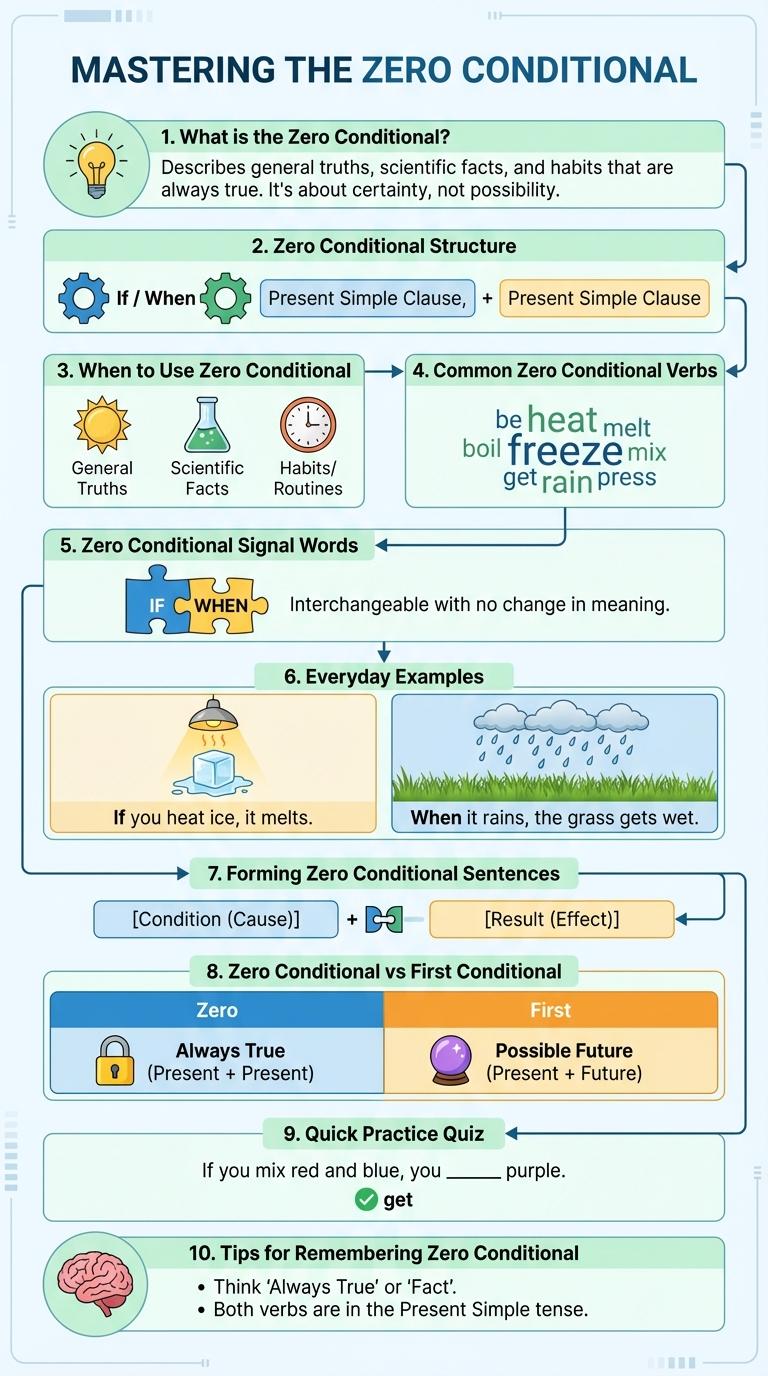
The zero conditional describes situations where one action always leads to another, reflecting cause and effect relationships based on facts or universal truths. It uses the present simple tense in both the if-clause and the main clause, emphasizing general truths or habitual actions. This infographic visually breaks down the structure, examples, and common uses of the zero conditional for easy understanding.
What is the Zero Conditional?
The Zero Conditional is used to express general truths, scientific facts, and situations that always happen under certain conditions. It follows a simple structure, usually combining the present simple tense in both clauses.
- Definition - It describes cause and effect relationships that are always true or factual.
- Structure - The form is "If + present simple, present simple."
- Usage - Used to talk about habits, rules, or universal truths.
Zero Conditional Structure
What is the zero conditional structure?
The zero conditional is used to talk about facts and general truths. It follows the structure: If + Present Simple, Present Simple.
When to Use Zero Conditional
Zero conditional sentences express facts that are always true under certain conditions. They describe real-life situations that follow a cause and effect pattern.
- General truths - Used to state facts that are universally accepted and unchanging.
- Scientific facts - Explain natural laws or scientific principles that always hold true.
- Instructions and rules - Show what happens when specific conditions are met, often used in manuals or guidelines.
Zero conditionals use the present simple tense in both clauses to highlight consistent results.
Common Zero Conditional Verbs
The zero conditional expresses general truths or facts that always happen under certain conditions. It uses the simple present tense in both the if-clause and the main clause.
Common zero conditional verbs include "is," "are," "have," "do," and "go." These verbs frequently describe scientific facts, routines, and universal truths.
Zero Conditional Signal Words
The zero conditional is used to talk about facts or situations that are always true. Signal words such as "if," "when," and "whenever" commonly introduce zero conditional sentences. These words help indicate that the condition and result happen regularly or universally.
Everyday Examples
The zero conditional is used to talk about facts or things that always happen under certain conditions. It is common in everyday situations where the result is always true if the condition is met.
This infographic presents everyday examples of zero conditional sentences to illustrate how this structure works.
- If you heat water to 100degC, it boils. - This is a scientific fact that always happens under these conditions.
- If it rains, the ground gets wet. - This describes a natural occurrence resulting from rain.
- If you press the switch, the light turns on. - This shows a cause and effect in daily life.
Forming Zero Conditional Sentences
The zero conditional is used to talk about general truths, scientific facts, or habitual actions that always happen under certain conditions. It is formed by using the present simple tense in both the if-clause and the main clause. The structure follows this pattern: If + present simple, present simple.
Examples:
| If water reaches 100degC, | it boils. |
| If you heat ice, | it melts. |
| If the sun sets, | it gets dark. |
This form emphasizes facts that are always true and is common in scientific or instructional contexts. Both clauses use the same verb tense: present simple, without modal verbs or future forms.
Zero Conditional vs First Conditional
The zero conditional describes facts or general truths that are always true under certain conditions. It uses the present simple tense in both the if-clause and the main clause.
The first conditional talks about real and possible future situations. It uses the present simple tense in the if-clause and will + base verb in the main clause.
| Zero Conditional | First Conditional |
|---|---|
| If + present simple, present simple | If + present simple, will + base verb |
| Used for facts and general truths | Used for possible future events |
| Example: If water boils, it evaporates. | Example: If it rains, we will stay inside. |
| Expresses cause and effect relationships | Expresses likely outcomes based on conditions |
Quick Practice Quiz
The zero conditional is used for facts and general truths. It follows the structure: if + present simple, present simple.
Quick practice quiz: If you heat water to 100degC, what happens? If it rains, what usually happens to the ground? If you mix red and blue, what color do you get?