
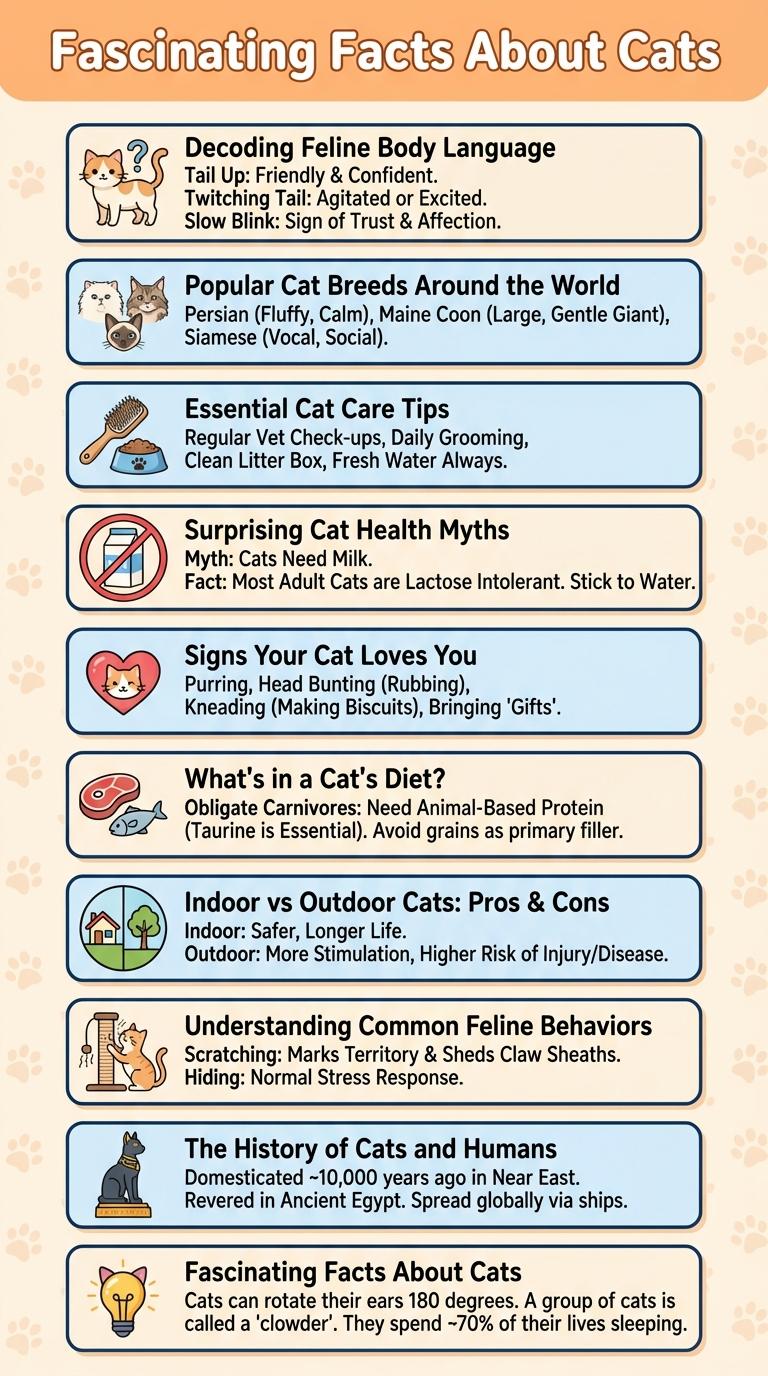
Cats captivate millions with their playful antics and mysterious behaviors, making them a beloved subject for pet owners and animal enthusiasts alike. This infographic reveals fascinating facts about cat breeds, health tips, and quirky habits that showcase the unique personality of these furry companions. Explore the visual guide to better understand your feline friend and enhance your bond with them.
Fascinating Facts About Cats
Cats have been cherished companions for over 9,000 years, with evidence of domestication traced back to ancient Egypt. Their unique ability to purr not only signifies contentment but also aids in healing bones and reducing stress.
Adult cats sleep between 12 to 16 hours daily, making them one of the most efficient resters among mammals. Their whiskers are highly sensitive, helping them navigate tight spaces and detect changes in their environment.
Decoding Feline Body Language
How can you understand what a cat is feeling just by watching its body language?
Cats communicate emotions through their posture, tail movements, and ear positions. Recognizing these signs helps improve your bond and respond appropriately to their needs.
Popular Cat Breeds Around the World
Cats are one of the most beloved pets worldwide, with numerous breeds each showcasing unique traits and personalities. Popular cat breeds vary across regions, reflecting cultural preferences and environmental adaptations.
The most recognized breeds include the Persian, known for its long fur and calm demeanor, and the Siamese, celebrated for its vocal nature and striking blue eyes. Other favored breeds, such as the Maine Coon and Bengal, stand out for their size and distinctive coat patterns.
Essential Cat Care Tips
Caring for cats requires specific knowledge to ensure their health and happiness. Proper nutrition, hygiene, and regular veterinary care are crucial for feline well-being.
- Balanced Diet - Provide a nutritious diet tailored to your cat's age and health to support overall vitality.
- Regular Vet Visits - Schedule annual check-ups to prevent diseases and maintain vaccinations.
- Litter Box Maintenance - Keep the litter box clean to promote good hygiene and prevent behavioral issues.
- Environmental Enrichment - Offer toys and scratching posts to stimulate mental and physical activity.
- Hydration - Ensure constant access to fresh water to avoid dehydration and urinary problems.
Consistent attention to these care aspects promotes a long, happy life for your cat.
Surprising Cat Health Myths
Cats are often surrounded by health myths that can mislead pet owners. One common myth is that cats always land on their feet, but they can suffer serious injuries from falls. Another misconception is that cats don't need regular veterinary care unless they appear sick, whereas preventive health visits are crucial.
Signs Your Cat Loves You
Cats show affection in subtle ways that often go unnoticed. Recognizing these signs helps deepen your bond with your feline friend.
- Purring - Cats often purr when they feel content and safe around you.
- Kneading - When your cat kneads with their paws, it's a sign of comfort and trust.
- Slow Blinking - A slow blink from your cat indicates affection and relaxation in your presence.
- Following You Around - Cats that follow you show they enjoy your company and feel secure near you.
- Head Butting - Rubbing their head against you marks you as part of their trusted circle.
What's in a Cat's Diet?
Cats require a diet rich in specific nutrients to maintain optimal health. Understanding the essential components of their diet helps ensure their well-being and longevity.
- High Protein Content - Cats are obligate carnivores and need protein from animal sources to support muscle maintenance and overall body function.
- Taurine Requirement - Taurine, an amino acid found in meat, is vital for heart health, vision, and reproductive function in cats.
- Limited Carbohydrates - Cats have a low tolerance for carbohydrates, making a diet low in carbs essential to avoid metabolic issues.
- Essential Fats - Fatty acids such as omega-3 and omega-6 support skin health, coat quality, and brain function in cats.
- Hydration Importance - Adequate water intake, often from wet food, prevents urinary tract problems and maintains kidney function in cats.
Indoor vs Outdoor Cats: Pros & Cons
Choosing between indoor and outdoor cats depends on lifestyle and safety concerns. Indoor cats enjoy protection from traffic and predators but may face boredom without sufficient stimulation. Outdoor cats benefit from exercise and natural behaviors but face risks like accidents and diseases.
| Indoor Cats | Outdoor Cats |
|---|---|
| Safe from traffic and predators | Natural exercise and stimulation |
| May suffer from boredom | Higher risk of injuries and diseases |
| Controlled environment | Exposure to diverse environments |
| Lower chance of parasites | Stronger hunting instincts |
| Requires enrichment activities | Greater independence |
Understanding Common Feline Behaviors
Cats communicate through various behaviors that reflect their emotions and needs. Understanding these common feline behaviors helps owners build a stronger bond with their pets.
Tail position reveals a cat's mood: a raised tail indicates happiness, while a tucked tail signals fear or submission. Purring can signify contentment or self-soothing during stress. Scratching is a natural behavior for marking territory and maintaining claw health.