
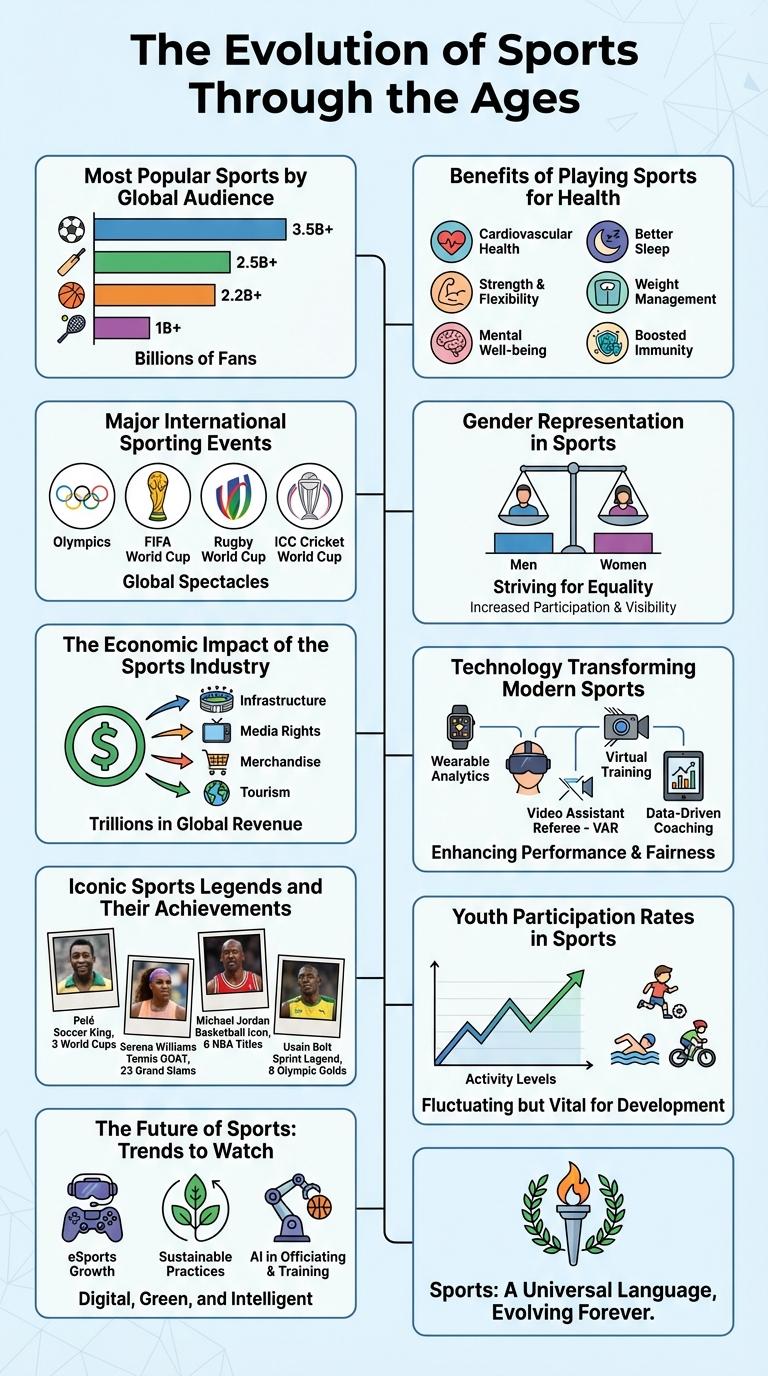
Infographics about sports visually present key statistics, player achievements, and game strategies, making complex data easy to understand. They combine vibrant graphics and concise information to engage fans and highlight trends across various sports. This approach enhances knowledge retention and sparks greater interest in athletic events.
The Evolution of Sports Through the Ages
Sports have evolved significantly from ancient times to the modern era, reflecting cultural, technological, and social changes. Early sports were often tied to rituals and survival skills, while contemporary sports emphasize entertainment, professionalism, and global competition.
The introduction of standardized rules and international organizations like the International Olympic Committee transformed sports into structured activities with global audiences. Innovations such as video technology, improved training, and digital broadcasting continue to enhance how sports are played and consumed worldwide.
Most Popular Sports by Global Audience
Sports captivate millions worldwide, bringing communities and cultures together through shared passion. Understanding the global popularity of various sports highlights trends in viewership and fan engagement.
- Soccer (Football) - With over 4 billion fans, soccer remains the most popular sport globally, dominating Europe, Africa, and South America.
- Cricket - Cricket attracts approximately 2.5 billion followers, especially strong in countries like India, Pakistan, and Australia.
- Basketball - Basketball enjoys a global audience of around 2.4 billion, with significant popularity in the United States, China, and the Philippines.
- Tennis - Tennis commands a global viewership of about 1 billion, driven by major tournaments like Wimbledon and the US Open.
- Formula 1 - Formula 1 racing gathers a loyal fanbase of 500 million worldwide, particularly admired in Europe and Asia.
These sports consistently drive major broadcasting revenues and attract extensive sponsorships, reflecting their massive global appeal.
Benefits of Playing Sports for Health
Playing sports significantly improves overall physical and mental well-being. Engaging in regular athletic activities fosters healthier lifestyles and boosts longevity.
- Enhances Cardiovascular Health - Sports increase heart rate and improve blood circulation, reducing the risk of heart disease.
- Builds Strength and Endurance - Regular physical activity in sports strengthens muscles and improves stamina for daily tasks.
- Reduces Stress and Anxiety - Participating in sports releases endorphins that help alleviate stress and promote mental calmness.
Major International Sporting Events
Major international sporting events unite athletes and fans from around the world, showcasing extraordinary talent and cultural diversity. Events like the Olympics, FIFA World Cup, and the Rugby World Cup attract millions of viewers and feature intense competition across various sports. These global tournaments promote sportsmanship, national pride, and inspire future generations of athletes.
Gender Representation in Sports
Gender representation in sports remains a critical issue, with women often underrepresented in both participation and leadership roles. Studies show that female athletes receive significantly less media coverage compared to male athletes, affecting visibility and sponsorship opportunities. Increasing gender diversity in sports promotes equality, enhances performance, and expands fan engagement worldwide.
The Economic Impact of the Sports Industry
The sports industry plays a significant role in the global economy, generating billions in revenue annually. It encompasses professional leagues, sports merchandising, broadcasting rights, and event management.
Sports events contribute to local economies through tourism, job creation, and infrastructure development. Major tournaments like the FIFA World Cup and the Olympics drive billions in economic activity. Sponsorship and advertising are key revenue streams, enhancing brand visibility and market reach for businesses worldwide.
Technology Transforming Modern Sports
Technology is revolutionizing modern sports by enhancing athlete performance and improving fan engagement. Innovations such as wearables, AI analytics, and virtual reality are reshaping training and competition.
Wearable devices track real-time biometric data, enabling precise performance optimization and injury prevention. AI-driven analytics provide coaches with strategic insights, while virtual reality creates immersive fan experiences and remote training opportunities.
Iconic Sports Legends and Their Achievements
Who are some of the most iconic sports legends and their key achievements? Legendary athletes like Michael Jordan, Serena Williams, and Pele have left an indelible mark on sports history. Their records, championships, and groundbreaking performances continue to inspire generations worldwide.
Youth Participation Rates in Sports
Youth participation rates in sports reveal trends in physical activity and social engagement among children and teenagers. Tracking these rates helps identify popular sports and areas needing development for healthier lifestyles.
Analyzing participation data guides policymakers and organizations to promote inclusive sports programs that cater to diverse youth populations.
- Soccer leads participation - Soccer is the most popular sport among youth, with participation rates exceeding 35% in many countries.
- Decline in organized sports - Recent studies show a decline of up to 10% in organized sports participation among teenagers over the past five years.
- Gender disparity - Boys participate in sports at a rate approximately 20% higher than girls, highlighting the need for targeted engagement strategies.