
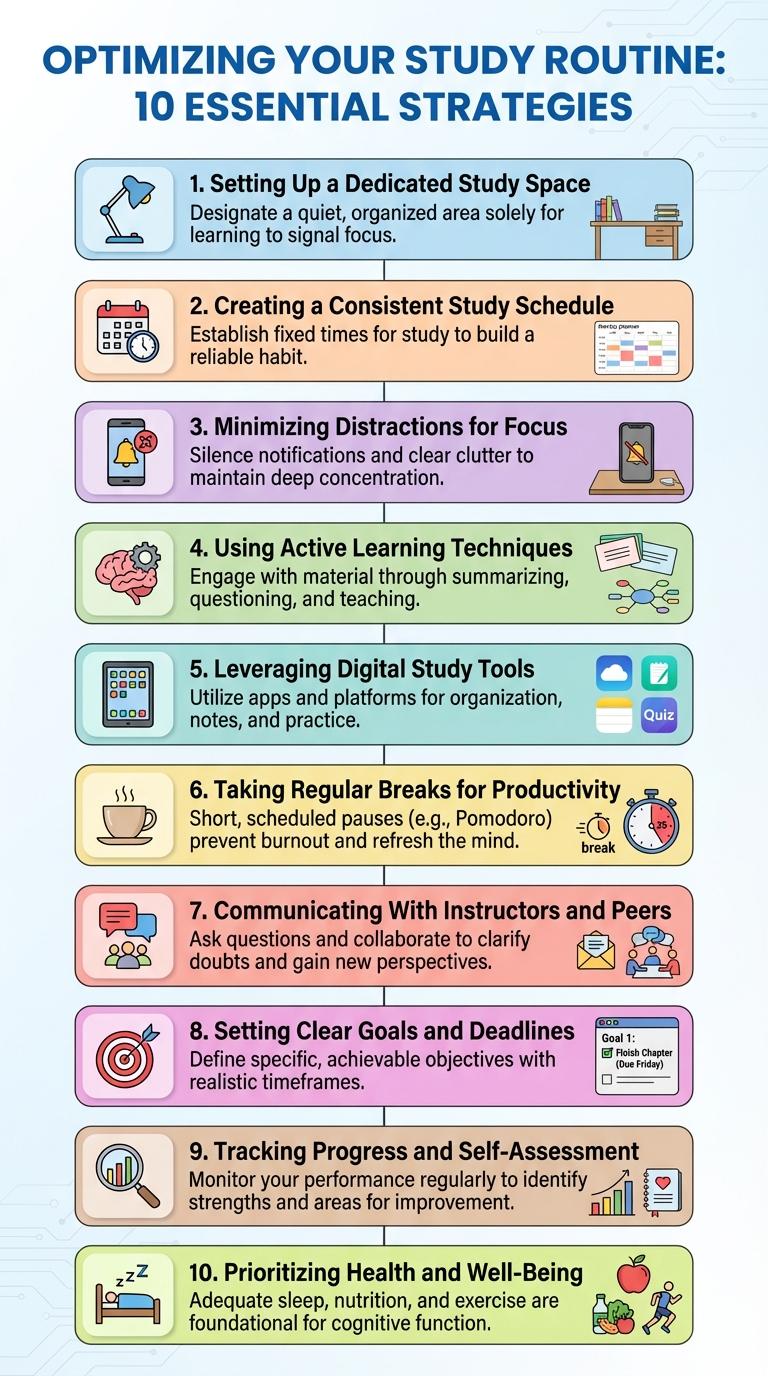
Effective study habits are crucial for success in distance learning environments, where self-discipline and time management play significant roles. Utilizing strategies such as creating a dedicated study space, setting consistent schedules, and minimizing distractions enhances focus and retention. Visual tools like infographics can simplify these habits, making it easier for learners to implement and maintain productive routines.
Setting Up a Dedicated Study Space
How can setting up a dedicated study space improve distance learning efficiency? A well-organized study area minimizes distractions and enhances focus, making learning more productive. Consistent use of this space builds a routine that supports better information retention and time management.
Creating a Consistent Study Schedule
Creating a consistent study schedule enhances focus and time management in distance learning. Allocate specific time blocks daily to review materials, complete assignments, and participate in online discussions. Use digital calendars or apps to set reminders, ensuring adherence to the set study routine.
Minimizing Distractions for Focus
Effective distance learning requires minimizing distractions to maintain focus and improve retention. Creating a dedicated, quiet workspace and using tools like website blockers helps reduce interruptions. Consistent schedules and short, timed study sessions enhance concentration and productivity.
Using Active Learning Techniques
| Active Learning Technique | Key Benefit |
|---|---|
| Self-Quizzing | Enhances memory retention by reinforcing material through recall |
| Summarizing Notes | Improves understanding by condensing information into key points |
| Teaching Others | Solidifies knowledge by explaining concepts aloud |
| Interactive Problem Solving | Develops critical thinking by applying concepts to real scenarios |
| Using Flashcards | Boosts quick recall and spaced repetition for long-term learning |
Leveraging Digital Study Tools
Effective study habits significantly enhance distance learning outcomes. Leveraging digital study tools boosts engagement and retention.
Digital tools such as flashcard apps, note-taking software, and interactive quizzes support active learning. These platforms provide personalized feedback and track progress over time. Integrating multiple digital resources creates a dynamic and flexible study routine tailored to individual needs.
Taking Regular Breaks for Productivity
Taking regular breaks during distance learning enhances focus and prevents burnout. Short breaks help refresh the mind, leading to improved productivity and retention.
Experts recommend a 5-10 minute break every 25-30 minutes of study, following the Pomodoro Technique. Physical movement or relaxation during breaks boosts energy and concentration.
Communicating With Instructors and Peers
Effective communication with instructors and peers enhances the distance learning experience. Clear, consistent interaction supports better understanding and academic success.
- Timely Responses - Respond promptly to questions and feedback to maintain engagement and clarify doubts.
- Active Participation - Join discussions and group activities to build connections and deepen comprehension.
- Use Multiple Channels - Leverage email, forums, and video calls to facilitate diverse communication methods.
Setting Clear Goals and Deadlines
Setting clear goals is essential for maintaining focus during distance learning. It helps students prioritize tasks and measure progress efficiently.
Deadlines create a structured timeline, reducing procrastination and boosting productivity. Combining goals with deadlines ensures consistent study habits and academic success.
Tracking Progress and Self-Assessment
Tracking progress and self-assessment are essential elements for effective distance learning. These habits help students stay motivated and identify areas needing improvement.
- Set Clear Goals - Define specific, measurable objectives to monitor your learning journey.
- Use Learning Journals - Record daily or weekly accomplishments to reflect on your progress over time.
- Regular Self-Quizzes - Test your understanding frequently to assess grasp of material and reinforce knowledge.