
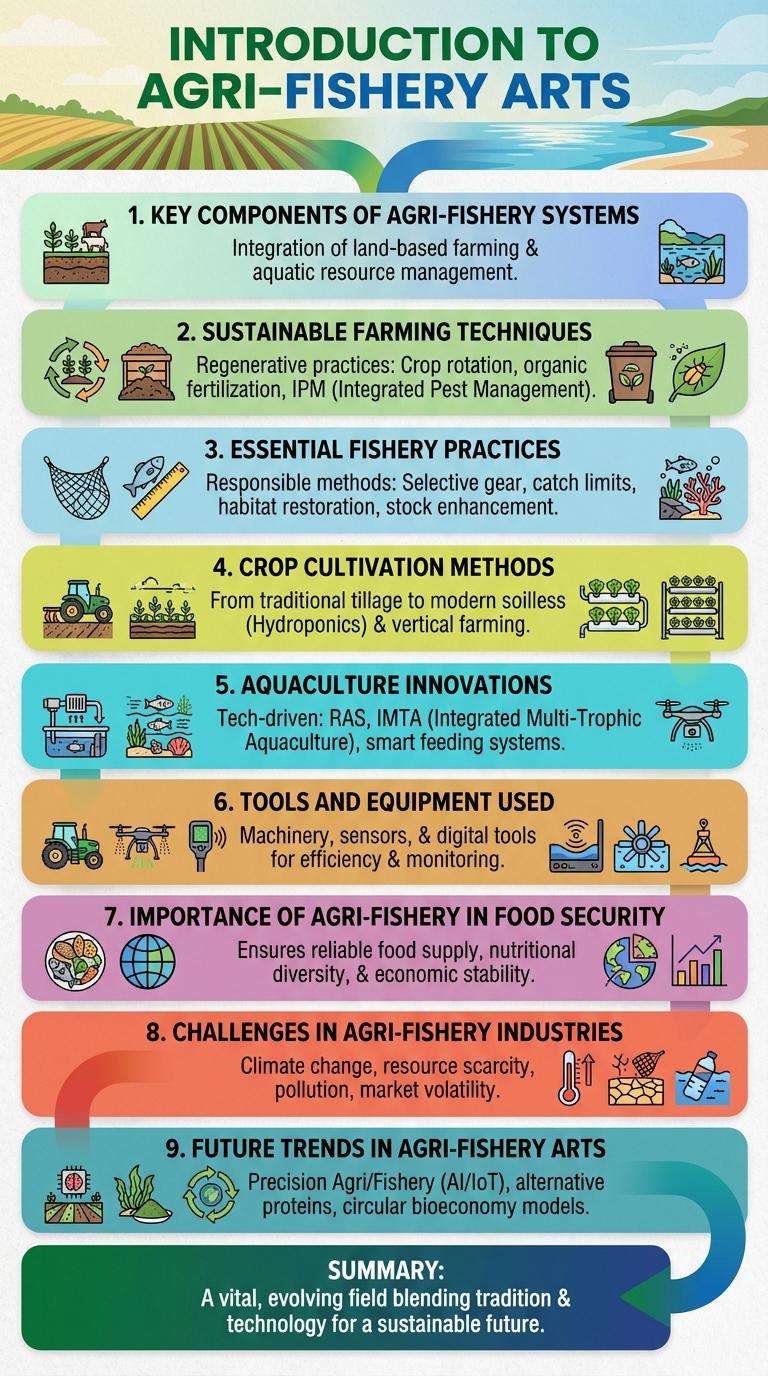
Agri-fishery arts showcase the intricate blend of traditional farming and fishing techniques passed down through generations. These practices highlight sustainable methods that maintain ecological balance while supporting local communities. The infographic reveals key tools, cultural rituals, and the evolution of agri-fishery arts in rural economies.
Introduction to Agri-Fishery Arts
Agri-Fishery Arts encompasses the study of agricultural and aquatic production systems, integrating techniques from farming and fishing industries. This field promotes sustainable practices that enhance food security and support rural livelihoods. It combines scientific knowledge with traditional methods to optimize crop cultivation and fishery management.
Key Components of Agri-Fishery Systems
Agri-fishery arts combine agriculture and aquaculture to create sustainable food production systems. These integrated practices enhance resource efficiency and promote environmental balance.
- Aquaculture Techniques - Methods of cultivating fish and aquatic plants in controlled environments improve yield and water quality.
- Soil and Water Management - Effective management ensures optimal nutrient cycling and supports both crop and fish health.
- Crop Integration - Incorporating diverse crops alongside fish farming maximizes land use and biodiversity.
These key components contribute to resilient and productive agri-fishery systems supporting food security.
Sustainable Farming Techniques
| Sustainable Farming Technique | Key Benefits |
|---|---|
| Crop Rotation | Enhances soil fertility, reduces pest and disease buildup |
| Integrated Pest Management (IPM) | Minimizes chemical use, promotes natural pest control |
| Organic Farming | Improves biodiversity, reduces chemical residues |
| Agroforestry | Combines trees with crops, enhances soil structure, and carbon sequestration |
| Aquaponics | Integrates fish farming with hydroponics, conserves water, and maximizes space |
Essential Fishery Practices
What are the essential fishery practices for sustainable agri-fishery arts?
Effective fishery practices include site selection based on water quality and ecosystem compatibility. Proper feed management and disease control ensure healthy aquatic life and improved yields.
How does selective breeding contribute to fishery success?
Selective breeding enhances growth rates and disease resistance in fish species. This practice helps maximize productivity while maintaining genetic diversity.
Why is water quality management critical in agri-fishery arts?
Maintaining optimal water quality prevents the buildup of toxic substances that harm aquatic organisms. It supports aerobic conditions necessary for fish respiration and overall health.
What role does integrated pest management play in fisheries?
Integrated pest management minimizes the use of harmful chemicals by employing biological controls and monitoring pest populations. This approach protects fish health and conserves the environment.
How can post-harvest handling improve fishery product quality?
Proper post-harvest handling like timely cooling and hygienic processing reduces spoilage and contamination. It increases shelf life and market value of fishery products.
Crop Cultivation Methods
Crop cultivation methods are essential practices in agri-fishery arts that enhance soil fertility and increase yield. They involve various techniques tailored to different crop types and environmental conditions.
Traditional methods include plowing, planting, and irrigating, often combined with crop rotation to prevent soil depletion. Modern techniques incorporate precision farming, using technology to optimize resources and reduce waste. Sustainable practices focus on organic inputs and biodiversity to maintain ecological balance and long-term productivity.
Aquaculture Innovations
Aquaculture innovations are revolutionizing sustainable food production by enhancing efficiency and environmental compatibility. New technologies enable precise monitoring and management of aquatic species, improving yield and health.
Innovations include automated feeding systems, water quality sensors, and genetic advancements to boost resilience in fish and shellfish. These advancements support global food security while minimizing ecological impact.
Tools and Equipment Used
Agri-fishery arts blend traditional farming and fishing techniques to optimize productivity and sustainability. Tools and equipment play a crucial role in enhancing efficiency and supporting environmental stewardship.
- Plow - A fundamental farming tool used to till soil in preparation for planting crops.
- Fish Nets - Various types of nets designed to catch different species of fish with minimal environmental impact.
- Irrigation Systems - Equipment used to supply water efficiently to crops, increasing yield and conserving resources.
Importance of Agri-Fishery in Food Security
Agri-fishery arts combine traditional and modern techniques in agriculture and aquaculture, playing a crucial role in sustaining food production worldwide. These practices enhance crop and fish yields while promoting biodiversity and environmental balance.
Food security depends heavily on efficient agri-fishery systems, ensuring a stable supply of nutritious food for growing populations. Integrated agri-fishery methods reduce resource waste and improve resilience against climate change impacts.
Challenges in Agri-Fishery Industries
The agri-fishery industries face significant challenges that impact productivity and sustainability. Addressing these obstacles is crucial for food security and economic growth.
- Climate Change Effects - Rising temperatures and unpredictable weather patterns disrupt crop yields and fish habitats.
- Resource Depletion - Overfishing and soil degradation threaten long-term viability of agri-fishery resources.
- Technological Gaps - Limited access to advanced farming and fishing technologies hinders efficiency improvements.