
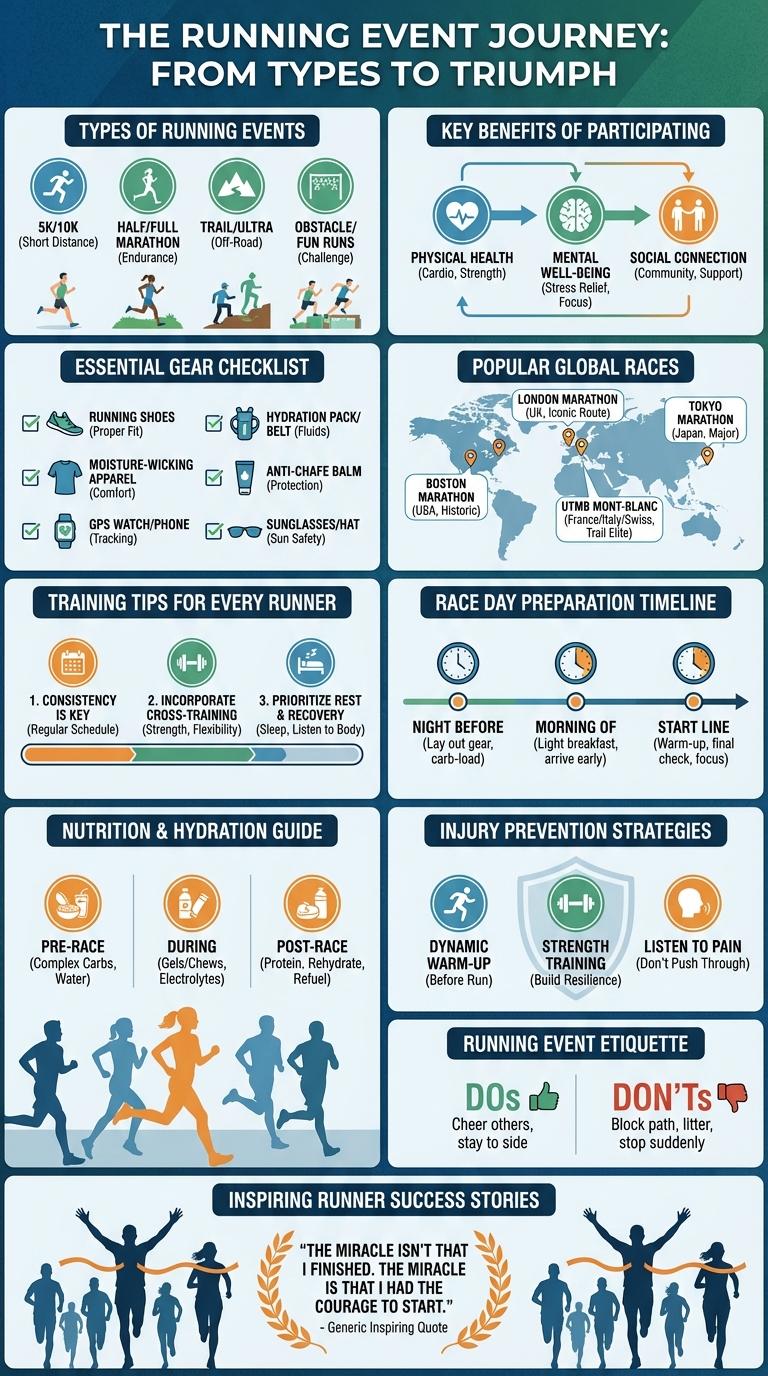
Running events attract diverse participants seeking fitness, competition, and community connection. Infographics visually capture key statistics such as race distances, participant demographics, and popular locations, making complex data easily digestible. These visuals enhance understanding of trends and inspire runners to engage in upcoming events.
Types of Running Events
Running events encompass a wide range of races designed for various skill levels and interests. These events include sprint races, middle-distance, long-distance, and trail running competitions.
Sprint races focus on speed over short distances, typically ranging from 100 to 400 meters. Long-distance events such as marathons and ultramarathons test endurance over 42 kilometers or more.
Key Benefits of Participating
Running events offer numerous health and social benefits for participants. Engaging in these events promotes physical fitness and fosters community spirit.
Participating in running events improves cardiovascular health and builds endurance. It also provides opportunities for social interaction and motivation through group support. These events encourage goal setting and personal achievement, boosting overall mental well-being.
Essential Gear Checklist
Running events require proper gear to ensure comfort, safety, and performance. Essential items include quality running shoes, moisture-wicking clothing, and hydration options. Accessories like a GPS watch, sunscreen, and a race bib belt complete the checklist for a successful race day.
Popular Global Races
What are some of the most popular running events worldwide? Iconic races like the Boston Marathon and the Berlin Marathon attract thousands of participants each year. These global events combine competitive spirit with cultural celebration, drawing runners from all continents.
Which races are known for their unique challenges and landscapes? The Ultra-Trail du Mont-Blanc features grueling mountain trails across France, Italy, and Switzerland, while the Great Wall Marathon incorporates one of the world's most historic landmarks. Each race offers athletes distinct experiences beyond traditional city marathons.
How do large-scale marathons impact local communities? Events such as the New York City Marathon and London Marathon boost tourism and local economies significantly. They inspire community involvement, promote health and fitness, and often support charitable causes worldwide.
| Race | Location |
|---|---|
| Boston Marathon | Boston, USA |
| Berlin Marathon | Berlin, Germany |
| Ultra-Trail du Mont-Blanc | France, Italy, Switzerland |
| Great Wall Marathon | China |
| New York City Marathon | New York, USA |
Training Tips for Every Runner
Training effectively is essential for runners of all levels to boost performance and prevent injury. Consistent mileage, combined with interval and strength workouts, helps build endurance and speed. Proper hydration, nutrition, and rest contribute significantly to recovery and overall success.
Race Day Preparation Timeline
Preparing effectively for race day boosts performance and reduces stress. A well-structured timeline ensures optimal readiness from weeks before to race start.
- Two Weeks Before - Finalize your training schedule and start tapering intensity to conserve energy.
- Three Days Before - Hydrate consistently and focus on carbohydrate-rich meals for energy storage.
- Race Morning - Eat a light, familiar breakfast and perform dynamic warm-up exercises to activate muscles.
Nutrition & Hydration Guide
Proper nutrition and hydration are crucial for optimal performance in running events. Consuming balanced meals rich in carbohydrates, proteins, and fats supports energy levels and muscle recovery.
Hydration before, during, and after running helps maintain fluid balance and prevent dehydration. Drinking water and electrolyte beverages ensures sustained endurance and reduces the risk of cramps.
Injury Prevention Strategies
Running events are popular for promoting fitness and community engagement. Proper injury prevention strategies ensure participants enjoy these events safely.
- Warm-up Exercises - Preparing muscles with dynamic stretches reduces the risk of strains and sprains during runs.
- Proper Footwear - Wearing running shoes that fit well and provide adequate support helps prevent common injuries like plantar fasciitis.
- Gradual Training Progression - Increasing running intensity and distance gradually allows the body to adapt and avoids overuse injuries.
Implementing these injury prevention strategies enhances performance and minimizes downtime for runners in any event.