
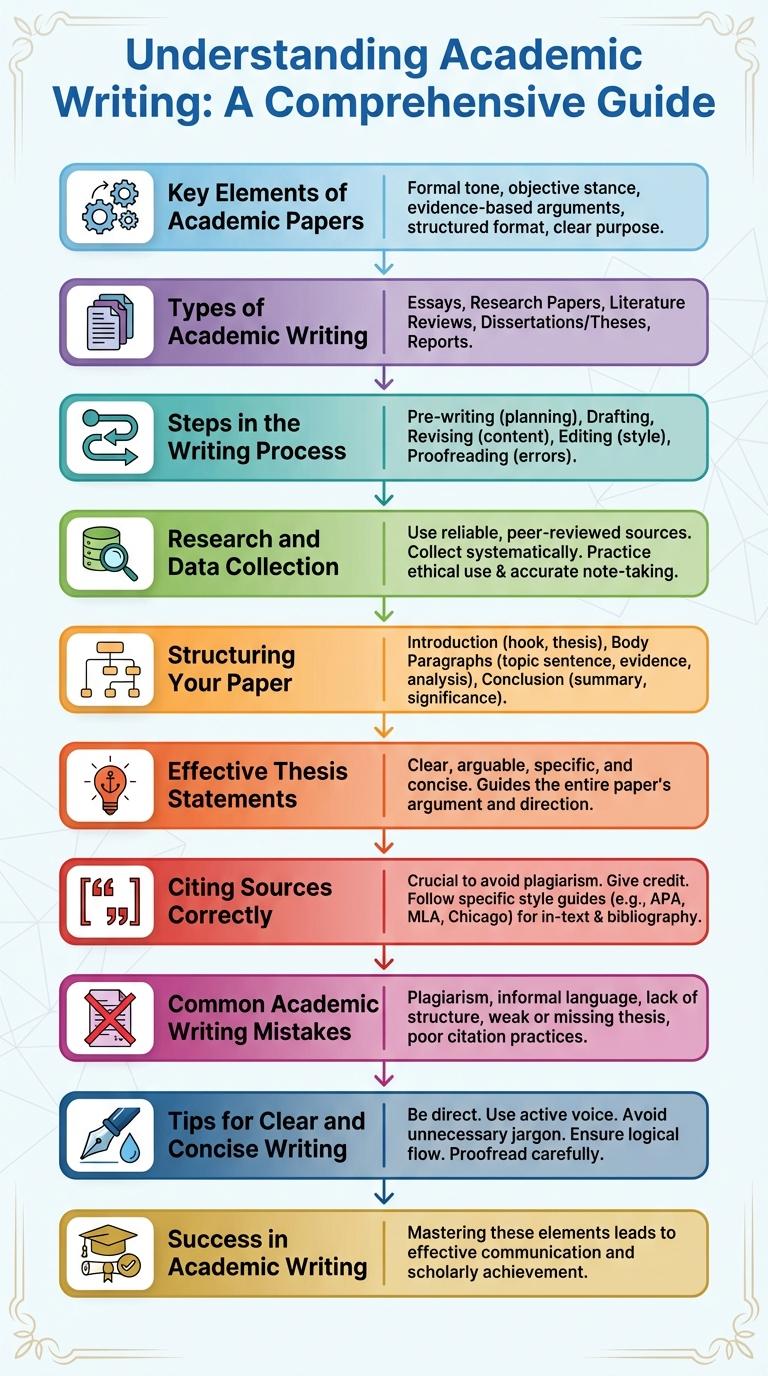
Academic writing demands clarity, precision, and structured presentation of ideas to effectively communicate research and analysis. Understanding key components such as thesis statements, evidence integration, and proper citation enhances the quality and credibility of scholarly work. This infographic visually breaks down essential elements and best practices to guide students and researchers in producing impactful academic texts.
Understanding Academic Writing
Academic writing is a structured form of writing used in scholarly work to present ideas clearly and methodically. It requires critical thinking, precise language, and adherence to formal conventions.
This style emphasizes clarity, evidence-based arguments, and a logical flow of information to support academic discourse.
- Purpose - To convey complex information and research findings in a clear, concise, and objective manner.
- Structure - Typically organized into introduction, body, and conclusion to ensure coherent argument development.
- Language - Formal and precise language is used, avoiding slang and casual expressions to maintain professionalism.
Key Elements of Academic Papers
Academic writing requires clarity, structure, and evidence-based arguments to effectively communicate research findings. Understanding the key elements of academic papers enhances the quality and credibility of scholarly work.
Key elements include the introduction, which presents the research question and context; the methodology section, detailing the research design and procedures; the results, showcasing the data and findings; and the discussion, interpreting the significance of the results. A strong conclusion summarizes the main points and suggests future research directions. Proper citation and referencing are essential to acknowledge sources and avoid plagiarism.
Types of Academic Writing
Academic writing encompasses various forms designed to communicate scholarly ideas clearly and effectively. Understanding the types of academic writing helps students and researchers choose the appropriate format for their work.
- Analytical Writing - Examines and interprets data or literature to draw conclusions and support arguments.
- Descriptive Writing - Provides detailed observations and information about a subject without analysis.
- Persuasive Writing - Aims to convince the reader of a particular viewpoint using evidence and reasoning.
- Comparative Writing - Discusses similarities and differences between two or more subjects.
- Expository Writing - Explains or informs about a specific topic in a clear and straightforward manner.
Steps in the Writing Process
Academic writing follows a clear, structured process to ensure clarity and coherence. The main steps include planning, drafting, revising, editing, and publishing the final document. Mastering each step enhances the quality and effectiveness of scholarly communication.
Research and Data Collection
What are the essential steps for effective research and data collection in academic writing?
Start by identifying credible sources such as peer-reviewed journals and academic databases. Organize collected data systematically to ensure accuracy and ease of reference during writing.
Structuring Your Paper
Structuring your academic paper effectively enhances clarity and flow. A well-organized structure guides readers through your argument seamlessly.
Begin with an introduction that outlines the purpose and thesis. Follow with body paragraphs that develop key points supported by evidence.
Effective Thesis Statements
Effective thesis statements clearly express the main idea of an academic paper. They guide the reader by outlining the focus and purpose of the essay.
A strong thesis is specific, concise, and arguable, providing a roadmap for the content that follows. It sets the tone and scope, helping to organize supporting arguments logically.
Citing Sources Correctly
Correctly citing sources in academic writing is essential to avoid plagiarism and establish credibility. Use recognized citation styles like APA, MLA, or Chicago, ensuring consistency throughout the document. Proper citations give credit to original authors and guide readers to additional information.
Common Academic Writing Mistakes
Academic writing demands clarity and precision to effectively communicate research findings. Avoiding common mistakes enhances the overall quality and credibility of scholarly work.
- Incorrect Citation - Failing to properly attribute sources can lead to plagiarism and undermine academic integrity.
- Overly Complex Language - Using jargon or convoluted sentences can obscure meaning and confuse readers.
- Lack of Thesis Focus - A weak or unclear thesis statement weakens the argument and direction of the paper.
- Poor Structure - Disorganized paragraphs disrupt the logical flow and coherence of the writing.
- Inconsistent Tense Use - Switching tenses unpredictably can confuse the timeline and reduce readability.
Mastering these elements leads to stronger, more impactful academic writing.