
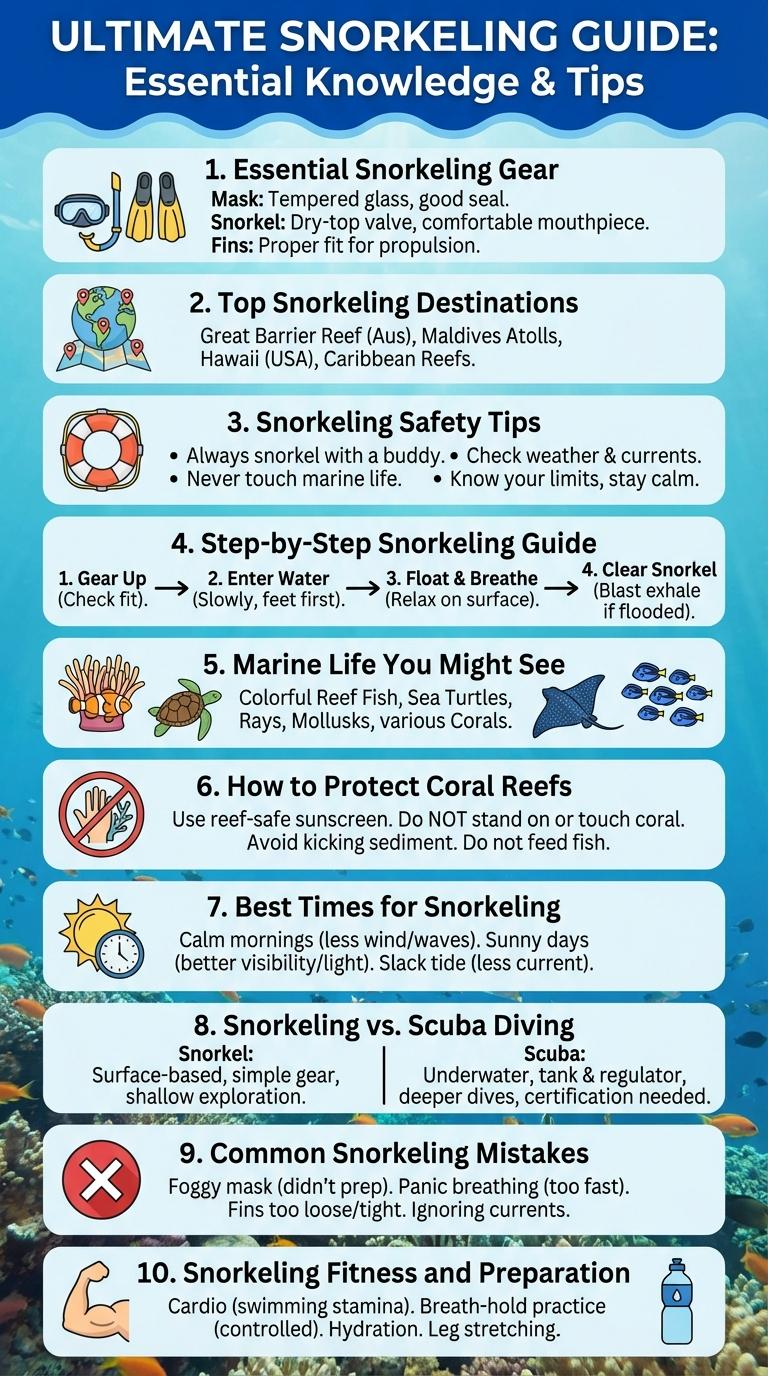
Snorkeling offers an accessible way to explore vibrant underwater ecosystems and encounter diverse marine life. This infographic highlights essential tips, safety guidelines, and must-have gear to maximize your snorkeling experience. Whether you're a beginner or seasoned snorkeler, understanding key techniques ensures safe and enjoyable underwater adventures.
Essential Snorkeling Gear
What gear is essential for a safe and enjoyable snorkeling experience? Proper snorkeling equipment enhances comfort and safety while exploring underwater. Essential gear includes a mask, snorkel, fins, a wetsuit, and a snorkeling vest.
| Gear | Purpose |
| Mask | Provides clear underwater vision by creating an air pocket over the eyes. |
| Snorkel | Allows breathing at the surface without lifting the head out of the water. |
| Fins | Enhance swimming efficiency and reduce fatigue. |
| Wetsuit | Keeps the body warm and protects against marine life and sun exposure. |
| Snorkeling Vest | Offers buoyancy and extra safety for beginners and long sessions. |
Top Snorkeling Destinations
Snorkeling offers an incredible way to explore vibrant underwater worlds close to shore. Top snorkeling destinations provide crystal-clear waters, diverse marine life, and stunning coral reefs.
- Great Barrier Reef, Australia - The world's largest coral reef system features over 1,500 species of fish and vibrant coral formations.
- Bonaire, Caribbean - Known for its pristine reefs and marine parks, this island offers easy shore access and abundant marine biodiversity.
- Maui, Hawaii - Home to Molokini Crater, Maui offers clear waters and diverse sea turtles, colorful fish, and volcanic reef landscapes.
Snorkeling Safety Tips
Snorkeling safety begins with wearing a properly fitted mask and snorkel to ensure clear vision and easy breathing. Always snorkel with a buddy and stay close to the shore or boat to avoid strong currents. Protect yourself from the sun by applying waterproof sunscreen and wearing a rash guard for extended exposure in tropical waters.
Step-by-Step Snorkeling Guide
Snorkeling offers an immersive way to explore underwater ecosystems with ease and safety. Essential gear includes a mask, snorkel, and fins, ensuring clear vision and effortless swimming. Follow safety guidelines and choose calm waters to maximize your snorkeling experience.
| Step | Description |
|---|---|
| 1. Gear Up | Wear a properly fitting mask, snorkel, and fins to prepare for underwater exploration. |
| 2. Enter Water | Enter slowly in shallow water to adjust your equipment and breathing. |
| 3. Float and Breathe | Relax on the surface, breathe through the snorkel, and keep your face submerged. |
| 4. Explore | Use fins for gentle propulsion and observe marine life without disturbing the environment. |
| 5. Exit Safely | Return to shore carefully and remove gear only when in shallow or safe areas. |
Marine Life You Might See
Snorkeling offers a unique glimpse into vibrant underwater ecosystems. Exploring shallow reefs reveals an array of colorful marine life.
Common sightings include tropical fish such as parrotfish, angelfish, and clownfish. Sea turtles gracefully glide through the water, often near coral formations. Brightly patterned sea stars and curious sea urchins add to the underwater spectacle.
How to Protect Coral Reefs
Snorkeling offers an incredible way to explore vibrant coral reefs while appreciating marine biodiversity. Protecting these delicate ecosystems is essential for maintaining ocean health and supporting aquatic life.
- Avoid Touching Corals - Physical contact can damage coral polyps and disrupt growth.
- Use Reef-Safe Sunscreen - Chemicals in some sunscreens harm coral reefs and marine organisms.
- Maintain Proper Buoyancy - Prevent accidental contact by controlling your swimming depth and position.
Responsible snorkeling practices help preserve coral reefs for future generations and sustain marine ecosystems.
Best Times for Snorkeling
Snorkeling offers an amazing underwater experience, with certain times providing clearer waters and abundant marine life. Knowing the best times for snorkeling enhances safety and visibility, making each excursion more enjoyable.
- Morning Hours - Early mornings typically feature calm seas and excellent visibility due to lower wind and wave activity.
- Seasonal Timing - Dry seasons in tropical regions offer clearer water conditions and greater marine biodiversity for snorkeling.
- Lunar Phases - Snorkeling during new moon phases can provide darker nights and minimal tidal currents, improving underwater exploration.
Snorkeling vs. Scuba Diving
| Aspect | Snorkeling |
|---|---|
| Equipment | Mask, snorkel, fins |
| Depth | Surface or shallow waters (up to 5 meters) |
| Training Required | No formal training needed |
| Experience Level | Suitable for beginners and all ages |
| Cost | Low cost, minimal equipment |
| Aspect | Scuba Diving |
|---|---|
| Equipment | Mask, regulator, tank, buoyancy control device (BCD), fins |
| Depth | Varies, typically 10 to 40 meters or more |
| Training Required | Certification and formal training mandatory |
| Experience Level | Recommended for trained divers; higher skill level |
| Cost | Higher cost due to equipment and training fees |
Common Snorkeling Mistakes
Snorkeling is a popular water activity that allows individuals to explore underwater life with ease. Many beginners make common mistakes that can affect their experience and safety.
One frequent mistake is improper mask fitting, which can cause water leakage and discomfort. Another is incorrect breathing technique, where beginners tend to panic or breathe too quickly through the snorkel.