
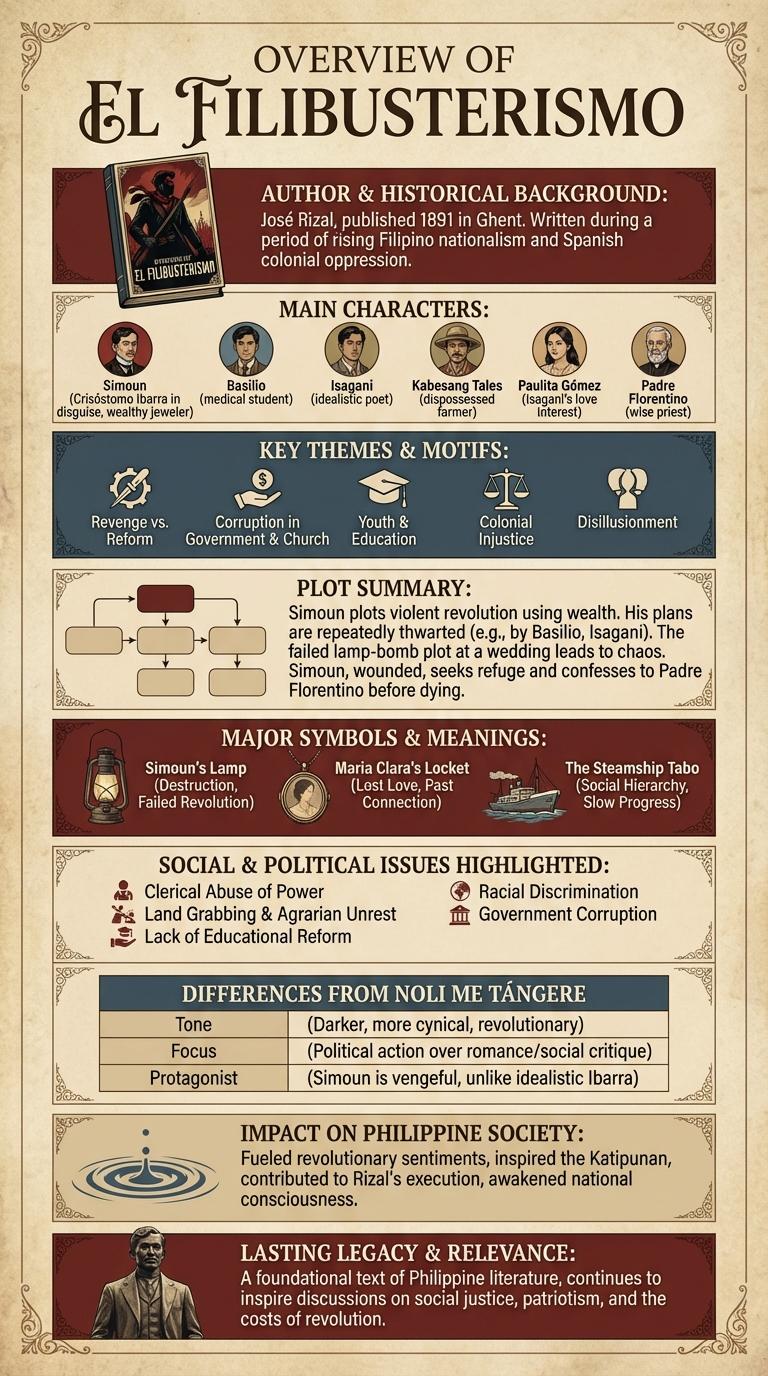
El Filibusterismo, a novel by Jose Rizal, exposes the deep social injustices and corruption during Spanish colonial rule in the Philippines. This infographic highlights key characters, major themes, and historical context, providing a concise visual summary of the story's impact and significance. Readers gain insight into the revolutionary spirit that fuels the narrative and its call for reform.
Overview of El Filibusterismo
| Title | El Filibusterismo |
| Author | Jose Rizal |
| Publication Year | 1891 |
| Genre | Political Novel, Historical Fiction |
| Main Theme | Revolution against Spanish colonization and social injustice |
Author and Historical Background
"El Filibusterismo" is a novel written by Filipino author Jose Rizal. It was published in 1891 as a sequel to his first novel, "Noli Me Tangere."
The book reflects the social and political issues during the Spanish colonial period in the Philippines.
- Author - Jose Rizal, a Filipino nationalist and reformist, authored "El Filibusterismo" to expose corruption and abuses under Spanish rule.
- Publication Date - The novel was published in 1891 in Ghent, Belgium, amid rising Filipino calls for reform.
- Historical Context - Written during the late 19th century, the novel critiques the Spanish colonial government and the friarocracy's influence in the Philippines.
Main Characters
Who are the main characters in "El Filibusterismo"? The novel features key figures such as Simoun, a wealthy jeweler seeking revenge, and Basilio, a dedicated medical student. Other important characters include Isagani, a passionate poet, and Juli, who represents innocence and sacrifice in the story.
Key Themes and Motifs
El Filibusterismo, written by Jose Rizal, explores themes of social injustice, corruption, and the fight for reform in the Philippines during Spanish colonization. The novel highlights the consequences of oppression and the desire for freedom among Filipinos.
Key motifs include betrayal, revenge, and sacrifice, which emphasize the complexities of the characters' struggles. Symbolism such as the lamp and the river represents enlightenment and the flow of change, respectively, throughout the narrative.
Plot Summary
El Filibusterismo, written by Jose Rizal, follows the story of Simoun, a wealthy jeweler who seeks to ignite a revolution against Spanish colonial rule in the Philippines. Disguised and driven by revenge, Simoun manipulates the corrupt authorities and attempts to engineer a violent uprising. The novel explores themes of social injustice, corruption, and the struggle for freedom under oppressive colonial power.
Major Symbols and Their Meanings
El Filibusterismo, written by Jose Rizal, is a novel rich with symbols that convey deeper meanings about Filipino society under Spanish colonial rule. These symbols reflect the themes of oppression, corruption, and the quest for justice.
The Gem symbolizes wealth and power, representing the greed and moral decay among the colonial elites. The Darkness signifies ignorance and despair prevailing in the oppressed Filipino masses.
The Basbas or blessing symbolizes false piety and the manipulation of religion to control people. The Boat represents the journey toward revolution and the turbulent path to freedom.
The Letters in the story symbolize communication and the spread of revolutionary ideas. The Forest portrays a place of refuge and resistance, contrasting with the corruption in the towns.
Social and Political Issues Highlighted
El Filibusterismo by Jose Rizal exposes the widespread corruption and abuse of power by colonial authorities in the Philippines. The novel highlights social inequality, showing the suffering of the oppressed Filipino masses under the Spanish regime. It criticizes the failure of the church and government to deliver justice, sparking calls for reform and resistance.
Differences from Noli Me Tángere
El Filibusterismo is the darker, more revolutionary sequel to Noli Me Tangere, both written by Jose Rizal. It reflects a shift from reformist ideals to a call for radical change, emphasizing the fight against colonial oppression.
The following highlights key differences between El Filibusterismo and Noli Me Tangere:
- Tone and Theme - El Filibusterismo adopts a darker, more revolutionary tone compared to the reformist and satirical nature of Noli Me Tangere.
- Main Character Focus - The protagonist changes from Crisostomo Ibarra in Noli Me Tangere to his alter ego, Simoun, in El Filibusterismo, who seeks vengeance through radical means.
- Setting and Atmosphere - Noli Me Tangere depicts a more idyllic provincial setting, while El Filibusterismo is set largely in Manila, reflecting urban corruption and unrest.
- Political Message - Noli Me Tangere promotes reform and peaceful change, whereas El Filibusterismo underscores revolution and social upheaval.
- Character Development - Characters in El Filibusterismo exhibit deeper cynicism and despair in contrast to the hope and idealism seen in Noli Me Tangere.
Impact on Philippine Society
El Filibusterismo, written by Jose Rizal, significantly influenced Philippine society by inspiring nationalist movements and fostering a sense of identity. The novel exposed social injustices and ignited calls for reform and independence from colonial rule.
- Ignited Filipino Nationalism - The novel strengthened the collective Filipino identity against Spanish tyranny.
- Exposed Social Injustices - Highlighted corruption and abuse by colonial authorities and clergy.
- Inspired Reform Movements - Motivated the Propaganda Movement and later the Philippine Revolution.
El Filibusterismo remains a foundational work in understanding the socio-political awakening of the Philippines during the late 19th century.