
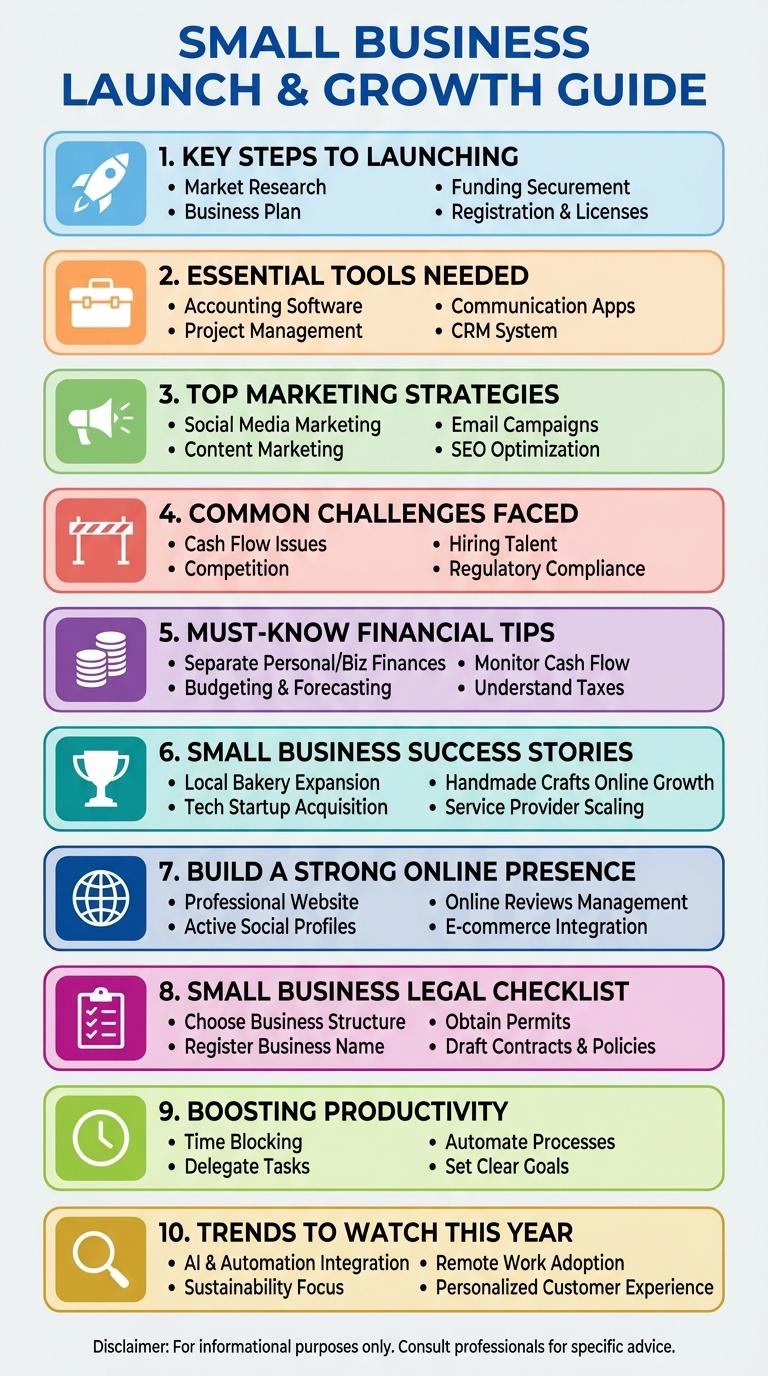
Small businesses drive economic growth and foster community connections. Infographics visually represent key data, making complex information about small business trends and challenges easy to understand. This powerful tool highlights vital statistics and insights to support entrepreneurs and guide informed decision-making.
Key Steps to Launching a Small Business
Starting a small business requires careful planning and strategic execution. Following key steps ensures a strong foundation for success.
- Conduct Market Research - Analyze industry trends and customer needs to identify viable business opportunities.
- Create a Business Plan - Develop a detailed roadmap outlining your business goals, strategies, and financial projections.
- Register Your Business - Choose a business structure and complete necessary legal registrations to operate officially.
- Secure Financing - Explore funding options such as loans, investors, or personal savings to support startup costs.
- Launch Marketing Efforts - Implement targeted promotions to attract and retain customers effectively.
Essential Tools Every Small Business Needs
What essential tools does every small business need to operate efficiently? Small businesses require a combination of digital and physical tools to streamline operations and enhance productivity. Key essentials include accounting software, customer relationship management (CRM) systems, and communication platforms.
How can accounting software benefit small businesses? It automates financial tracking, simplifies tax preparation, and provides real-time financial insights. Popular tools include QuickBooks, Xero, and FreshBooks.
Why is a Customer Relationship Management (CRM) system important? CRMs help manage customer interactions, improve sales processes, and enhance customer service. Tools like HubSpot, Salesforce, and Zoho CRM are widely used by small businesses.
What role do communication platforms play in small business success? Effective communication tools enable team collaboration, remote work, and client engagement. Slack, Microsoft Teams, and Zoom are top choices for business communication.
Which physical tools support daily small business operations? Reliable hardware like computers, printers, and POS systems are vital for productivity and customer transactions. Investing in quality devices ensures smoother business workflows and customer satisfaction.
Top Marketing Strategies for Small Businesses
Small businesses thrive by implementing targeted marketing strategies that boost visibility and engagement. Utilizing social media platforms, email marketing, and local SEO helps attract and retain customers effectively. Consistent branding and customer feedback integration further enhance growth and brand loyalty.
Common Challenges Faced by Small Businesses
Small businesses play a crucial role in the global economy but often face significant hurdles. Understanding these common challenges helps entrepreneurs prepare and adapt effectively.
Cash flow management remains one of the most critical issues, affecting daily operations and growth potential. Limited access to capital and financing options restricts expansion and innovation. Additionally, small businesses struggle with marketing, competition from larger companies, and regulatory compliance.
Must-Know Financial Tips for Small Business Owners
| Financial Tip | Key Details |
|---|---|
| Maintain Accurate Records | Track all income, expenses, and receipts using accounting software for clear financial insights and easier tax filing. |
| Separate Personal and Business Finances | Open a dedicated business bank account and credit card to avoid confusion and simplify bookkeeping. |
| Budget for Taxes | Set aside 20-30% of profits for federal, state, and local taxes to prevent unexpected liabilities. |
| Monitor Cash Flow Regularly | Review cash flow statements monthly to ensure enough liquidity for operations and investments. |
| Invest in Professional Advice | Consult accountants or financial advisors to optimize tax strategies and improve financial planning. |
Small Business Success Stories
Small business success stories highlight the inspiring journeys of entrepreneurs who turned innovative ideas into thriving enterprises. These stories demonstrate the power of resilience, creativity, and strong community support in achieving business growth.
Entrepreneurs often overcome significant challenges such as funding shortages, market competition, and operational hurdles to build successful brands. Showcasing these achievements motivates aspiring small business owners to pursue their goals with confidence and determination.
How to Build a Strong Online Presence
Building a strong online presence is essential for small business growth and customer engagement. Effective digital strategies increase visibility and drive sales.
- Develop a professional website - Your website serves as the foundation of your online identity and should be user-friendly and mobile-responsive.
- Leverage social media platforms - Engage with your target audience through consistent, relevant content on platforms like Facebook, Instagram, and LinkedIn.
- Optimize for search engines (SEO) - Use targeted keywords and quality content to improve your website's ranking and attract organic traffic.
Consistent online branding and quality customer interactions build trust and foster loyalty in the competitive digital marketplace.
Small Business Legal Checklist
Starting a small business requires careful attention to legal requirements. A comprehensive Small Business Legal Checklist ensures compliance and protects your company from potential risks.
Key areas include business structure selection, registration, permits, contracts, and intellectual property. Following this checklist helps maintain smooth operations and legal security.
Boosting Productivity in Your Small Business
Boosting productivity in your small business involves efficient time management, streamlined workflows, and leveraging technology to automate repetitive tasks. Prioritizing critical activities and setting clear goals enhances employee focus and output. Investing in training and using project management tools can drive sustained growth and operational excellence.