
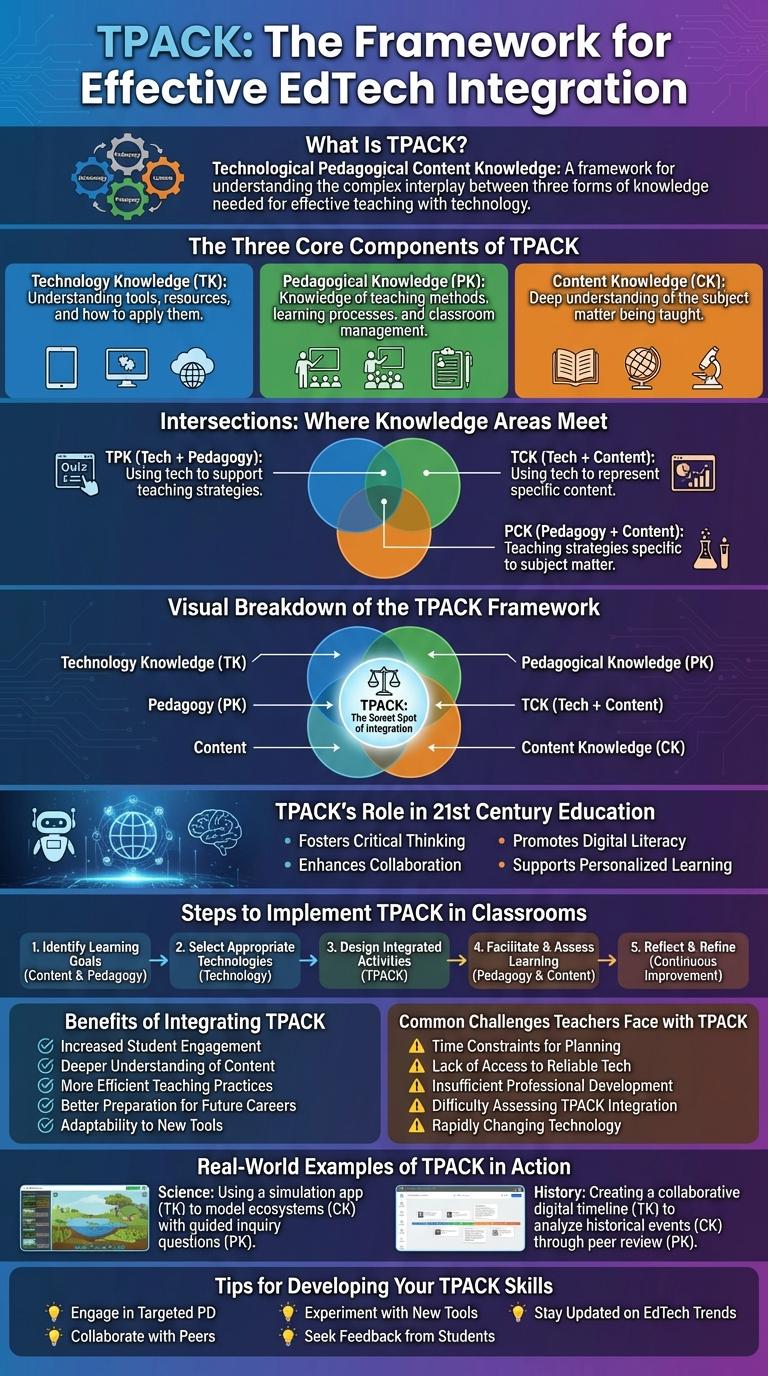
TPACK integrates technological knowledge with pedagogy and content expertise, enhancing teaching effectiveness in digital classrooms. This infographic visually breaks down the components of Technological Pedagogical Content Knowledge, highlighting how these intersect to support innovative instructional strategies. Understanding TPACK fosters the creation of engaging, technology-rich learning experiences tailored to diverse educational settings.
What Is TPACK?
The Technological Pedagogical Content Knowledge (TPACK) framework integrates technology with teaching and subject content. It helps educators design effective, technology-enhanced learning experiences.
TPACK emphasizes the intersection of three core knowledge areas: technology, pedagogy, and content. Mastery in all areas supports innovative and impactful instruction.
The Three Core Components of TPACK
The Three Core Components of TPACK are Technological Knowledge (TK), Pedagogical Knowledge (PK), and Content Knowledge (CK). TK involves understanding and using technology tools effectively within educational contexts. PK refers to the methods and practices of teaching, while CK focuses on the subject matter expertise needed to deliver content accurately and meaningfully.
Intersections: Where Knowledge Areas Meet
The TPACK framework highlights the integration of three primary knowledge areas essential for effective teaching with technology: Content Knowledge, Pedagogical Knowledge, and Technological Knowledge. Understanding the intersections of these areas reveals how they combine to enhance educational practices and student learning.
- Technological Content Knowledge (TCK) - Understanding how technology relates to specific subject content and how it can represent or enhance that content.
- Pedagogical Content Knowledge (PCK) - Knowing how to teach particular content effectively using appropriate instructional strategies.
- Technological Pedagogical Knowledge (TPK) - Awareness of how teaching and learning can change through the integration of technology.
The center of the TPACK model, where all three knowledge areas intersect, represents comprehensive teaching expertise that blends content, pedagogy, and technology seamlessly.
Visual Breakdown of the TPACK Framework
The TPACK framework integrates technology, pedagogy, and content knowledge to enhance teaching effectiveness. It emphasizes the intersection of these three essential components for meaningful learning experiences.
At the core, TPACK combines Technological Knowledge (TK), Pedagogical Knowledge (PK), and Content Knowledge (CK). The framework highlights how these knowledge areas overlap to support educators in designing technology-rich lessons. Visual infographics often use Venn diagrams to clearly showcase the dynamic interplay among these components.
TPACK's Role in 21st Century Education
What is TPACK, and why does it matter in 21st century education?
TPACK stands for Technological Pedagogical Content Knowledge, a framework that integrates technology with pedagogy and content knowledge. It helps educators design effective, modern learning experiences that prepare students for today's digital world.
How does TPACK enhance teaching effectiveness in modern classrooms?
By combining technological tools with subject expertise and teaching methods, TPACK enables personalized and engaging lessons. This integration supports critical thinking, collaboration, and creativity in students.
Which core knowledge areas compose the TPACK framework?
The framework involves three intersecting knowledge domains: Content Knowledge (CK), Pedagogical Knowledge (PK), and Technological Knowledge (TK). Their intersection creates a comprehensive approach to teaching with technology.
What challenges does TPACK address in 21st century learning environments?
TPACK helps teachers overcome gaps in integrating digital tools meaningfully rather than superficially. It ensures technology use aligns with curricular goals and learner needs for deeper understanding.
| TPACK Domain | Description |
|---|---|
| Content Knowledge (CK) | Subject matter expertise necessary for teaching specific disciplines. |
| Pedagogical Knowledge (PK) | Understanding of teaching methods and student learning processes. |
| Technological Knowledge (TK) | Proficiency in using digital tools and technologies effectively. |
| TPACK | Integration of CK, PK, and TK to optimize teaching and learning outcomes. |
What impact does TPACK have on student outcomes in the digital age?
TPACK fosters innovative instructional strategies that increase engagement and adapt to diverse learner profiles. It prepares students with 21st century skills critical for their academic and career success.
Steps to Implement TPACK in Classrooms
| Step | Description |
|---|---|
| 1. Identify Content Knowledge (CK) | Determine subject-specific concepts and facts essential for the lesson. |
| 2. Analyze Pedagogical Knowledge (PK) | Choose teaching strategies aligned with students' learning styles and objectives. |
| 3. Evaluate Technological Knowledge (TK) | Select appropriate digital tools and resources that enhance understanding and engagement. |
| 4. Integrate TPACK Principles | Blend content, pedagogy, and technology in lesson planning to create cohesive learning experiences. |
| 5. Reflect and Adapt | Assess student outcomes and refine the use of TPACK for continuous improvement. |
Benefits of Integrating TPACK
Integrating TPACK enhances teaching by combining technological, pedagogical, and content knowledge, leading to more effective and engaging learning experiences. It empowers educators to design lessons that cater to diverse student needs using appropriate technology tools.
TPACK fosters critical thinking and creativity among students by promoting interactive and collaborative learning environments. Teachers become more adaptable and confident in using digital resources, improving overall educational outcomes.
Common Challenges Teachers Face with TPACK
Teachers often struggle with integrating technology effectively alongside pedagogy and content knowledge within the TPACK framework. Many face difficulties in selecting appropriate digital tools that align with both curriculum goals and student needs. Time constraints and lack of professional development further hinder educators from fully mastering TPACK principles.
Real-World Examples of TPACK in Action
The TPACK framework integrates technology, pedagogy, and content knowledge to enhance teaching effectiveness. Real-world applications demonstrate its impact on student engagement and learning outcomes.
Educators use TPACK to design lessons that combine digital tools with subject expertise for deeper understanding.
- Interactive Science Simulations - Teachers apply TPACK by utilizing online labs to illustrate complex scientific concepts, improving student comprehension.
- Flipped Classroom Models - Instructors leverage educational videos and interactive platforms to provide content outside class, freeing time for active learning strategies.
- Mathematics Problem-Solving Apps - Educators integrate apps that adapt to student skill levels, fostering personalized learning within curriculum standards.