
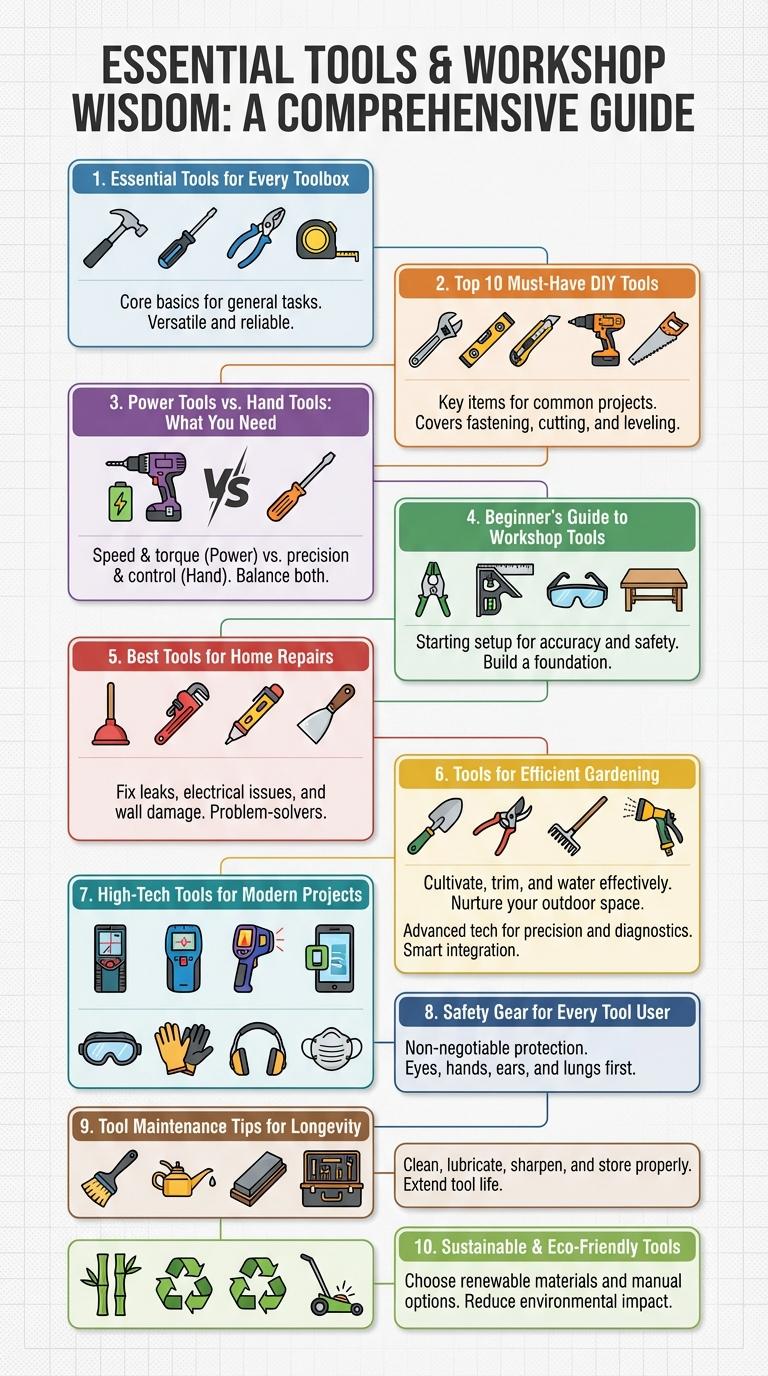
Infographics about tools visually simplify complex information, making it easier to understand different types and their uses. They highlight key features, benefits, and applications, enhancing quick reference and learning. This approach supports efficient decision-making and skill development for professionals and hobbyists alike.
Essential Tools for Every Toolbox
Every household and professional workspace needs a well-stocked toolbox to tackle a variety of tasks. Essential tools ensure efficiency, safety, and precision during projects.
- Hammer - A fundamental tool used for driving nails and general construction work.
- Screwdriver Set - Versatile tools designed for driving screws in different materials and sizes.
- Measuring Tape - Crucial for accurate measurements in woodworking, plumbing, and home repairs.
- Adjustable Wrench - Used to tighten or loosen nuts and bolts of various sizes.
- Pliers - Handy for gripping, twisting, and cutting wires or small hardware components.
A toolbox stocked with these essential tools supports both basic repairs and complex projects efficiently.
Top 10 Must-Have DIY Tools
Having the right tools is essential for any DIY project, ensuring efficiency and quality results. These top 10 must-have DIY tools cover a broad range of basic tasks around the home.
- Claw Hammer - A versatile tool perfect for driving and removing nails in woodworking and home repairs.
- Screwdriver Set - Essential for assembling, tightening, or loosening screws of various types and sizes.
- Measuring Tape - Provides accurate measurements for precise cutting and fitting in projects.
- Adjustable Wrench - Useful for gripping and turning nuts and bolts of different sizes without needing multiple wrenches.
- Utility Knife - Ideal for cutting materials like cardboard, drywall, and plastic with ease and precision.
- Level - Ensures surfaces and installations are perfectly horizontal or vertical.
- Power Drill - Speeds up drilling holes and driving screws, compatible with various drill bits and attachments.
- Pliers - Provides gripping, bending, and cutting capabilities for wires and small objects.
- Handsaw - Allows controlled cutting of wood and other materials without power tools.
- Safety Gear - Includes gloves, goggles, and ear protection to maintain safety during all DIY tasks.
Power Tools vs. Hand Tools: What You Need
Power tools and hand tools both play essential roles in completing various projects efficiently. Understanding their differences helps in choosing the right tool for specific tasks.
Power tools run on electricity or batteries, offering speed and ease for heavy-duty work like drilling, cutting, and sanding. Hand tools rely on manual effort, providing precision and control for detailed tasks such as measuring, tightening, and shaping. Selecting between power and hand tools depends on the project's complexity, required accuracy, and work environment.
Beginner's Guide to Workshop Tools
| Tool | Description |
|---|---|
| Hammer | Basic tool used for driving nails and fitting parts. |
| Screwdriver | Essential for driving screws into various materials. |
| Measuring Tape | Accurate measurement tool for length and distance. |
| Utility Knife | Multipurpose cutting tool suitable for different materials. |
| Clamps | Used to hold objects securely while working. |
Best Tools for Home Repairs
Discover the best tools for home repairs that ensure efficiency and durability. Essential items include a versatile hammer, an adjustable wrench, a reliable screwdriver set, a sturdy tape measure, and a high-quality cordless drill. Using these tools simplifies tasks such as fixing leaks, assembling furniture, and performing electrical repairs.
Tools for Efficient Gardening
Efficient gardening relies heavily on the right tools to save time and effort. Essential gardening tools include pruners for precise cutting, trowels for planting, and watering cans for effective hydration. Using ergonomic and durable tools enhances productivity and promotes a healthier garden.
High-Tech Tools for Modern Projects
High-tech tools revolutionize modern projects by enhancing efficiency and precision. These advanced instruments integrate cutting-edge technology to streamline workflows and improve outcomes.
From AI-powered software to IoT devices, these tools provide real-time data and analytics. Industry leaders rely on these innovations to drive project success and maintain competitive advantages.
Safety Gear for Every Tool User
What essential safety gear should every tool user wear? Proper safety gear minimizes the risk of accidents and injuries while using tools. Safety equipment includes protective eyewear, gloves, hearing protection, and sturdy footwear to ensure maximum protection.
Why is eye protection crucial when using power tools? Flying debris and sparks can cause serious eye injuries. Safety goggles or face shields protect against these hazards and improve overall visibility during tool operation.
How do gloves contribute to tool user safety? Gloves guard hands from cuts, abrasions, and vibrations. Selecting the right gloves depends on the specific tool and task being performed.
What role does hearing protection play in tool safety? Prolonged exposure to loud tool noise can damage hearing permanently. Earplugs or earmuffs reduce noise levels and protect auditory health.
Which footwear is recommended for tool users to ensure safety? Steel-toe boots or shoes provide protection from heavy falling objects and sharp debris. Slip-resistant soles help maintain balance and prevent falls in cluttered workspaces.
Tool Maintenance Tips for Longevity
Proper tool maintenance ensures durability and optimal performance. Regular cleaning and sharpening extend the lifespan of your tools.
Store tools in a dry, organized space to prevent rust and damage. Inspect tools frequently for wear and perform timely repairs to maintain safety and efficiency.