
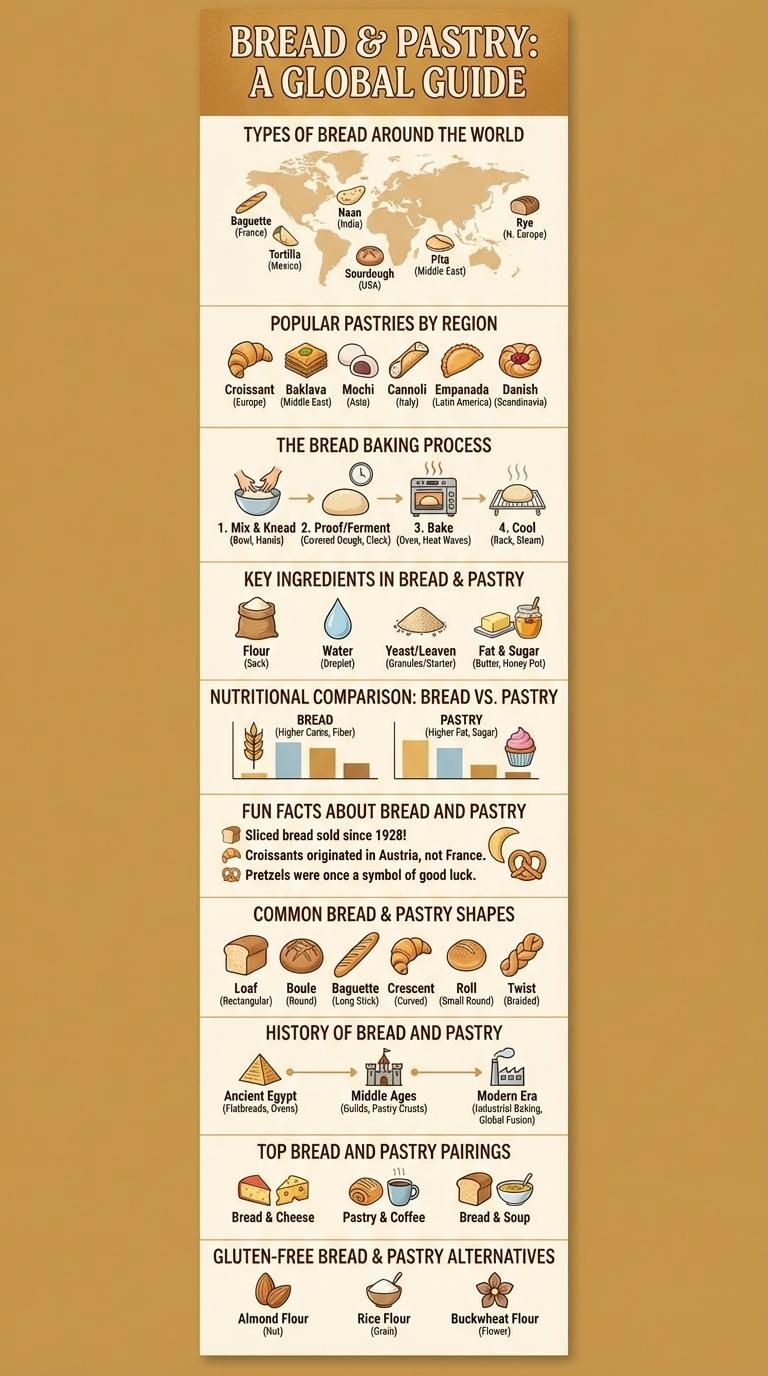
Bread and pastries are staples in diets worldwide, each offering unique textures and flavors that delight the senses. Exploring their ingredients, baking techniques, and cultural significance reveals the artistry behind these beloved foods. Infographics visually present this information, making the complex processes accessible and engaging for all audiences.
Types of Bread Around the World
What are some popular types of bread around the world? Bread varies greatly by region, each with unique flavors and preparation methods. Many cultures have signature bread that reflect their culinary heritage.
| Type of Bread | Region |
|---|---|
| Baguette | France |
| Naan | India |
| Sourdough | United States |
| Ciabatta | Italy |
| Rye Bread | Eastern Europe |
How do bread types reflect cultural traditions? Ingredients and baking techniques vary due to regional climates and available resources. These breads are often staples in local diets and hold cultural significance.
Popular Pastries By Region
Bread and pastries form an essential part of culinary traditions worldwide. Each region boasts unique popular pastries that reflect local flavors and ingredients.
In Europe, croissants dominate the breakfast scene, especially in France, while Italy is famous for its cannoli filled with sweet ricotta. In Asia, Japan's melon pan and China's egg tarts showcase diverse textures and tastes. Latin America offers delights like Argentina's medialunas and Mexico's conchas, combining sweet dough with distinctive toppings.
The Bread Baking Process
Bread baking involves a series of precise steps that transform basic ingredients into delicious, aromatic loaves. Understanding the bread baking process enhances both baking skills and final product quality.
- Mixing Ingredients - Flour, water, yeast, and salt are combined to form a homogenous dough.
- Kneading Dough - The dough is worked to develop gluten, giving bread structure and elasticity.
- Fermentation - Yeast ferments the dough, producing carbon dioxide that causes the dough to rise.
- Shaping and Proofing - Dough is shaped into loaves and proofed to allow further fermentation and volume increase.
- Baking - Heat in the oven sets the bread's structure and forms a crust through Maillard reactions.
Key Ingredients in Bread & Pastry
Bread and pastry rely on fundamental ingredients that influence texture, flavor, and appearance. Understanding these key components helps in perfecting baking techniques and outcomes.
- Flour - Provides the structure and base, mainly composed of gluten-forming proteins essential for dough elasticity.
- Yeast - Acts as a leavening agent by fermenting sugars and producing carbon dioxide to make bread rise.
- Butter - Adds richness and moisture, crucial for tender and flaky pastry layers.
- Sugar - Enhances flavor, encourages yeast fermentation, and aids in browning during baking.
- Water or Milk - Hydrates the dry ingredients, initiates gluten development, and influences dough consistency.
Mastering these vital ingredients ensures delicious and well-textured bread and pastry products.
Nutritional Comparison: Bread vs. Pastry
Bread and pastry differ significantly in their nutritional content. Bread is typically lower in sugar and fat, making it a healthier staple option.
Pastries contain higher levels of sugar, butter, and calories due to added ingredients like sugar, cream, and butter. This results in pastries being more energy-dense but less nutrient-balanced than bread.
Fun Facts About Bread and Pastry
| Fun Fact | Details |
|---|---|
| Oldest Bread Ever Found | Bread crumbs discovered in Northern Jordan date back over 14,000 years, predating agriculture. |
| World's Largest Croissant | Created in Italy in 2019, it weighed over 120 kilograms (265 pounds). |
| Sourdough's Unique Microorganisms | Sourdough bread relies on wild yeast and lactobacilli for natural fermentation. |
| Baguette Regulations | In France, true baguettes must be made with only flour, water, yeast, and salt. |
| Pastries and Royalty | Croissants are believed to originate in Austria, symbolizing victory over Ottoman forces. |
Common Bread & Pastry Shapes
Bread and pastry come in various shapes that influence texture, baking time, and presentation. Recognizing common shapes helps in selecting the right kind for different culinary uses.
- Round Loaf - Classic circular shape often used for rustic breads like boule and sourdough.
- Baguette - Long, thin shape with a crispy crust, typical of French bread.
- Braided Bread - Interwoven strands that create an attractive woven appearance and soft texture, commonly seen in challah.
- Croissant Shape - Crescent form with layered puff pastry known for its flaky and buttery texture.
- Twisted Pastry - Spiral or twisted shapes that enhance flakiness and visual appeal, popular in Danish pastries.
History of Bread and Pastry
Bread and pastry have been essential food staples for thousands of years, tracing back to ancient civilizations like Mesopotamia and Egypt. Early bread was made from ground grains mixed with water and baked on hot stones, while pastries evolved later with the addition of fats and sugars. These baked goods have diversified globally, reflecting cultural traditions and technological advancements in baking.
Top Bread and Pastry Pairings
Bread and pastry pairings enhance the flavors and textures of both components, creating a delightful culinary experience. Choosing the right combinations can elevate simple snacks into gourmet treats.
Classic pairings include crusty baguettes with creamy brie and buttery croissants with rich chocolate. These combinations balance savory and sweet elements, making every bite satisfying.