
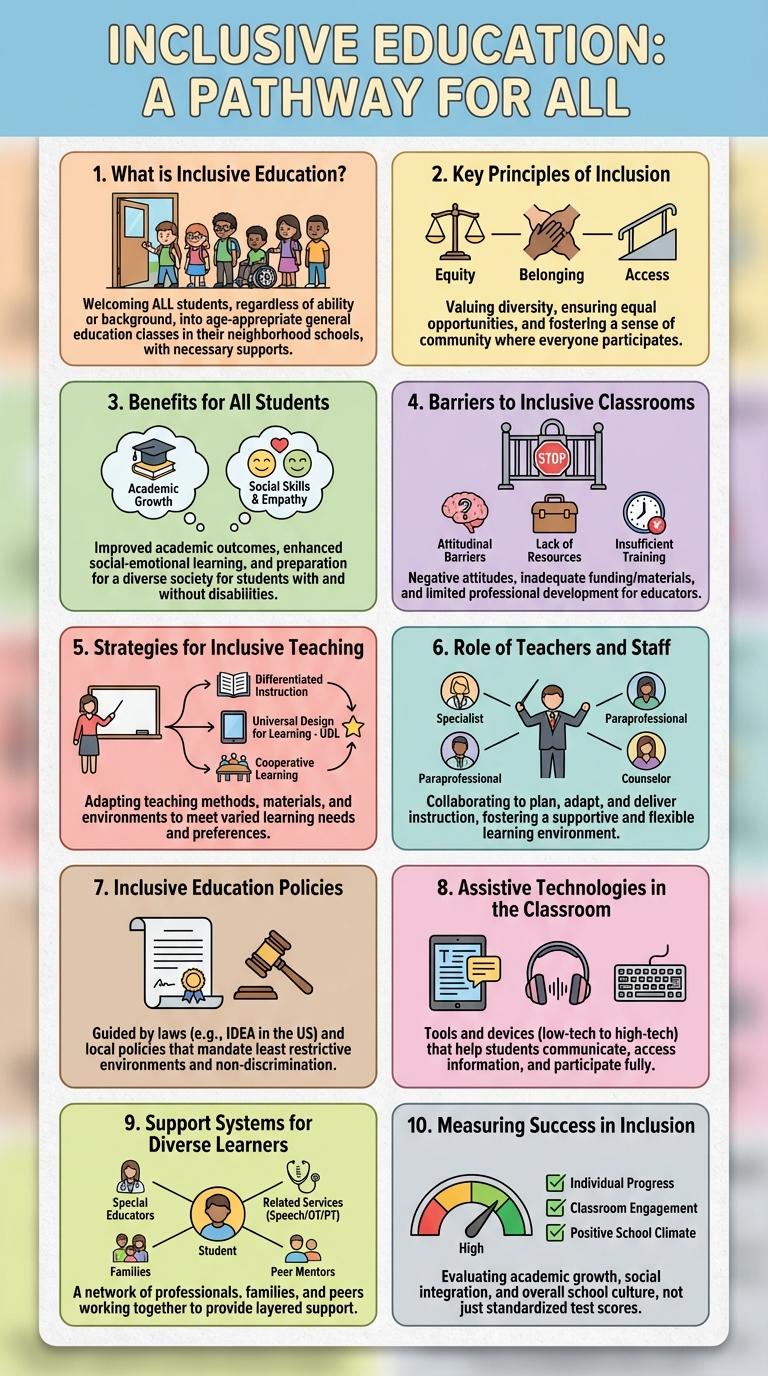
Inclusive education fosters learning environments that accommodate diverse student needs, promoting equal access to quality education for all. Infographics can visually represent key principles, benefits, and strategies of inclusive education to enhance understanding and awareness. Clear, concise visuals support educators, parents, and policymakers in implementing more effective and empathetic educational practices.
What is Inclusive Education?
Inclusive education is an approach that ensures all students, regardless of their abilities or backgrounds, learn together in the same environment. It promotes equal access to quality education for every child.
This method supports diverse learning needs by adapting teaching strategies and resources. It fosters acceptance, reduces discrimination, and encourages social interaction among students. Inclusive education benefits academic performance and personal growth for all learners.
Key Principles of Inclusion
Inclusive education embraces diversity and ensures equitable learning opportunities for all students regardless of their abilities or backgrounds.
It promotes a supportive environment where every learner can thrive academically, socially, and emotionally.
- Access - Ensures all students have opportunities to participate fully in the educational process.
- Participation - Encourages active engagement of all learners in classroom activities and decision-making.
- Support - Provides tailored resources and assistance to meet individual student needs.
Inclusive education fosters respect, understanding, and collaboration among students, educators, and communities.
Benefits for All Students
Why is inclusive education beneficial for all students? Inclusive education fosters a learning environment where diversity is valued and respected. It promotes social skills, empathy, and collaboration among students with different abilities and backgrounds.
How does inclusive education impact academic outcomes? Students in inclusive settings often show improved academic performance due to differentiated instruction and peer support. This approach encourages higher engagement and motivation across the classroom.
What role does inclusive education play in reducing stigma? Inclusive classrooms help break down stereotypes and misconceptions about disabilities. Students develop greater understanding and acceptance, which builds a positive school culture.
How does inclusive education prepare students for the future? Exposure to diverse peers equips students with essential life skills for real-world scenarios and workplaces. It enhances communication, adaptability, and problem-solving skills.
Why should schools invest in inclusive education? Inclusive education supports equity by ensuring all students have access to quality education. It creates a more supportive, dynamic, and innovative learning environment for everyone.
Barriers to Inclusive Classrooms
Inclusive classrooms face barriers such as lack of adequate teacher training, limited resources, and insufficient infrastructure. These challenges hinder the effective integration of students with diverse learning needs. Overcoming these obstacles is essential to create supportive and accessible learning environments for all students.
Strategies for Inclusive Teaching
| Strategy | Description |
|---|---|
| Differentiated Instruction | Tailor teaching methods and materials to accommodate diverse learning styles and abilities. |
| Universal Design for Learning (UDL) | Implement flexible approaches to learning that provide multiple means of representation, engagement, and expression. |
| Collaborative Learning | Encourage group activities that promote peer support and social interaction among students of varying abilities. |
| Use of Assistive Technology | Incorporate tools and devices that support students with disabilities in accessing the curriculum effectively. |
| Positive Behavior Support | Establish clear expectations and reinforce positive behaviors to create an inclusive and respectful classroom environment. |
Role of Teachers and Staff
Teachers and staff play a crucial role in fostering an inclusive education environment by adapting teaching methods to meet diverse student needs. Their commitment to creating accessible learning experiences ensures all students feel valued and supported.
Professional development and collaboration among educators enhance their ability to address various learning styles and challenges. Inclusive education thrives when teachers and staff work together to promote equity and respect in the classroom.
Inclusive Education Policies
Inclusive education policies ensure all students, regardless of background or ability, have equal access to quality learning environments. These policies promote diversity, equity, and support tailored resources for every learner.
- Legislation Mandates Inclusion - Laws like the Individuals with Disabilities Education Act (IDEA) require schools to provide inclusive settings for students with disabilities.
- Universal Design for Learning (UDL) - Policies encourage UDL to create flexible curricula that accommodate diverse learning styles and needs.
- Teacher Training Programs - Inclusive education policies emphasize professional development to equip educators with strategies for diverse classrooms.
Assistive Technologies in the Classroom
Assistive technologies enhance learning experiences for students with diverse needs by providing tailored support tools. These technologies foster independence, engagement, and accessibility in inclusive classrooms.
- Screen Readers - Software that converts text into speech, enabling visually impaired students to access digital content.
- Speech-to-Text Tools - Applications that transcribe spoken words into written text, aiding students with writing difficulties.
- Adaptive Keyboards - Customized keyboards designed to support students with motor skill challenges for easier typing.
Support Systems for Diverse Learners
Support systems for diverse learners play a critical role in inclusive education by providing tailored resources and strategies to meet unique needs. These systems ensure equitable access to learning opportunities for students with varying abilities and backgrounds.
Key support includes specialized instructional methods, assistive technologies, and collaboration among educators, families, and specialists. Effective implementation fosters an environment where all students can thrive academically and socially.