
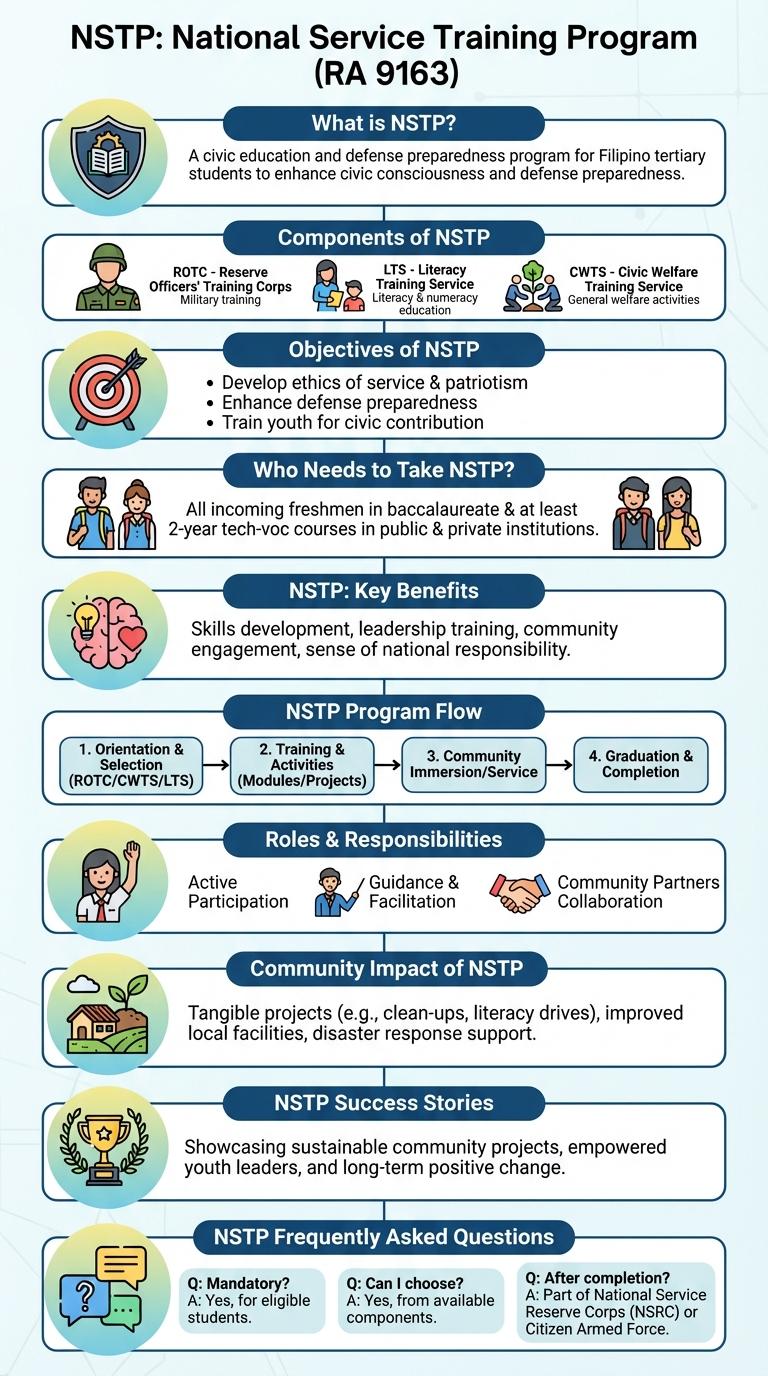
NSTP infographics visually break down the program's core components, objectives, and benefits, making complex information easily accessible. Highlighting key elements such as civic responsibility, community service, and leadership development, they help readers quickly grasp the impact of NSTP. Infographics serve as powerful tools to promote awareness and encourage student participation in the program.
What is NSTP?
The National Service Training Program (NSTP) is a government initiative in the Philippines designed to promote civic consciousness and defense preparedness among the youth. It aims to develop students' skills in active participation in public service.
NSTP is mandatory for all college students except those in military training courses like ROTC. It consists of three components: ROTC, Literacy Training Service (LTS), and Civic Welfare Training Service (CWTS).
Components of NSTP
The National Service Training Program (NSTP) is a civic education and defense preparedness program for Filipino college students. It aims to enhance the youth's involvement in public welfare and community development.
- Reserve Officers' Training Corps (ROTC) - Provides military training to develop discipline and national defense readiness.
- Literacy Training Service (LTS) - Focuses on teaching literacy and numeracy skills to underprivileged communities.
- Civic Welfare Training Service (CWTS) - Engages students in community service projects that contribute to societal welfare.
Objectives of NSTP
The National Service Training Program (NSTP) aims to develop the youth's civic consciousness and defense preparedness. It encourages active participation in public services to promote nation-building.
NSTP's objectives include enhancing students' awareness of community and environmental issues. It nurtures a sense of responsibility and patriotism among the youth. The program equips students with skills and experiences that contribute to sustainable development and disaster risk reduction.
Who Needs to Take NSTP?
| Who Needs to Take NSTP? | Description |
|---|---|
| College Students | All Filipino college students enrolled in any baccalaureate degree or technical-vocational course must take NSTP as a requirement for graduation. |
| First and Second Year Students | Students usually take NSTP during their first or second year to complete their general education requirements. |
| Both Local and Foreign Students | Foreign students enrolled in Filipino higher education institutions are also required to complete NSTP courses. |
| Students in Public and Private Schools | NSTP is mandatory across all types of educational institutions, whether public or private. |
| Individuals Seeking Civic Engagement | Students interested in community service, disaster response, and civic welfare participate in NSTP to develop these skills. |
NSTP: Key Benefits
The National Service Training Program (NSTP) enhances youth engagement in nation-building and community service. It equips students with essential skills for personal development and social responsibility.
- Civic Awareness - NSTP fosters understanding of social issues and promotes active citizenship.
- Leadership Skills - Participants develop teamwork and leadership abilities through community involvement.
- Disaster Preparedness - Training includes disaster risk reduction and emergency response skills.
NSTP prepares young Filipino students to contribute effectively to their communities and the country.
NSTP Program Flow
What is the flow of the NSTP program? The NSTP program consists of three main components: ROTC, CWTS, and LTS. Students choose one component and complete its required training and community service activities.
How does the NSTP program operate throughout the academic year? The program starts with orientation and training, followed by practical community involvement and monitoring. It concludes with assessment and certification of completion.
Roles & Responsibilities
The National Service Training Program (NSTP) is a civic education and defense preparedness program in the Philippines aimed at developing students' patriotism and involvement in nation-building. It ensures that young citizens become responsible and active members of the community.
NSTP participants engage in community service, disaster risk reduction, environmental protection, and youth leadership activities. These roles foster social responsibility and enhance leadership skills among students.
Community Impact of NSTP
The National Service Training Program (NSTP) significantly enhances community development by engaging youth in various civic activities. Participants contribute to environmental protection, health awareness, and disaster preparedness, fostering a culture of volunteerism. NSTP cultivates responsible citizens dedicated to sustainable community progress and social welfare.
NSTP Success Stories
The National Service Training Program (NSTP) has empowered countless students to become proactive community leaders and agents of change. Many NSTP graduates have successfully implemented sustainable projects addressing local environmental and social issues. Their dedication has fostered stronger communities and inspired continuous civic engagement nationwide.