
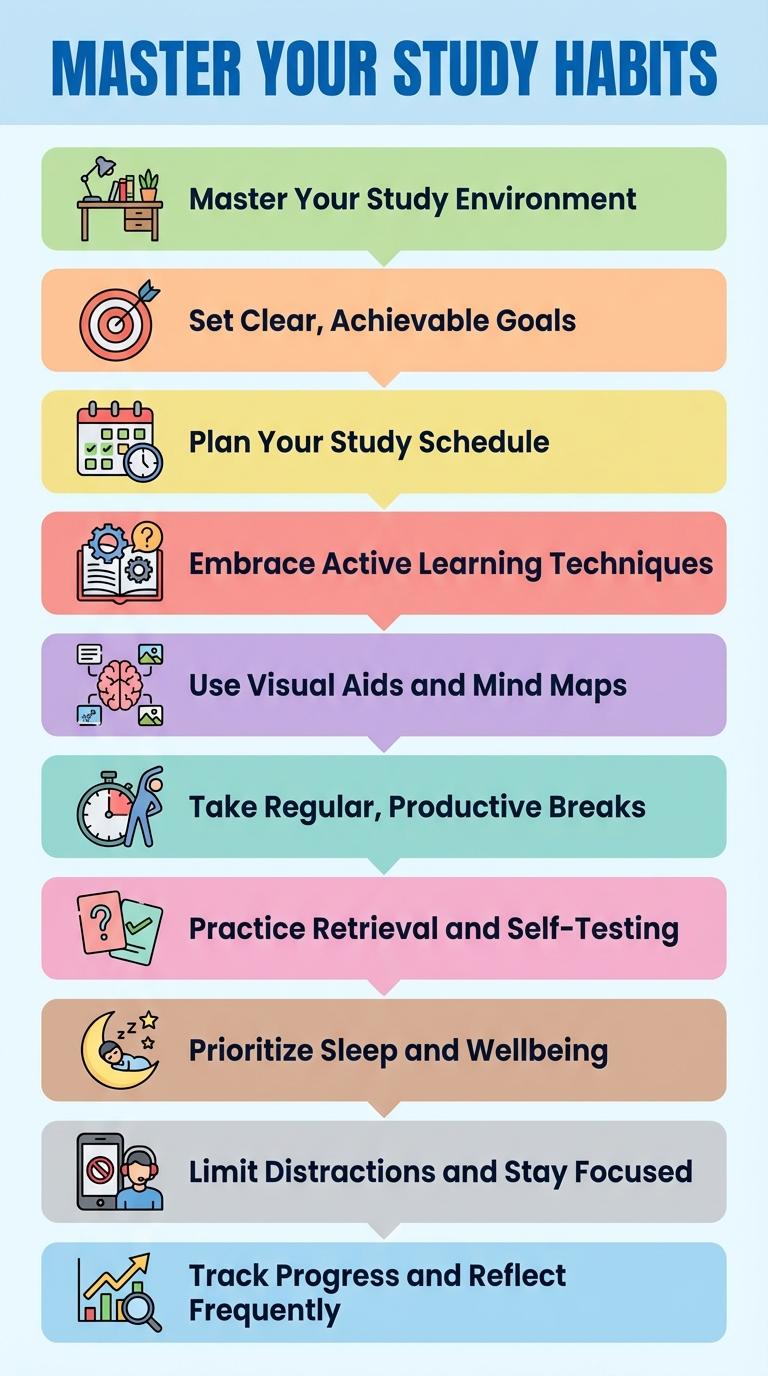
Effective study habits enhance learning efficiency and retention by promoting focused, organized, and consistent review techniques. Utilizing strategies such as active note-taking, regular breaks, and goal-setting maximizes productivity and minimizes burnout. Implementing these methods creates a solid foundation for academic success and long-term knowledge mastery.
Master Your Study Environment
Creating an ideal study environment enhances focus and boosts learning efficiency. A well-organized space reduces distractions and supports effective study habits.
- Choose a Quiet Location - Select a space free from noise and interruptions to improve concentration.
- Ensure Proper Lighting - Use natural or adequate artificial light to reduce eye strain and maintain alertness.
- Organize Your Study Materials - Keep books, notes, and tools within reach to minimize disruptions during study sessions.
Set Clear, Achievable Goals
Setting clear, achievable goals enhances focus and motivation during study sessions. Breaking down larger tasks into smaller, manageable steps leads to consistent progress.
Specific goals help track improvement and maintain accountability over time. Realistic targets reduce overwhelm and increase the likelihood of academic success.
Plan Your Study Schedule
| Effective Study Habit | Plan Your Study Schedule |
|---|---|
| Set Specific Goals | Define clear, achievable objectives for each study session to enhance focus and productivity. |
| Create a Consistent Routine | Establish regular study times to build habit and improve time management skills. |
| Prioritize Subjects | Identify difficult topics and allocate more time accordingly for better understanding. |
| Use Time Blocks | Divide study time into intervals with short breaks to maintain concentration and reduce fatigue. |
| Track Progress | Review completed tasks and adjust the schedule to stay on track toward goals. |
Embrace Active Learning Techniques
Active learning techniques significantly enhance information retention and understanding. Embracing methods like summarizing, questioning, and self-testing transforms passive reading into interactive study sessions.
Techniques such as teaching others and using flashcards engage multiple cognitive processes. These approaches boost focus, foster deeper comprehension, and improve long-term memory.
Use Visual Aids and Mind Maps
Using visual aids and mind maps enhances memory retention and understanding of complex information. These tools help organize thoughts and create connections between concepts for more effective studying.
- Visual Aids Improve Recall - Colorful charts and diagrams make information more memorable and easier to retrieve during exams.
- Mind Maps Clarify Relationships - Structuring ideas visually highlights connections and helps break down large topics into manageable parts.
- Engages Multiple Learning Styles - Combining images and text caters to visual learners and reinforces learning through dual coding.
Take Regular, Productive Breaks
Taking regular, productive breaks enhances focus and prevents burnout during study sessions. Short pauses of 5-10 minutes every hour help recharge the brain and improve information retention. Effective breaks include light physical activity, hydration, or mindfulness exercises to maximize cognitive benefits.
Practice Retrieval and Self-Testing
Practice retrieval involves actively recalling information from memory, which strengthens learning and long-term retention. Self-testing provides immediate feedback, helping identify knowledge gaps and reinforcing understanding. Combining these techniques enhances study efficiency and boosts academic performance.
Prioritize Sleep and Wellbeing
How does prioritizing sleep and wellbeing improve study effectiveness? Adequate sleep enhances memory consolidation and cognitive function, making learning more efficient. Maintaining wellbeing reduces stress and increases focus, supporting better academic performance.
Limit Distractions and Stay Focused
Effective study habits are crucial for academic success, especially when it comes to limiting distractions and maintaining focus. Creating an environment conducive to concentration improves retention and productivity.
- Minimize Digital Interruptions - Turn off notifications on your devices to reduce potential distractions during study sessions.
- Designate a Quiet Study Space - Choose a specific, quiet location dedicated solely to studying to enhance mental focus.
- Use Time Management Techniques - Apply methods like the Pomodoro Technique to sustain attention and take regular, timed breaks.
Consistent application of these strategies fosters deeper concentration and more effective learning outcomes.