
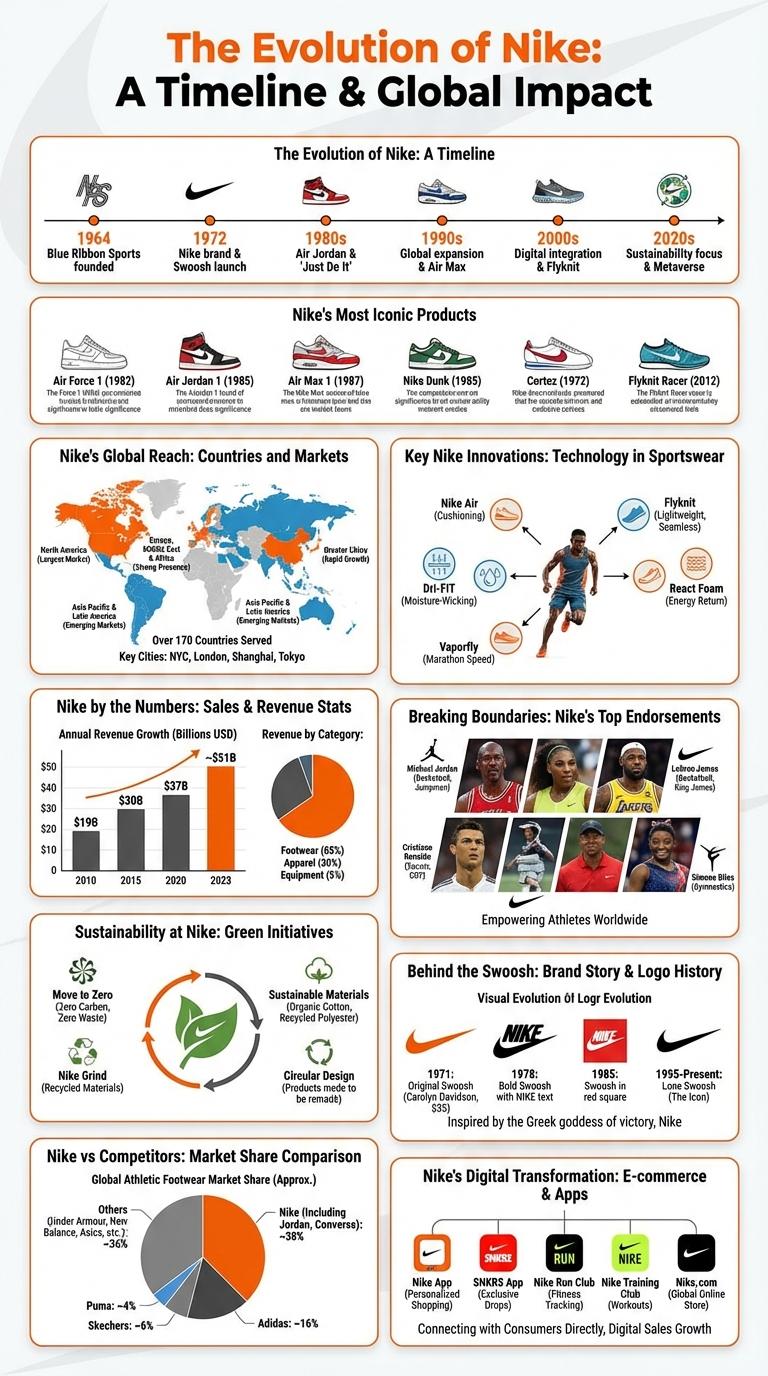
Nike's iconic logo and innovative designs have driven its global success in sportswear and footwear. The infographic highlights key milestones, market statistics, and product breakthroughs that define Nike's brand evolution. Insights into consumer trends and sustainability efforts showcase Nike's influence on both athletic performance and fashion.
The Evolution of Nike: A Timeline
Nike has transformed from a small startup into a global sportswear leader through continuous innovation and strategic branding. The brand's evolution highlights key milestones that shaped its industry dominance.
- Founded in 1964 as Blue Ribbon Sports - The company initially operated as a distributor for Japanese running shoes before launching its own brand.
- Introduction of the Nike Swoosh in 1971 - This iconic logo established a strong visual identity symbolizing motion and speed.
- Launch of the Air Max technology in 1987 - Revolutionized athletic footwear with visible air cushioning for enhanced comfort and performance.
- Global expansion during the 1990s - Nike established a significant international presence, sponsoring top athletes and teams worldwide.
- Focus on sustainability and innovation in the 2020s - Nike committed to reducing its environmental impact through advanced materials and manufacturing processes.
Nike's Most Iconic Products
Nike stands as a global leader in athletic footwear and apparel, known for innovation and style. Its most iconic products have shaped sports culture and fashion worldwide.
The Air Jordan 1 revolutionized basketball sneakers with its bold design and cultural impact. The Air Max line introduced visible air cushioning, blending performance with standout aesthetics.
Nike's Global Reach: Countries and Markets
Nike operates in over 190 countries, establishing itself as a dominant force in the global sportswear market. The brand's presence spans diverse regions including North America, Europe, Asia-Pacific, Latin America, and the Middle East.
Nike's products cater to various markets such as professional athletes, casual wearers, and youth segments. Key markets include the United States, China, and Europe, which together contribute the majority of Nike's revenue worldwide.
Key Nike Innovations: Technology in Sportswear
Nike has consistently pioneered advanced technologies that revolutionize sportswear. These innovations enhance athletic performance, comfort, and durability through cutting-edge materials and design.
- Flyknit Technology - A lightweight, form-fitting knit fabric that provides targeted support and breathability while reducing waste.
- Air Cushioning - Nike Air uses pressurized air in soles to deliver superior impact protection and cushioning for athletes.
- React Foam - A responsive midsole material engineered for optimal energy return and long-lasting comfort during physical activity.
Nike by the Numbers: Sales & Revenue Stats
How successful is Nike in terms of sales and revenue? Nike generated approximately $51.2 billion in global revenue in the fiscal year 2023. This makes Nike one of the leading sportswear brands worldwide.
| Fiscal Year 2023 Revenue | $51.2 Billion |
| Annual Revenue Growth | 6.2% |
| Revenue from North America | $24 Billion |
| Online Sales Share | 30% |
| Number of Nike Stores Worldwide | 1,200+ |
How does Nike's revenue break down by product category? Footwear accounts for approximately 65% of Nike's total sales revenue. Apparel contributes around 30%, with the remaining 5% coming from equipment and accessories.
Breaking Boundaries: Nike's Top Endorsements
Nike has consistently broken boundaries with its top athlete endorsements, elevating both sports and culture worldwide. Iconic figures such as Michael Jordan, Serena Williams, and Cristiano Ronaldo have become synonymous with Nike's innovative and inspirational brand identity. These partnerships demonstrate Nike's commitment to excellence, diversity, and pushing the limits of performance and style.
Sustainability at Nike: Green Initiatives
Nike leads the athletic industry with innovative sustainability practices aimed at reducing its environmental footprint. The company integrates eco-friendly materials and processes throughout its product lines.
Nike's Move to Zero initiative targets zero carbon and zero waste to help protect the future of sport. The brand uses recycled polyester and organic cotton in many products, significantly cutting resource consumption. Nike also invests in renewable energy and water conservation across its supply chain to further reduce environmental impact.
Behind the Swoosh: Brand Story & Logo History
Nike is a global leader in athletic footwear, apparel, and equipment, renowned for its iconic Swoosh logo. The brand's story reflects innovation, performance, and cultural impact.
- Origin of the Swoosh - Designed by Caroline Davidson in 1971, the Swoosh represents motion and speed, inspired by the wings of the Greek goddess Nike.
- Logo Evolution - The logo has remained mostly unchanged, symbolizing Nike's consistent commitment to quality and athletic excellence.
- Brand Name Meaning - Named after the Greek goddess of victory, Nike emphasizes winning, strength, and inspiration in sports.
Nike's brand story and Swoosh logo continue to inspire athletes worldwide through powerful symbolism and legacy.
Nike vs Competitors: Market Share Comparison
| Brand | Global Market Share (%) |
|---|---|
| Nike | 27.4 |
| Adidas | 15.1 |
| Puma | 4.6 |
| Under Armour | 3.5 |
| New Balance | 2.6 |