
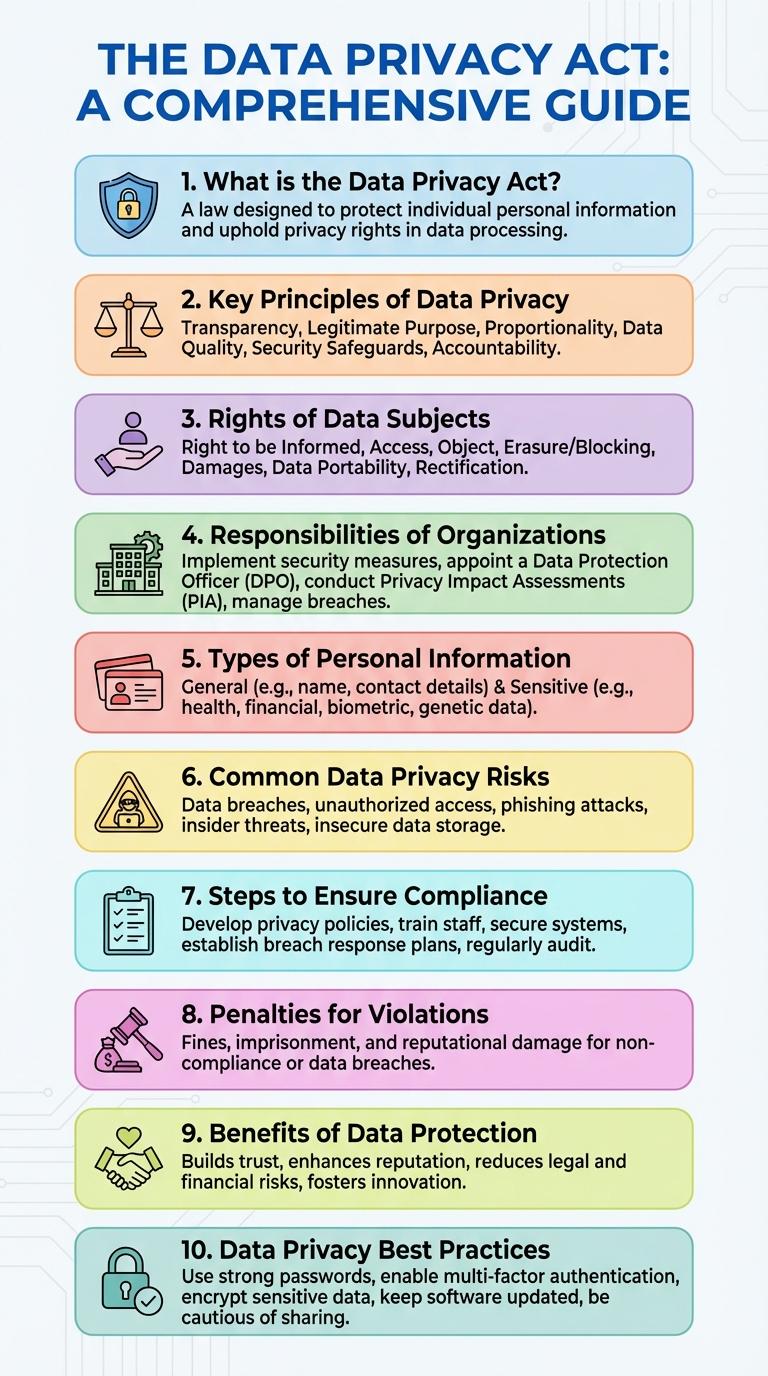
The Data Privacy Act safeguards personal information by establishing strict guidelines for data collection, storage, and processing. It empowers individuals with rights over their data, including access, correction, and deletion. Organizations must implement robust security measures to prevent unauthorized access and ensure compliance.
What is the Data Privacy Act?
The Data Privacy Act is a law designed to protect personal information collected by organizations, ensuring individuals' data privacy rights are respected. It establishes guidelines for data collection, processing, storage, and sharing to prevent unauthorized access and misuse. The act empowers individuals with control over their personal data and holds entities accountable for data breaches.
Key Principles of Data Privacy
The Data Privacy Act establishes key principles to protect personal information, ensuring data is collected and processed lawfully and fairly. It emphasizes transparency, requiring organizations to inform individuals about data usage and obtain valid consent. Security measures must be implemented to safeguard personal data from unauthorized access, breaches, or misuse.
Rights of Data Subjects
The Data Privacy Act safeguards the rights of data subjects by ensuring their personal information is protected and handled with transparency. Data subjects have the authority to access and correct their personal data held by organizations.
Individuals can request the deletion or blocking of inaccurate, outdated, or unlawfully collected information. The law also empowers data subjects to object to the processing of their data for legitimate grounds related to their privacy.
Responsibilities of Organizations
The Data Privacy Act mandates strict guidelines for organizations to protect personal data. Compliance ensures the security and confidentiality of consumer information.
- Implement Security Measures - Organizations must deploy technical, physical, and administrative safeguards to prevent data breaches.
- Conduct Regular Training - Employees should receive ongoing education on data privacy principles and best practices.
- Establish Data Handling Policies - Clear procedures for collecting, processing, and disposing of personal data are required.
- Appoint a Data Protection Officer - A dedicated official ensures adherence to data privacy regulations and manages compliance efforts.
- Respond to Data Breaches - Organizations are obligated to notify authorities and affected individuals promptly in case of a breach.
Adhering to these responsibilities strengthens trust and mitigates risks associated with data privacy violations.
Types of Personal Information
Common Data Privacy Risks
The Data Privacy Act is designed to protect individuals' personal information from unauthorized access and misuse. It establishes guidelines for the collection, storage, and processing of data to ensure privacy and security.
Common data privacy risks include data breaches, identity theft, and unauthorized data sharing. These risks can lead to significant financial loss and damage to personal reputation.
Steps to Ensure Compliance
The Data Privacy Act safeguards personal information by setting strict guidelines for data collection and processing. Organizations must follow clear steps to ensure compliance and protect individual privacy rights.
- Conduct Data Audits - Regularly review data collection and storage practices to identify areas of risk.
- Implement Security Measures - Use encryption, access controls, and secure networks to protect data from unauthorized access.
- Train Employees - Educate staff on privacy policies and their responsibilities under the Data Privacy Act.
Penalties for Violations
The Data Privacy Act enforces strict penalties to protect individuals' personal information. Violations result in significant fines and imprisonment to ensure compliance and safeguard privacy rights.
- Fines Up to PHP 5 Million - Monetary penalties can reach up to five million Philippine pesos for severe breaches of data privacy regulations.
- Imprisonment of Up to Six Years - Offenders may face jail time ranging from one year to six years depending on the nature of the violation.
- Criminal and Civil Liability - Violations lead to both criminal prosecution and civil lawsuits, including compensation for damages to affected parties.
Benefits of Data Protection
The Data Privacy Act safeguards individuals' personal information from unauthorized access and misuse. It ensures that organizations implement strict measures to protect sensitive data.
Benefits of data protection include enhanced consumer trust and stronger compliance with regulatory requirements. It reduces the risk of data breaches and financial penalties. Organizations gain a competitive advantage by demonstrating their commitment to privacy.