
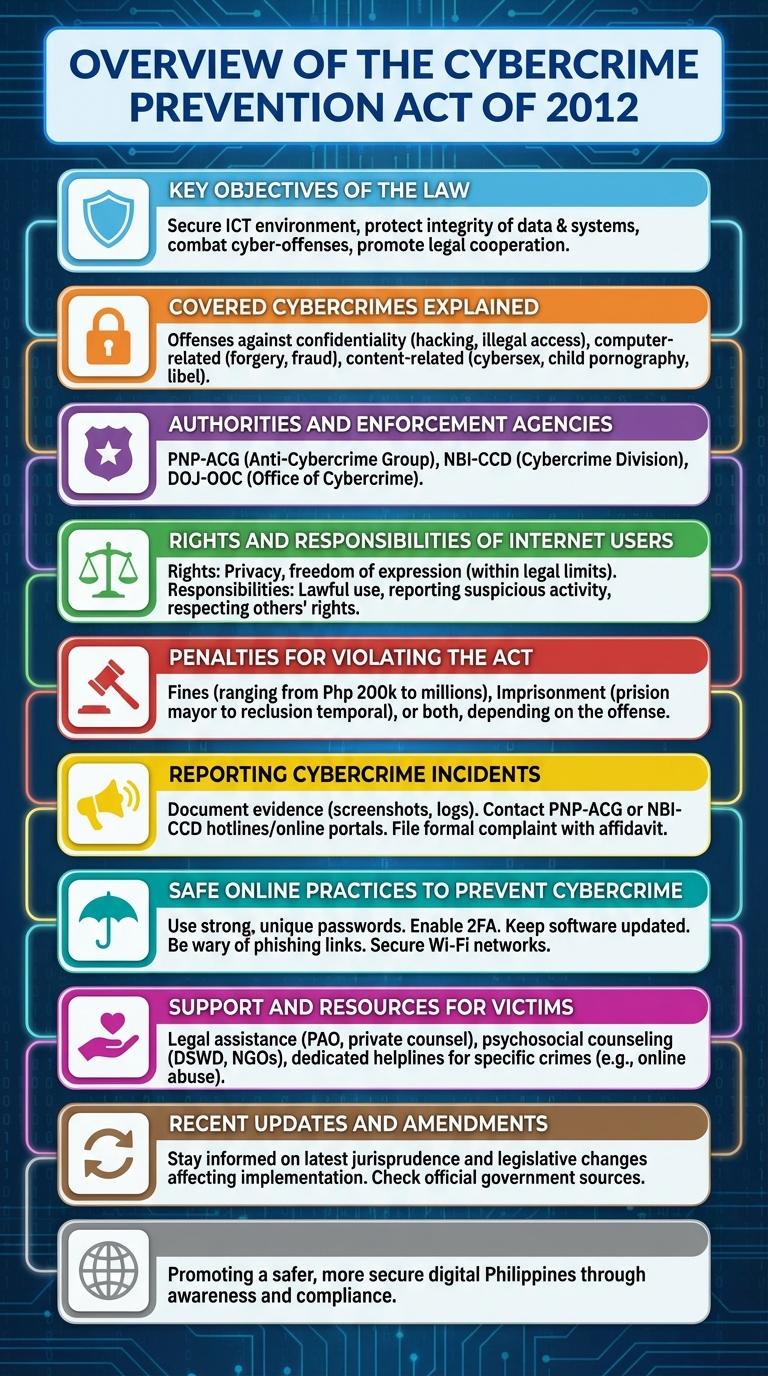
The Cybercrime Prevention Act of 2012 establishes legal measures to combat cyber offenses and protect digital rights. This infographic highlights key provisions, penalties, and user responsibilities outlined in the law. Understanding these elements helps promote safer online environments and awareness of cybercrime consequences.
Overview of the Cybercrime Prevention Act of 2012
The Cybercrime Prevention Act of 2012 is a Philippine law designed to address legal issues concerning online interactions and the internet. It aims to prevent and combat cybercrimes through defined offenses and penalties.
The law covers a wide range of cyber offenses including hacking, identity theft, cybersex, and cyberbullying. It establishes the legal framework for law enforcement agencies to investigate, prosecute, and penalize cybercriminals. The Act also promotes awareness and education about safe internet use to protect individuals and organizations from cyber threats.
Key Objectives of the Law
The Cybercrime Prevention Act of 2012 addresses the rising threats of cybercrime in the digital age. It establishes legal frameworks to protect individuals and institutions from cyber offenses.
- Protect Digital Communication - Safeguards the integrity and confidentiality of electronic data and online communications.
- Prevent Cyber Offenses - Criminalizes unauthorized access, data interference, cyber-squatting, and online libel.
- Empower Law Enforcement - Grants authorities powers to investigate, detect, and prosecute cybercrime effectively.
- Promote Cybersecurity Awareness - Encourages education programs to inform the public about online safety practices.
- Ensure Data Privacy - Protects personal data from unlawful collection, use, or distribution in cyberspace.
The law aims to create a safer digital environment by addressing cyber threats comprehensively.
Covered Cybercrimes Explained
The Cybercrime Prevention Act of 2012 addresses various offenses committed through the use of information and communication technologies. Covered cybercrimes include cybersex, identity theft, cyberbullying, and online libel. This law aims to protect internet users from digital threats by establishing clear legal definitions and penalties for these violations.
Authorities and Enforcement Agencies
The Cybercrime Prevention Act of 2012 empowers specific authorities to combat cybercrime effectively within the Philippines. Enforcement agencies have designated roles to investigate, prosecute, and protect citizens from digital offenses under this law.
- Department of Justice (DOJ) - Oversees the prosecution of cybercrime cases and coordinates with other agencies for legal enforcement.
- Philippine National Police (PNP)-Anti-Cybercrime Group - Investigates cybercrime incidents and enforces the provisions of the Cybercrime Prevention Act.
- National Bureau of Investigation (NBI) Cybercrime Division - Conducts forensic analysis and supports law enforcement in cybercrime investigations.
Rights and Responsibilities of Internet Users
The Cybercrime Prevention Act of 2012 protects the rights of internet users by ensuring privacy, free expression, and data security. Users have the right to report cybercrimes and seek legal remedies under this law.
Internet users also hold responsibilities, such as avoiding online harassment, respecting intellectual property, and refraining from spreading false information. Compliance with these duties helps maintain a safe and trustworthy digital environment for all.
Penalties for Violating the Act
The Cybercrime Prevention Act of 2012 enforces strict penalties to deter offenses involving computer-related crimes. Understanding these penalties helps safeguard individuals and organizations from legal consequences.
- Unauthorized Access - Punishable by imprisonment ranging from 6 months to 3 years and a fine up to P200,000 for gaining illegal entry into computer systems.
- Cybersex - Offenders face 6 to 12 years of imprisonment for using a computer system to engage in lascivious conduct.
- Identity Theft - Imprisonment from 6 to 12 years and fines up to P500,000 apply to those who fraudulently use another's personal information.
Reporting Cybercrime Incidents
The Cybercrime Prevention Act of 2012 mandates the timely reporting of cybercrime incidents to appropriate authorities like the Philippine National Police - Anti-Cybercrime Group (PNP-ACG) and the National Bureau of Investigation - Cybercrime Division (NBI-CCD). Reporting helps initiate prompt investigation and legal action against perpetrators.
Victims and witnesses can report incidents online, via hotline numbers, or directly at law enforcement offices. Proper documentation and evidence submission increase the chances of successful prosecution under Republic Act No. 10175.
Safe Online Practices to Prevent Cybercrime
The Cybercrime Prevention Act of 2012 establishes legal measures to protect individuals and organizations from online threats. Following safe online practices, such as using strong passwords and keeping software updated, significantly reduces the risk of cybercrime. Awareness of phishing scams and avoiding suspicious links are essential steps in maintaining cybersecurity.
Support and Resources for Victims
| Support Type | Details |
|---|---|
| Legal Assistance | Free legal aid services for victims provided by government agencies and accredited organizations under the Cybercrime Prevention Act of 2012. |
| Reporting Channels | Hotlines and online portals established by law enforcement for efficient reporting of cybercrime incidents. |
| Psychological Support | Counseling services made available to victims to address trauma and emotional distress resulting from cybercrimes. |
| Victim Protection | Confidentiality provisions to protect victims' identities and prevent retaliation as mandated by the law. |
| Awareness and Education | Community programs and materials designed to inform victims about their rights and available support resources. |