
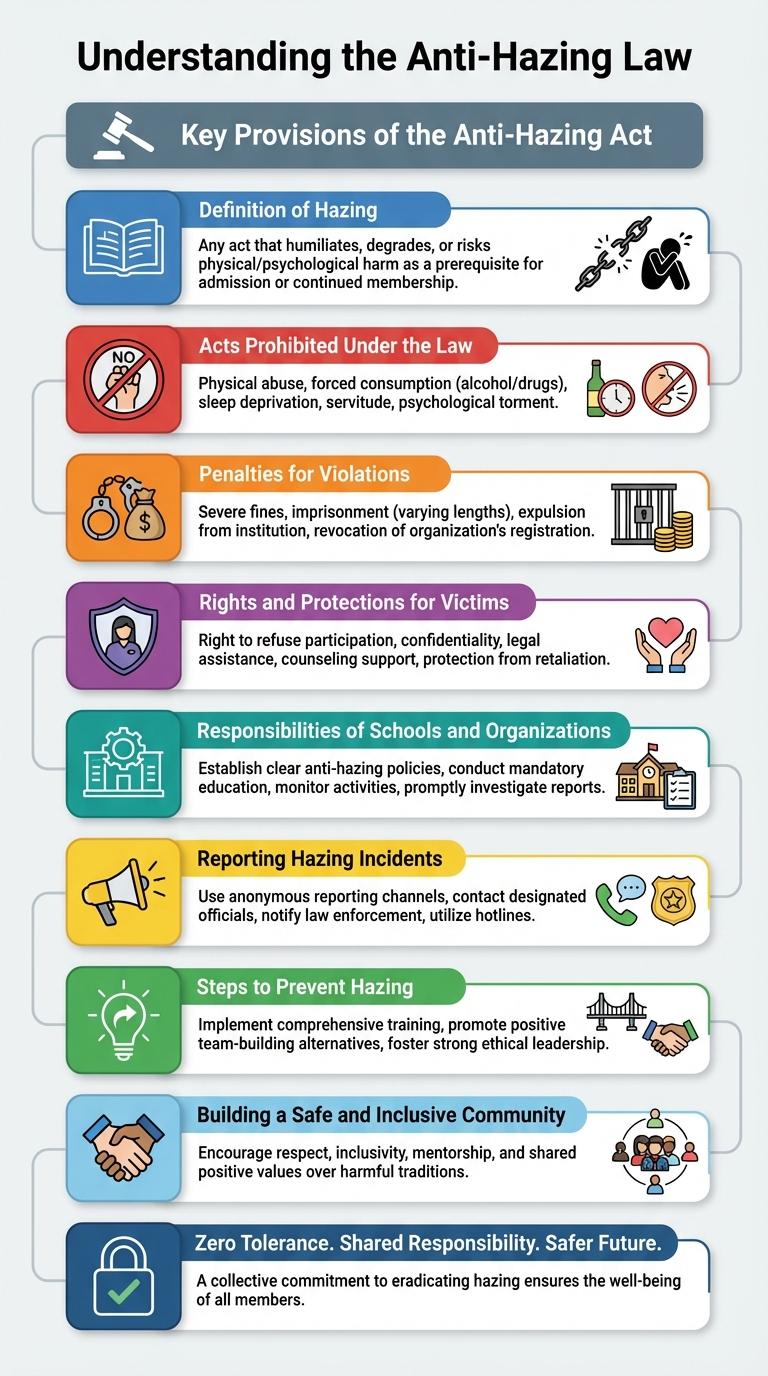
The Anti-Hazing Law enforces strict penalties against any form of hazing to protect students from physical and psychological harm. Schools and organizations must adhere to these regulations to ensure a safe and respectful environment. Understanding the law's key provisions promotes awareness and prevention of hazing incidents.
Understanding the Anti-Hazing Law
The Anti-Hazing Law aims to prevent and penalize any form of hazing in educational institutions, fraternities, sororities, and organizations. It defines hazing as any act that inflicts physical or psychological harm on members or prospective members. The law imposes strict penalties on individuals and organizations found guilty to promote safety and respect.
Key Provisions of the Anti-Hazing Act
What are the key provisions of the Anti-Hazing Act?
The Anti-Hazing Act strictly prohibits all forms of hazing in fraternities, sororities, and organizations. It mandates the immediate reporting of hazing incidents and enforces penalties against violators.
| Provision | Description |
|---|---|
| Definition of Hazing | Any physical or psychological suffering imposed on a person as part of initiation. |
| Mandatory Reporting | Organizations must report hazing incidents to authorities within 24 hours. |
| Penalties | Imprisonment and fines for individuals and organizations involved in hazing. |
| Prohibition of Hazing | Prohibits hazing activities, regardless of consent by victims or approval of organizations. |
| Protective Measures | Support and rehabilitation for victims of hazing are required by law. |
Definition of Hazing
Hazing refers to activities that subject new members of a group to physical or psychological abuse as a form of initiation or admission. These activities often involve humiliation, coercion, and potential harm.
Anti-hazing laws prohibit any form of initiation rites that cause physical injury, mental distress, or endanger the safety of individuals. These laws aim to protect students and members of organizations from abusive and dangerous practices. Penalties include fines, suspension, or criminal charges to ensure compliance and deter hazing incidents.
Acts Prohibited Under the Law
Anti-hazing laws strictly prohibit any form of initiation rites that inflict physical or psychological harm. These laws aim to protect individuals from abusive practices during group admissions.
Violations of the anti-hazing law carry serious legal consequences to deter harmful behaviors in organizations.
- Physical Violence - Any act causing bodily injury or physical suffering is banned under the law.
- Mental Abuse - Psychological torment or coercion as part of hazing is a punishable offense.
- Forced Consumption - Compelling victims to ingest substances harmful to health is strictly prohibited.
Penalties for Violations
The Anti-Hazing Law imposes strict penalties on individuals and organizations found guilty of hazing. Violators face imprisonment from 6 months up to 6 years, along with substantial fines ranging from PHP 10,000 to PHP 100,000. Schools and fraternities involved may also be subjected to sanctions, including suspension or revocation of permits.
Rights and Protections for Victims
The Anti-Hazing Law ensures comprehensive rights and protections for victims to foster a safe environment. It mandates strict legal measures to shield victims from further harm and to promote justice.
- Right to Confidentiality - Victims' identities and personal information are protected to maintain privacy throughout legal proceedings.
- Right to Medical Assistance - Immediate and free medical care must be provided to victims suffering from hazing-related injuries.
- Protection from Retaliation - Victims are safeguarded against any form of retaliation or intimidation after reporting hazing incidents.
Responsibilities of Schools and Organizations
| Responsibilities of Schools | Responsibilities of Organizations |
|---|---|
| Implement clear anti-hazing policies aligned with national laws | Educate members about the legal and ethical implications of hazing |
| Conduct regular workshops and seminars on hazing awareness and prevention | Establish internal guidelines prohibiting hazing practices |
| Monitor and investigate reported hazing incidents promptly | Report any hazing activities to school authorities and relevant bodies |
| Provide support and protection for victims of hazing | Promote a culture of respect and safety among members |
| Coordinate with law enforcement for enforcement of anti-hazing laws | Ensure accountability and impose sanctions on violators within the organization |
Reporting Hazing Incidents
Reporting hazing incidents is a critical component of enforcing anti-hazing laws and protecting individuals from harm. Timely and accurate reporting helps authorities respond effectively and prevent further abuse.
- Confidentiality Guaranteed - Reports of hazing are handled with strict confidentiality to protect the identity of the complainant.
- Multiple Reporting Channels - Incidents can be reported to school authorities, law enforcement, or dedicated anti-hazing hotlines.
- Legal Protection for Complainants - The law provides protection against retaliation to individuals who report hazing activities.
Prompt reporting empowers communities to uphold safe environments and ensure compliance with anti-hazing regulations.
Steps to Prevent Hazing
Hazing is a serious offense with legal consequences under the Anti-Hazing Law. Prevention starts with awareness and strict adherence to guidelines set forth by authorities.
Organizations must establish clear no-hazing policies and educate members on the dangers and legal risks. Reporting mechanisms should be accessible to ensure early intervention and protection for potential victims.