
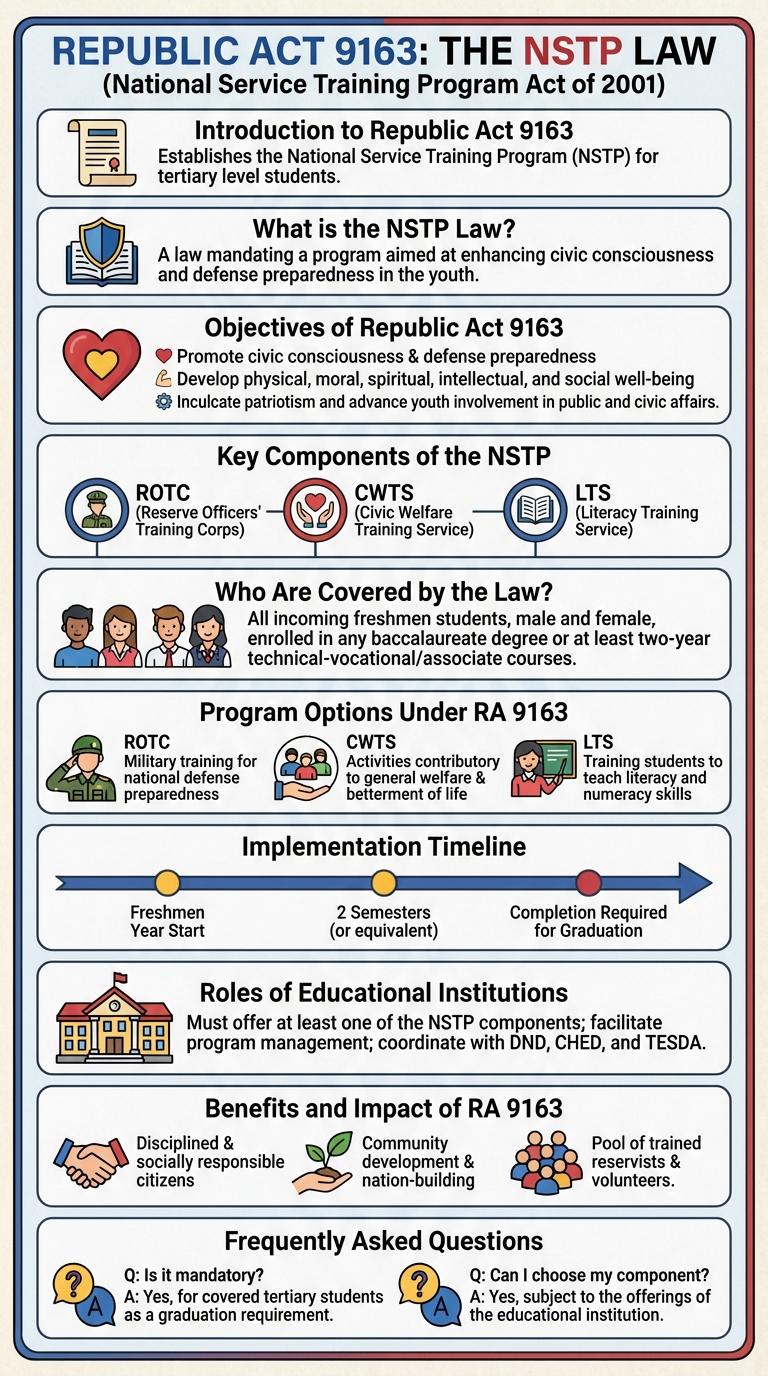
Republic Act 9163, also known as the National Service Training Program (NSTP) Act of 2001, mandates the implementation of civic education and defense preparedness among Filipino youth. This infographic visually breaks down the key components, objectives, and benefits of the law, facilitating better understanding and awareness. It highlights the three NSTP program components: Reserve Officers' Training Corps (ROTC), Civic Welfare Training Service (CWTS), and Literacy Training Service (LTS).
Introduction to Republic Act 9163
Republic Act 9163, also known as the National Service Training Program (NSTP) Act of 2001, mandates the implementation of a national service program for Filipino college students. This law aims to enhance civic consciousness and defense preparedness among the youth.
The NSTP under RA 9163 consists of three program components: the Reserve Officers' Training Corps (ROTC), Literacy Training Service (LTS), and Civic Welfare Training Service (CWTS). It ensures that students contribute to nation-building while developing essential skills and values.
What is the NSTP Law?
| Republic Act 9163 | National Service Training Program (NSTP) Law |
|---|---|
| Enacted in 2002 | Mandates civic education and defense preparedness for Filipino youth |
| Requires all tertiary level students | Must complete one of three NSTP components: ROTC, CWTS, or LTS |
| Aims to enhance civic consciousness | Develops student competencies in community service and nation-building |
| Implemented by the Commission on Higher Education (CHED) | Integrates military training, literacy training, or civic welfare training programs |
| Promotes civic responsibility among youth | Supports the development of skilled, disciplined, and civic-minded citizens |
Objectives of Republic Act 9163
What are the main objectives of Republic Act 9163? Republic Act 9163 aims to promote patriotism and enhance the youth's understanding of the military. It seeks to develop discipline, leadership, and civic consciousness among Filipino students.
Key Components of the NSTP
The Republic Act 9163, also known as the National Service Training Program (NSTP) Act of 2001, aims to enhance civic consciousness and defense preparedness among Filipino youth. It mandates the inclusion of NSTP in the curriculum of higher and technical education institutions across the Philippines.
- Reserve Officers' Training Corps (ROTC) - This component focuses on military training to prepare students for national defense and disaster response.
- Literacy Training Service (LTS) - Students enrolled in LTS are trained to teach literacy and numeracy to schoolchildren and out-of-school youth.
- Civic Welfare Training Service (CWTS) - CWTS involves activities that contribute to the general welfare and betterment of community life.
Who Are Covered by the Law?
Republic Act 9163, also known as the National Service Training Program (NSTP) Act of 2001, covers all Filipino college students enrolled in any baccalaureate degree or technical-vocational course. The law mandates these students to undergo one of the NSTP components as part of their curriculum.
The program aims to enhance civic consciousness and defense preparedness among the youth by involving them in programs or activities that contribute to the general welfare. Coverage includes students from both public and private higher education institutions nationwide.
Program Options Under RA 9163
Republic Act 9163, also known as the National Service Training Program (NSTP) Act of 2001, mandates the implementation of NSTP for Filipino college students. Program options under RA 9163 include the Reserve Officers' Training Corps (ROTC), Literacy Training Service (LTS), and Civic Welfare Training Service (CWTS). These options aim to enhance civic consciousness, defense preparedness, and community development skills among the youth.
Implementation Timeline
Republic Act 9163, also known as the National Service Training Program (NSTP) Act of 2001, outlines the mandatory civic education and defense preparedness training for Filipino students. The law was signed on January 23, 2002, and took effect shortly after, mandating implementation across colleges and universities nationwide. The NSTP requires students to complete one of its program components within their first two years of tertiary education.
Roles of Educational Institutions
Republic Act 9163, also known as the National Service Training Program (NSTP) Act of 2001, mandates the involvement of educational institutions in promoting civic consciousness and defense preparedness among Filipino youth. Educational institutions play a crucial role in implementing and managing the NSTP to ensure its objectives are met.
These institutions are responsible for integrating the NSTP into their curriculum, providing students with courses designed to enhance their sense of community service and patriotism. They coordinate with government agencies to facilitate training and activities under the NSTP framework. Furthermore, educational institutions monitor and evaluate student participation and program effectiveness to uphold the law's intent.
Benefits and Impact of RA 9163
Republic Act 9163, also known as the National Service Training Program Act of 2001, offers essential benefits to Filipino youth by fostering civic consciousness and defense preparedness. The law significantly impacts nation-building through its structured training programs that enhance skills and promote social responsibility.
- Promotes Civic Awareness - RA 9163 encourages students to develop a sense of social responsibility and community involvement.
- Enhances Disaster Preparedness - The program trains youth in emergency response, contributing to national disaster resilience.
- Supports National Defense - RA 9163 prepares students for basic military training to support the Armed Forces of the Philippines if needed.