
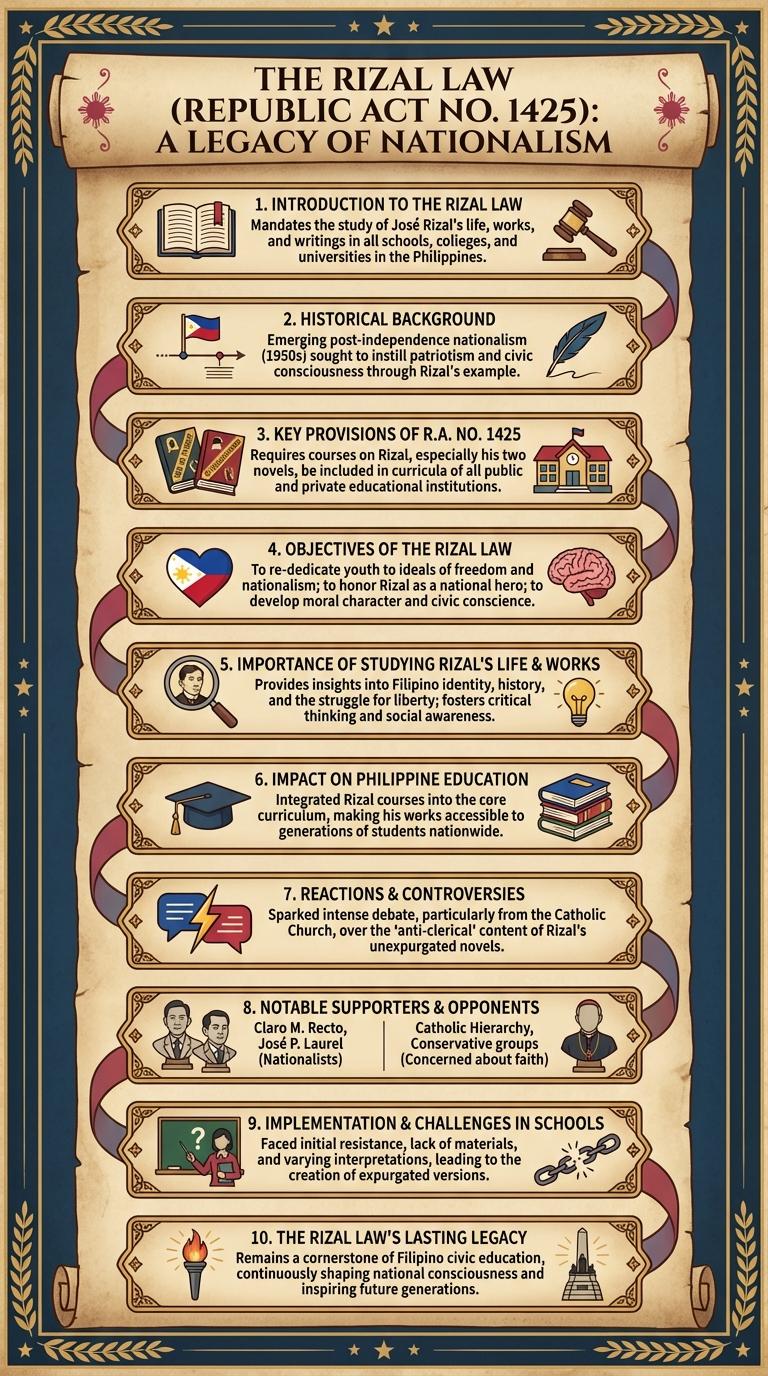
The Rizal Law mandates the study of Jose Rizal's life, works, and writings in Philippine schools to foster patriotism and national identity. It highlights the importance of understanding Rizal's contributions to the country's history and independence movement. This infographic presents key facts and insights about the law and its impact on education.
Introduction to the Rizal Law
The Rizal Law, officially known as Republic Act No. 1425, mandates the study of the life, works, and writings of Dr. Jose Rizal in Philippine schools. It was enacted in 1956 to promote patriotism and nationalism among Filipino students.
The law requires all educational institutions, both public and private, to offer courses on Rizal's novels, "Noli Me Tangere" and "El Filibusterismo." It emphasizes the importance of understanding Rizal's contributions to Philippine history and identity. The Rizal Law aims to inspire students to emulate Rizal's dedication to country and justice.
Historical Background of the Rizal Law
The Rizal Law, officially known as Republic Act No. 1425, was enacted in 1956 to mandate the study of Jose Rizal's life, works, and writings in Philippine schools. This law aimed to inspire nationalism and patriotism by educating Filipino students about Rizal's role in the country's fight for independence from Spanish colonization. The historical background of the Rizal Law reflects the post-war government's efforts to strengthen national identity and promote civic consciousness among the youth.
Key Provisions of Republic Act No. 1425
| Key Provision | Description |
|---|---|
| Mandatory Reading | Reynaldo Rizal's life, works, and writings must be included in the curricula of all public and private schools, colleges, and universities in the Philippines. |
| Objective | Promote patriotism and nationalism through understanding Rizal's role in Philippine history and his advocacy for reform during Spanish colonization. |
| Course Integration | Rizal's novels "Noli Me Tangere" and "El Filibusterismo" are required reading materials as part of the course content. |
| Authorized Texts | Schools must use editions of Rizal's works approved by the Department of Education. |
| Enforcement | The Department of Education, Culture, and Sports oversees compliance and integration of the law in educational institutions nationwide. |
Objectives of the Rizal Law
What are the key objectives of the Rizal Law?
The Rizal Law aims to promote patriotism and love of country among Filipinos. It mandates the teaching of Jose Rizal's life, works, and writings in all schools.
Importance of Studying Rizal's Life and Works
The Rizal Law mandates the study of Jose Rizal's life, works, and writings in Philippine schools to deepen the understanding of Filipino nationalism. This law highlights Rizal's role as a national hero whose advocacy for reforms inspired the fight for independence. Studying his legacy fosters patriotism and critical thinking among students.
Impact of the Rizal Law on Philippine Education
The Rizal Law, enacted in 1956, mandates the study of Jose Rizal's life and works in all Philippine schools. This law has significantly shaped the nation's educational landscape by promoting patriotism and national identity.
- Promotes Nationalism - By integrating Rizal's novels into the curriculum, students develop a deeper sense of Filipino identity and pride.
- Enhances Civic Awareness - Teaching Rizal's ideals fosters critical thinking about social justice and civic responsibility among youth.
- Standardizes Curriculum - The law ensures uniform inclusion of Rizal's works across public and private educational institutions.
The Rizal Law continues to influence Philippine education by reinforcing historical consciousness and ethical values in students nationwide.
Reactions and Controversies Surrounding the Rizal Law
The Rizal Law, officially known as Republic Act No. 1425, mandates the study of Jose Rizal's life, works, and writings in Philippine schools. The law sparked intense debates upon its enactment in 1956, reflecting deep divisions in Philippine society.
Conservative groups, particularly the Catholic Church, strongly opposed the law, fearing it would promote anti-clerical sentiment. Supporters argued the law was essential for fostering national pride and awareness of Rizal's contributions to Philippine independence.
Notable Supporters and Opponents
The Rizal Law, officially known as Republic Act No. 1425, mandates the study of the life, works, and writings of Jose Rizal in Philippine schools. This law sparked significant debate among notable supporters and opponents during its enactment in 1956.
- Senator Claro M. Recto - A principal author and strong advocate, he emphasized Rizal's role in inspiring Philippine nationalism.
- Bishop Rufino Santos - A leading opponent who argued the law conflicted with Catholic teachings and influenced the Church's stance.
- President Ramon Magsaysay - Supported the law to promote national identity and educational reform.
- Archbishop Julio Rosales - Voiced concerns about the secular nature of Rizal's works undermining religious values.
- Senator Jose P. Laurel - Advocated for the law as a means to strengthen patriotism among Filipino youth.
Implementation and Challenges in Schools
The Rizal Law mandates the study of Jose Rizal's life and works in all Philippine schools to promote patriotism and nationalism. Schools face various challenges in implementing this law effectively within their curricula.
- Curriculum Integration - Schools must incorporate Rizal's novels and historical context into existing subjects, often requiring curriculum adjustments.
- Teacher Training - Effective teaching of Rizal's works depends on properly trained educators who understand historical nuances and pedagogical strategies.
- Resource Availability - Limited access to original texts and teaching materials hinders comprehensive instruction of the law in many institutions.
- Student Engagement - Encouraging student interest in Rizal's works remains a challenge due to varying perceptions of relevance and complexity.
- Political Sensitivity - Some schools face difficulties balancing historical facts with contemporary political perspectives surrounding Rizal's legacy.