
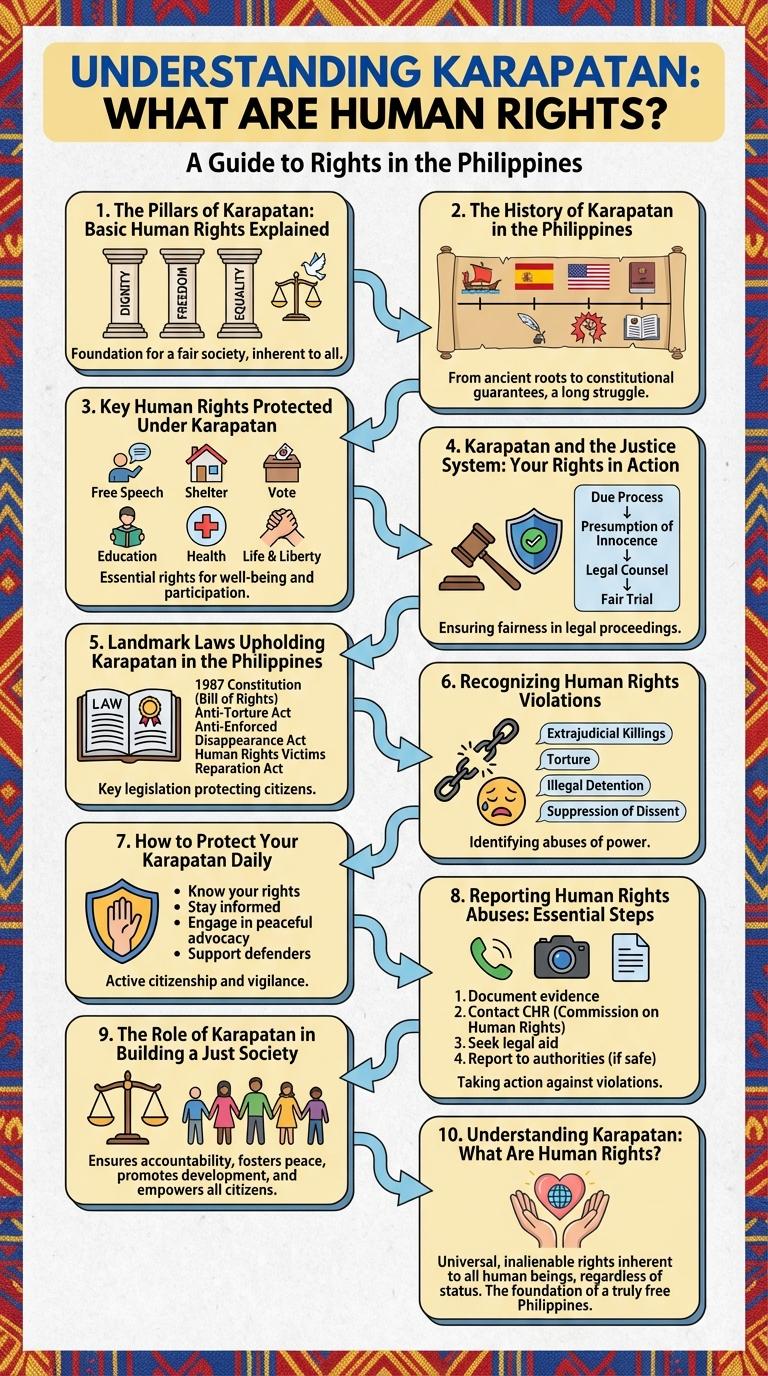
Karapatan is a prominent human rights organization dedicated to promoting and protecting fundamental freedoms in the Philippines. The infographic highlights key data and accomplishments, showcasing their advocacy efforts, campaigns, and the impact on civil liberties. Visual elements offer a clear understanding of Karapatan's role in raising awareness and fostering justice.
Understanding Karapatan: What Are Human Rights?
What are human rights and why are they important? Human rights are fundamental rights and freedoms entitled to every individual, regardless of nationality or background. They ensure dignity, equality, and justice for all people worldwide.
How do human rights protect individuals? These rights safeguard people from abuse, discrimination, and unfair treatment by governments and organizations. Human rights promote freedom of speech, religion, and access to education and healthcare.
Who defines and enforces human rights? International bodies like the United Nations establish human rights standards through treaties and declarations. Governments are responsible for implementing these rights within their legal systems.
What categories of human rights exist? Key categories include civil and political rights, such as freedom of expression, and economic, social, and cultural rights, like the right to work and education. These categories together support the overall well-being of individuals.
Why is awareness of human rights essential? Understanding human rights empowers people to claim their freedoms and hold authorities accountable. Education on these rights helps build fairer, more inclusive societies.
The Pillars of Karapatan: Basic Human Rights Explained
Karapatan represents the fundamental human rights that every individual is entitled to, ensuring dignity and equality. The pillars of Karapatan include civil, political, economic, social, and cultural rights, forming the foundation for justice and freedom. Understanding these rights empowers people to advocate for their protection and promotes a fair society.
| Pillar | Explanation |
|---|---|
| Civil Rights | Guarantee freedom of speech, privacy, and protection from discrimination. |
| Political Rights | Ensure participation in governance, voting, and political expression. |
| Economic Rights | Provide access to work, fair wages, and safe working conditions. |
| Social Rights | Include education, healthcare, and social security benefits. |
| Cultural Rights | Protect heritage, language, and cultural expression of communities. |
The History of Karapatan in the Philippines
Karapatan is a prominent human rights organization established in the Philippines in 1995. It focuses on documenting and addressing human rights violations across the country.
The organization emerged during a period of political upheaval, responding to state abuses under various administrations. Karapatan has played a crucial role in advocating for justice, accountability, and the protection of civil and political rights. Its efforts have influenced national and international awareness of human rights conditions in the Philippines.
Key Human Rights Protected Under Karapatan
Karapatan is a prominent human rights organization dedicated to promoting and protecting the fundamental rights of individuals in the Philippines. It focuses on ensuring justice, accountability, and respect for human dignity.
Key human rights protected under Karapatan include the right to life, freedom of expression, and the right to be free from torture and arbitrary detention. The organization actively monitors violations and advocates for victims to uphold these essential freedoms.
Karapatan and the Justice System: Your Rights in Action
Karapatan, a prominent human rights organization in the Philippines, advocates for the protection and promotion of civil liberties within the justice system. Understanding your rights empowers you to navigate legal processes effectively and demand fair treatment.
The justice system must uphold due process, protect against arbitrary arrests, and ensure access to legal counsel. Karapatan provides resources and support to victims of rights violations, fostering accountability and justice for all.
Landmark Laws Upholding Karapatan in the Philippines
The Philippines has enacted several landmark laws to protect and uphold the rights of its citizens, known locally as "karapatan." These laws serve as the foundation for human rights, social justice, and civil liberties in the country.
Key legislation ensures the promotion, protection, and enforcement of fundamental freedoms and provides mechanisms to address violations.
- Republic Act No. 8371 (Indigenous Peoples' Rights Act of 1997) - Recognizes and promotes the rights of indigenous cultural communities and indigenous peoples in the Philippines, ensuring their ancestral land titles and cultural integrity.
- Republic Act No. 9262 (Anti-Violence Against Women and Their Children Act of 2004) - Provides legal protection to women and children from violence, abuse, and harassment within the family and communities.
- Republic Act No. 9745 (Anti-Torture Act of 2009) - Prohibits torture and other cruel, inhuman, and degrading treatment or punishment, establishing penalties and protective measures.
- Republic Act No. 8425 (Social Reform and Poverty Alleviation Act) - Aims to uplift marginalized sectors through social justice programs and poverty reduction strategies.
- Republic Act No. 9485 (Anti-Red Tape Act of 2007) - Ensures transparency and accountability in public service, enhancing citizens' rights to efficient government delivery.
Recognizing Human Rights Violations
Karapatan is a prominent human rights organization dedicated to recognizing and addressing human rights violations in the Philippines. It documents cases of abuses such as unlawful arrests, extrajudicial killings, and torture. The organization empowers communities and supports victims by advocating for justice and accountability.
How to Protect Your Karapatan Daily
| How to Protect Your Karapatan Daily | |
|---|---|
| Stay Informed | Regularly read trusted news sources and updates from human rights organizations to understand your rights clearly. |
| Speak Up | Report any violations or discrimination you experience or witness to local authorities or human rights groups. |
| Know Your Rights | Learn the fundamental rights protected by the Philippine Constitution and international laws that safeguard your freedoms. |
| Support Advocacy | Engage with community programs and organizations that promote human rights and help enforce accountability. |
| Practice Respect | Respect the rights of others to create a culture of mutual understanding and protection within your community. |
Reporting Human Rights Abuses: Essential Steps
Reporting human rights abuses is a critical step in protecting victims and ensuring justice. Understanding the essential steps helps to effectively document and address violations.
- Identify the Abuse - Recognize the type and details of the human rights violation for accurate reporting.
- Gather Evidence - Collect relevant documents, photos, or witness statements to support the case.
- Contact Authorities - Report the abuse to trusted legal or human rights organizations for proper action.
- Maintain Confidentiality - Protect the privacy of victims and witnesses throughout the process.
- Follow Up - Keep track of the case status to ensure that appropriate measures are being taken.
Effective reporting contributes to accountability and the promotion of human rights worldwide.