
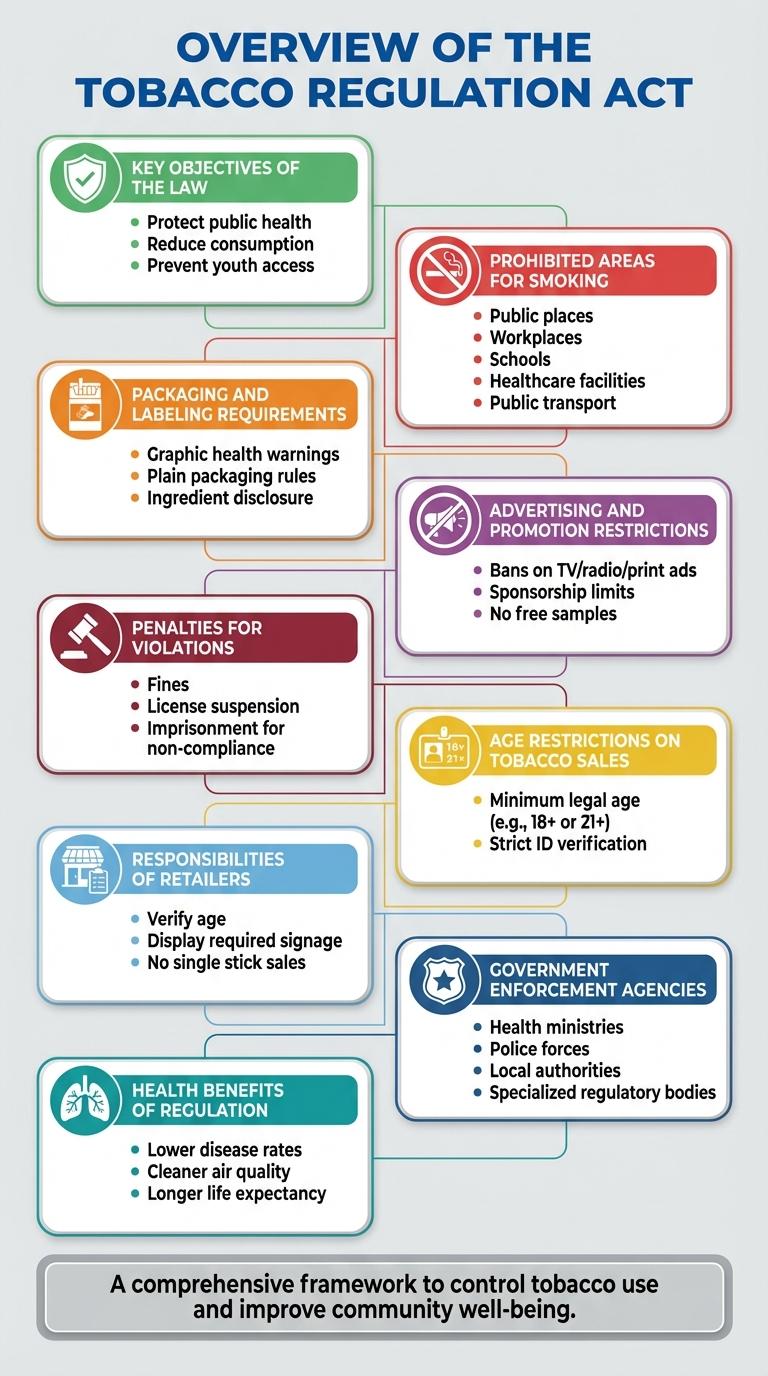
The Tobacco Regulation Act establishes comprehensive guidelines to control the manufacture, sale, and distribution of tobacco products, aiming to reduce health risks associated with smoking. It enforces restrictions on advertising, mandates warning labels, and sets age limits for purchase to protect public health. Compliance with these regulations is essential for curbing tobacco use and promoting awareness of its dangers.
Overview of the Tobacco Regulation Act
The Tobacco Regulation Act establishes comprehensive legal guidelines to control the production, distribution, and consumption of tobacco products. Its primary goal is to reduce health risks associated with tobacco use by enforcing strict regulations on advertising, packaging, and sales.
This act mandates age restrictions for purchasing tobacco, requires health warnings on packaging, and limits where tobacco products can be sold and consumed. Enforcement agencies are tasked with monitoring compliance and imposing penalties on violations. These measures aim to decrease tobacco-related illnesses and promote public health awareness.
Key Objectives of the Law
The Tobacco Regulation Act aims to reduce tobacco consumption by enforcing strict controls on the sale, advertising, and packaging of tobacco products. It seeks to protect public health by limiting exposure to harmful substances and preventing tobacco use among minors. The law mandates comprehensive warning labels and restricts smoking in public places to promote a healthier environment.
Prohibited Areas for Smoking
The Tobacco Regulation Act enforces strict prohibitions on smoking in designated public areas to protect public health. These areas include enclosed public spaces where exposure to secondhand smoke poses significant risks.
Smoking is banned in government buildings, healthcare facilities, educational institutions, and public transportation zones. This regulation aims to reduce tobacco-related harm and promote a smoke-free environment for all citizens.
Packaging and Labeling Requirements
| Provision | Description |
|---|---|
| Graphic Health Warnings | Mandatory display of large, clear images depicting health risks on cigarette packages covering at least 50% of the front and back surfaces. |
| Text Warning Statements | Specific health warnings required in bold, legible font, occupying a minimum of 30% of packaging area. |
| Prohibition of Misleading Labels | Ban on terms like "light," "mild," or "low tar" to prevent false impressions of reduced harm. |
| Standardized Packaging | Restrictions on colors, logos, and branding to minimize product appeal, using uniform color schemes and font styles. |
| Ingredient Disclosure | Requirement for manufacturers to list ingredients and additives on the package or accompanying documentation. |
Advertising and Promotion Restrictions
The Tobacco Regulation Act enforces strict advertising and promotion restrictions to reduce tobacco consumption. It bans tobacco advertisements on TV, radio, and print media, including sponsorship of events. These measures aim to protect public health by limiting tobacco visibility and appeal to youth.
Penalties for Violations
What are the penalties for violations under the Tobacco Regulation Act?
The Tobacco Regulation Act enforces strict penalties to deter unlawful activities related to tobacco products. Fines, license suspensions, and imprisonment are common consequences for violating these regulations.
Age Restrictions on Tobacco Sales
The Tobacco Regulation Act enforces strict age restrictions to limit youth access to tobacco products. It aims to reduce tobacco-related health issues by preventing sales to underage individuals.
- Legal Age Requirement - Tobacco sales are prohibited to anyone under 21 years of age in most jurisdictions.
- Verification Procedures - Retailers must verify the age of buyers using government-issued identification before completing a sale.
- Penalties for Non-Compliance - Violations of age restrictions result in fines, license suspension, or revocation for sellers.
These measures contribute to public health by decreasing youth tobacco consumption and exposure.
Responsibilities of Retailers
The Tobacco Regulation Act mandates specific responsibilities for retailers to ensure public health and compliance with the law. Retailers play a crucial role in preventing underage tobacco sales and promoting safe consumption.
- Age Verification - Retailers must verify the age of all customers purchasing tobacco products to prevent sales to minors.
- Proper Display - Tobacco products must be displayed in a manner that reduces visibility and accessibility to underage individuals.
- Warning Labels - Retailers are required to ensure all tobacco products carry government-approved health warning labels.
Government Enforcement Agencies
The Tobacco Regulation Act empowers multiple government enforcement agencies to monitor compliance and enforce laws related to tobacco use and sales. Key agencies include the Food and Drug Administration (FDA) and the Federal Trade Commission (FTC), which oversee product standards and advertising practices.
The Centers for Disease Control and Prevention (CDC) support enforcement through research and public health campaigns. State and local health departments also play a critical role in implementing regulations and conducting inspections to reduce tobacco-related harm.