
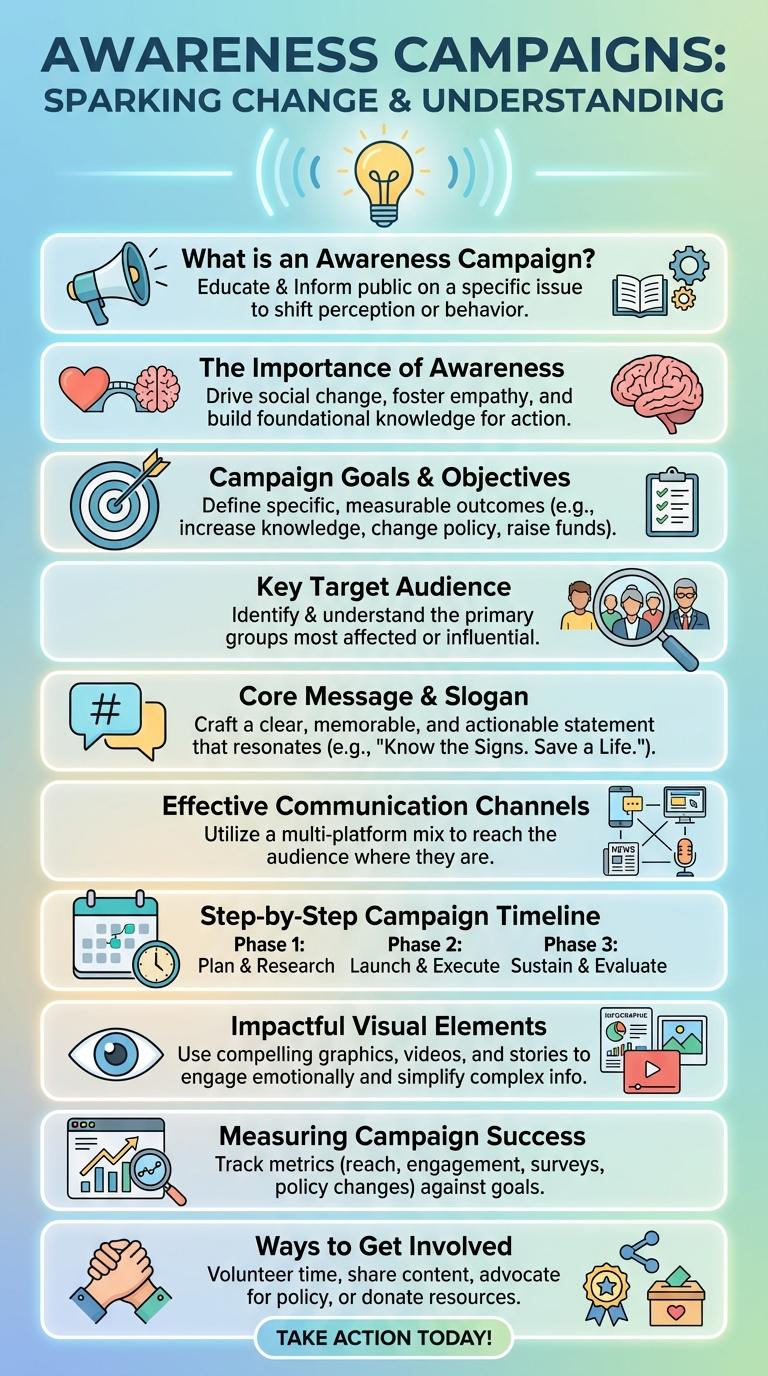
An infographic about an awareness campaign visually presents key information to engage and educate the target audience effectively. It highlights critical statistics, calls to action, and important messages that drive understanding and motivate support. This concise format ensures complex ideas are easily grasped and shared across various platforms.
What is an Awareness Campaign?
An awareness campaign is a strategic effort to inform and educate the public about a specific issue, cause, or product. These campaigns aim to increase knowledge, shape attitudes, and inspire action within a target audience.
Awareness campaigns use various media channels including social media, print, and events to reach wide audiences effectively. They focus on clear messaging and emotional appeal to enhance engagement and retention. Successful campaigns measure impact through metrics such as reach, engagement rates, and behavioral change.
The Importance of Awareness
Awareness campaigns play a crucial role in educating the public about important social, health, and environmental issues. They foster informed communities by spreading vital information and encouraging proactive behaviors. Effective awareness efforts contribute to positive change by inspiring collective action and support.
Campaign Goals & Objectives
An awareness campaign aims to inform and engage the target audience effectively. Clear goals and objectives provide direction and measurable outcomes to ensure success.
Campaign Goals & Objectives focus on raising awareness, influencing behavior, and measuring impact for continuous improvement.
- Increase Public Awareness - Enhance knowledge about the issue among the target population through targeted messaging.
- Promote Behavioral Change - Encourage positive actions by addressing barriers and motivating the audience.
- Measure Campaign Effectiveness - Use key performance indicators to assess reach, engagement, and impact over time.
Key Target Audience
Key target audiences for an awareness campaign include demographics most affected by or interested in the campaign's subject. Identifying these groups ensures relevant messaging reaches those who can benefit or contribute the most.
Primary segments often involve age, gender, location, and behavioral traits linked to the campaign's goals. Tailoring content to these audiences improves engagement and drives desired actions effectively.
Core Message & Slogan
An effective awareness campaign centers on a clear core message that resonates with the target audience, ensuring the purpose is easily understood. The slogan should be concise, memorable, and evoke an emotional response to encourage engagement. Combining a strong core message with a powerful slogan amplifies the campaign's impact and promotes lasting awareness.
Effective Communication Channels
Effective communication channels are vital for the success of any awareness campaign. Selecting the right platforms ensures the message reaches the intended audience clearly and promptly.
Popular channels include social media, email newsletters, and community events. Each medium offers unique advantages for engaging with diverse demographic groups efficiently.
Step-by-Step Campaign Timeline
An awareness campaign requires careful planning and strategic execution to maximize impact. A clearly defined timeline ensures each phase is completed on schedule and goals are met effectively.
- Research Phase - Collect data and understand the target audience's needs and preferences.
- Content Development - Create compelling messages and visuals that resonate with the audience.
- Launch and Promotion - Roll out the campaign across multiple channels to increase visibility and engagement.
Monitoring and evaluation after the campaign help measure success and identify areas for improvement.
Impactful Visual Elements
| Visual Element | Impact on Awareness Campaign |
|---|---|
| Bold Colors | Attract attention and evoke emotional responses to reinforce the campaign message. |
| Clear Icons | Improve message comprehension by representing ideas quickly and universally. |
| Concise Text | Enhances readability, making key points easy to remember and share. |
| Engaging Graphics | Capture interest and create memorable visual storytelling for stronger impact. |
| Consistent Branding | Builds trust and recognition, reinforcing the campaign's identity across all materials. |
Measuring Campaign Success
How can the success of an awareness campaign be effectively measured? Measuring campaign success involves analyzing key performance indicators (KPIs) such as reach, engagement, and conversion rates. These metrics provide insights into audience impact and message effectiveness.
What are the most important KPIs in tracking awareness campaigns? Reach indicates how many people have seen the campaign, while engagement shows interaction levels through likes, shares, comments, or website visits. Conversion rates reveal how many individuals took desired actions, like signing up or donating.
Which tools help in measuring campaign success? Digital analytics platforms like Google Analytics, social media insights, and survey feedback tools provide valuable data. These resources allow real-time monitoring and help optimize campaign strategies for better results.
How can feedback be integrated into measuring awareness? Collecting audience feedback through surveys or polls helps assess message clarity and emotional impact. This qualitative data complements quantitative metrics and enhances overall evaluation.
Why is continuous measurement critical during a campaign? Ongoing measurement enables timely adjustments to improve engagement and reach. Monitoring trends helps identify successful tactics and areas needing improvement for maximizing campaign impact.