
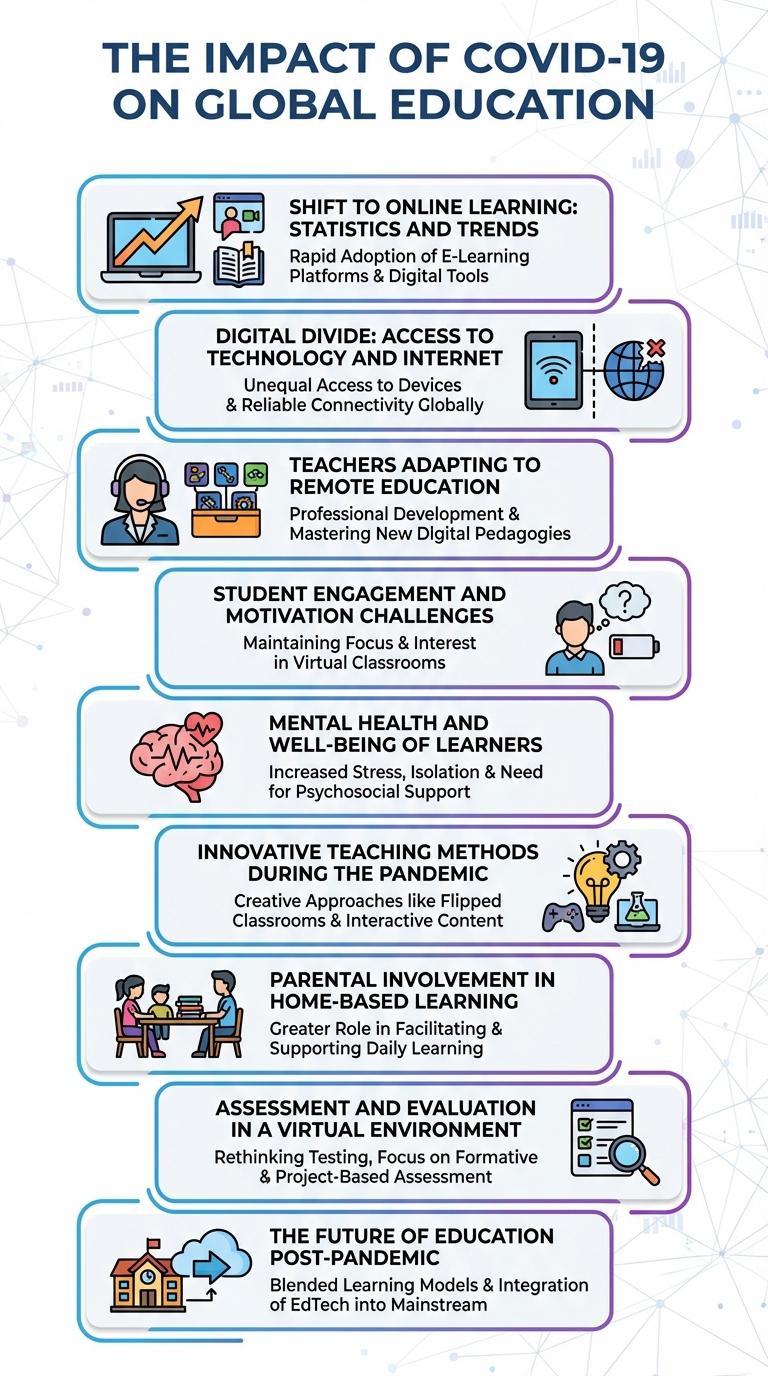
Education during the pandemic underwent a transformative shift as schools worldwide adapted to remote learning and digital classrooms. This infographic highlights the key challenges faced by students and educators, including access to technology and engagement hurdles. It also showcases innovative solutions and evolving strategies that reshaped teaching and learning experiences in unprecedented times.
The Impact of COVID-19 on Global Education
How did COVID-19 affect global education systems? The pandemic caused widespread school closures, impacting over 1.6 billion learners worldwide. Remote learning became essential but exposed significant inequalities in access to technology and internet connectivity.
What challenges did students face during the pandemic? Many students struggled with limited digital resources and lack of in-person instruction. Mental health issues and learning loss increased due to social isolation and disrupted routines.
How did educators adapt to the pandemic's impact? Teachers rapidly transitioned to online platforms, developing new methods for virtual engagement and assessment. This shift highlighted the urgent need for effective digital teaching tools and training.
What measures helped mitigate educational disruptions? Governments and organizations expanded access to devices, internet services, and educational content. Hybrid models combining online and in-person learning emerged to support continuity and flexibility in education.
What long-term effects might the pandemic have on education? Accelerated digital transformation is reshaping educational delivery and accessibility. Increased focus on equity aims to bridge the digital divide and prepare systems for future crises.
Shift to Online Learning: Statistics and Trends
The COVID-19 pandemic triggered a massive shift to online learning worldwide, affecting over 1.5 billion students in 190 countries. Enrollment in digital education platforms surged by 300% during the first year of the pandemic.
Statistics reveal that 70% of students reported increased screen time due to virtual classes, while 45% faced challenges with internet access. Trends indicate a lasting integration of hybrid learning models, with 60% of institutions planning to continue online components post-pandemic.
Digital Divide: Access to Technology and Internet
The COVID-19 pandemic exposed significant disparities in access to digital technology and stable internet, affecting students' ability to participate in remote learning. Millions of students worldwide faced barriers due to lack of devices or reliable connectivity, deepening educational inequalities. Addressing the digital divide requires targeted investments in infrastructure, affordable internet, and device accessibility to ensure inclusive education for all.
Teachers Adapting to Remote Education
Teachers rapidly adapted to remote education during the pandemic, leveraging digital tools to maintain student engagement. Innovative methods and continuous professional development became essential for effective online teaching.
Educators mastered platforms like Zoom, Google Classroom, and Microsoft Teams to deliver lessons virtually. They developed new strategies to address diverse learning needs and ensure accessibility for all students. Collaboration among teachers increased, fostering resource sharing and peer support.
Student Engagement and Motivation Challenges
The COVID-19 pandemic drastically altered traditional education, creating significant challenges in maintaining student engagement and motivation. Remote learning highlighted disparities and revealed the need for innovative strategies to support learners.
- Decreased Attention Span - Prolonged screen time during online classes resulted in reduced focus among students.
- Limited Social Interaction - Isolation from peers lowered motivation driven by collaborative learning and peer support.
- Unequal Access to Resources - Lack of reliable internet and devices hindered consistent participation, impacting engagement levels.
Mental Health and Well-Being of Learners
The COVID-19 pandemic significantly impacted the mental health and well-being of learners worldwide. Social isolation, increased screen time, and academic stress contributed to heightened anxiety and depression among students.
- Increased Anxiety Levels - Surveys indicated that over 70% of students experienced elevated anxiety during remote learning periods.
- Reduced Social Interaction - Lack of face-to-face engagement led to feelings of loneliness and decreased emotional support for many learners.
- Screen Fatigue - Prolonged use of digital devices caused exhaustion and reduced concentration abilities in students.
Addressing mental health issues is crucial for supporting learner resilience and academic success during and after the pandemic.
Innovative Teaching Methods During the Pandemic
Education during the pandemic saw a rapid shift to online platforms, prompting the adoption of innovative teaching methods. Educators leveraged digital tools to maintain student engagement and ensure continuity in learning despite disruptions.
Virtual classrooms, interactive multimedia content, and gamification became central to remote education strategies. These methods enhanced accessibility and personalized learning experiences for students worldwide.
Parental Involvement in Home-Based Learning
| Aspect | Key Insight |
|---|---|
| Parental Role | Parents became primary facilitators of learning as schools shifted to remote education. |
| Challenges Faced | Navigating technology, balancing work and supervision, and managing student motivation. |
| Positive Outcomes | Increased family engagement and awareness of children's educational needs. |
| Support Needed | Access to digital tools, training for parents on educational platforms, and mental health resources. |
| Impact on Learning | Varied student progress due to differences in parental involvement and resource availability. |
Assessment and Evaluation in a Virtual Environment
Assessment and evaluation methods underwent significant changes during the pandemic, adapting to virtual learning environments. Educators faced challenges ensuring academic integrity and accurate measurement of student performance remotely.
- Online Proctoring Tools - Vital for monitoring exams to maintain fairness and reduce cheating in virtual assessments.
- Alternative Assessment Methods - Increased use of open-book exams, projects, and presentations to evaluate understanding beyond traditional tests.
- Real-Time Feedback Systems - Enabled continuous student engagement and quick identification of learning gaps through interactive quizzes and digital platforms.