
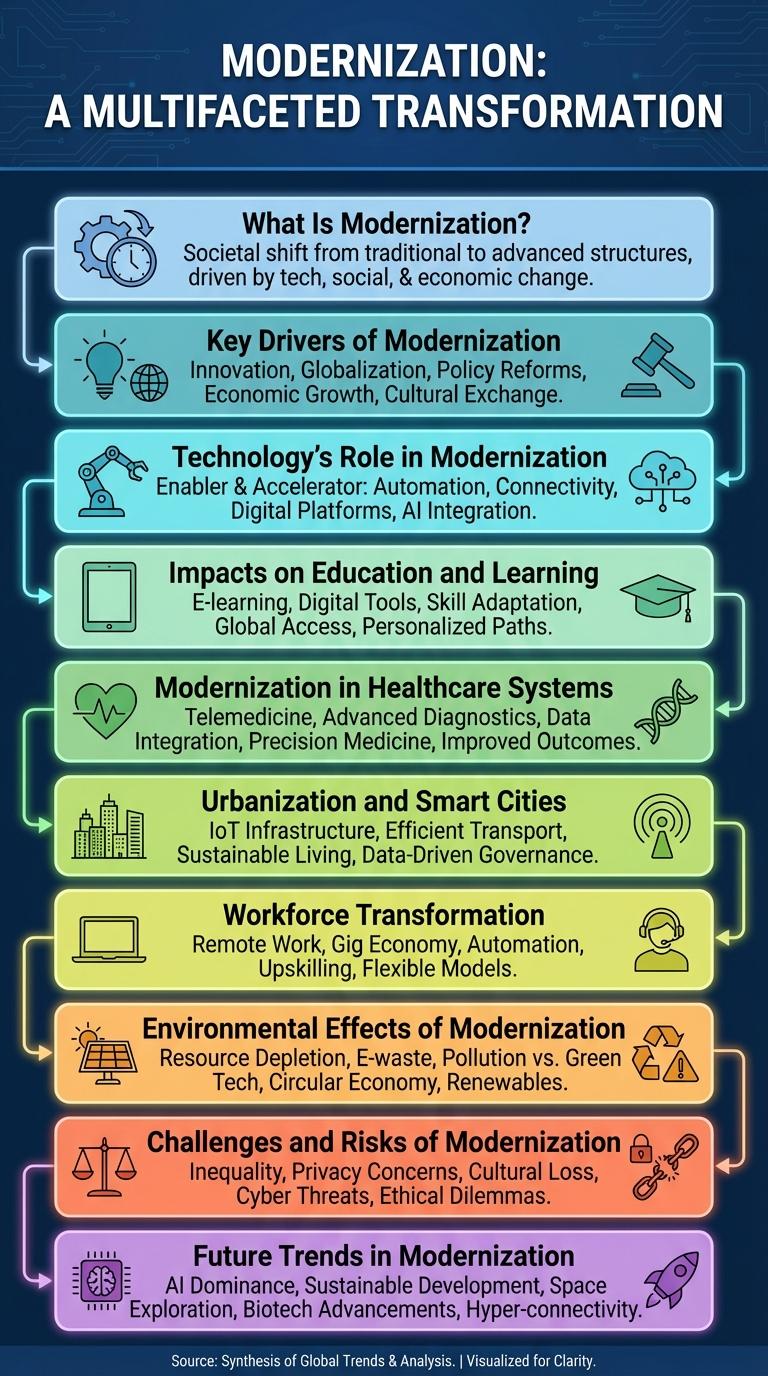
Modernization transforms societies by integrating advanced technologies and innovative practices, enhancing efficiency and quality of life. It drives economic growth, reshapes infrastructure, and fosters cultural evolution in a rapidly changing world. This infographic highlights key aspects and impacts of modernization across various sectors.
What Is Modernization?
What is modernization?
Modernization refers to the process of transforming societies through technological advancements and social changes. It encompasses economic, political, and cultural development to improve living standards and infrastructure.
Key Drivers of Modernization
Modernization transforms societies by integrating innovative technologies and evolving social structures. Key drivers propel this dynamic change, shaping economic growth and cultural shifts.
- Technological Advancement - Continuous innovation in technology accelerates productivity and connectivity across industries.
- Economic Development - Increasing investment and improved infrastructure boost industrialization and urban growth.
- Education and Skill Development - Enhanced education systems foster a skilled workforce ready for modern challenges.
- Political Stability and Governance - Effective governance promotes policy reforms that support modernization efforts.
- Globalization - Cross-border interactions facilitate cultural exchange and economic integration on a global scale.
Understanding these drivers helps in strategizing effective modernization policies and sustainable development.
Technology's Role in Modernization
Technology plays a crucial role in modernization by driving innovation and increasing efficiency across industries. Advances in digital tools, automation, and communication technologies transform traditional processes and enable smarter decision-making. This acceleration of technology adoption fosters economic growth and improves quality of life worldwide.
Impacts on Education and Learning
Modernisasyon transforms education by integrating digital technologies, enabling interactive and personalized learning experiences. It promotes access to a vast array of online resources, enhancing knowledge acquisition beyond traditional classrooms. This shift fosters critical thinking and adaptability, essential skills for the evolving global landscape.
Modernization in Healthcare Systems
Modernization in healthcare systems involves integrating advanced technologies and improving infrastructure to enhance patient care and operational efficiency. Digital tools, such as electronic health records and telemedicine, play a crucial role in this transformation.
Healthcare modernization aims to reduce costs while improving accessibility and quality of services. Implementation of AI-driven diagnostics and wearable health devices allows for early detection and personalized treatment plans. Upgrading hospital facilities and training healthcare professionals ensure better management and patient outcomes.
Urbanization and Smart Cities
Modernization drives rapid urbanization, reshaping population distribution and city development worldwide. Smart cities integrate advanced technology to optimize urban living and resource management.
- Urbanization Growth - Over 55% of the global population resides in urban areas, expected to reach 68% by 2050, demanding sustainable infrastructure expansion.
- Smart City Technology - IoT devices and AI systems enable efficient traffic management, energy use, and public safety services in smart cities.
- Environmental Impact - Modern urban planning incorporates green spaces and renewable energy to reduce pollution and enhance residents' well-being.
Workforce Transformation
Workforce transformation is a critical component of modernization, involving the integration of advanced technologies and reskilling employees to meet evolving business demands. Organizations harness digital tools like AI, automation, and cloud computing to enhance productivity and innovation.
Continuous learning and agile work cultures enable employees to adapt swiftly to change, driving operational efficiency and competitive advantage. Emphasizing diversity and collaboration further strengthens workforce capabilities in a modernized environment.
Environmental Effects of Modernization
| Environmental Effect | Description |
|---|---|
| Increased Pollution | Industrial growth and urban development lead to higher air, water, and soil pollution levels, harming ecosystems and human health. |
| Deforestation | Expansion of agricultural land and infrastructure causes large-scale forest loss, reducing biodiversity and carbon sequestration. |
| Resource Depletion | Modernization drives intensive extraction of natural resources such as minerals, water, and fossil fuels, resulting in scarcity and environmental degradation. |
| Greenhouse Gas Emissions | Increased use of fossil fuels in transportation, manufacturing, and energy sectors accelerates climate change through elevated CO2 and methane levels. |
| Habitat Disruption | Urban sprawl and industrial projects fragment natural habitats, endangering wildlife and disrupting ecological balance. |
Challenges and Risks of Modernization
Modernization drives significant economic growth and technological advancement, yet it brings numerous challenges and risks. Infrastructure strain and social disparities often accompany rapid development, creating complex issues to address.
Environmental degradation and cultural erosion pose persistent risks associated with modernization. Balancing progress with sustainability and social equity remains essential for long-term success.