
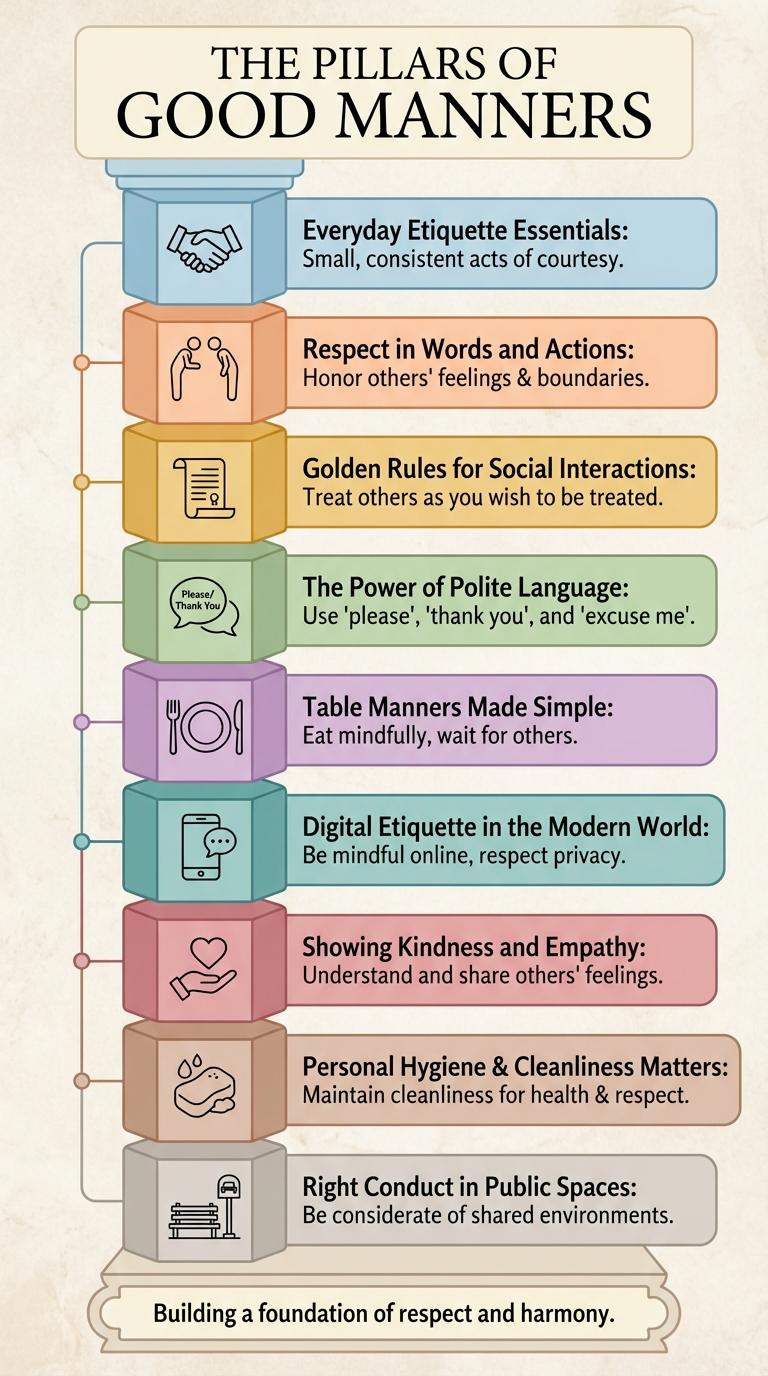
Good manners and right conduct form the foundation of respectful and harmonious interactions in everyday life. Practicing politeness, empathy, and consideration fosters positive relationships and creates a welcoming environment. Understanding key etiquette principles enhances communication and demonstrates social awareness in diverse settings.
The Pillars of Good Manners
Good manners and right conduct are the foundation of respectful and harmonious social interactions. They create a positive environment where everyone feels valued and understood.
The pillars of good manners include respect, kindness, honesty, empathy, and responsibility. These core values guide behavior and help build trust in personal and professional relationships.
Everyday Etiquette Essentials
Good manners and right conduct enhance social interactions and foster positive relationships. Practicing everyday etiquette, such as polite greetings, active listening, and respectful communication, creates a harmonious environment. These simple habits reflect kindness, consideration, and self-discipline in daily life.
Respect in Words and Actions
How can respect be shown through our words and actions? Respect in communication means choosing polite language and speaking kindly to others. Actions like listening attentively and acknowledging others' feelings also demonstrate genuine respect.
Why is respectful behavior important in daily interactions? Respect fosters trust and creates a positive environment where everyone feels valued. It encourages cooperation and reduces conflicts in social and professional settings.
What are some examples of respectful language? Using phrases such as "please," "thank you," and "excuse me" shows consideration for others. Avoiding insults, sarcasm, and interrupting reflects respect in conversations.
How do respectful actions impact relationships? Simple acts like greeting others warmly, offering help, and respecting personal space build strong connections. Consistent respectful conduct promotes harmony and mutual understanding.
What role does empathy play in respectful conduct? Empathy helps us understand and appreciate others' perspectives and feelings. Practicing empathy leads to more thoughtful words and actions that honor individual differences and dignity.
Golden Rules for Social Interactions
| Golden Rule | Description |
|---|---|
| Respect Others | Listen attentively and value different opinions to create positive social environments. |
| Practice Politeness | Use courteous language like "please," "thank you," and "excuse me" in everyday interactions. |
| Be Honest | Maintain trust by being truthful and transparent in communication. |
| Show Empathy | Understand and share the feelings of others to foster compassion and connection. |
| Respect Personal Space | Maintain appropriate physical distance to ensure comfort and privacy during conversations. |
The Power of Polite Language
Good manners and right conduct shape positive interactions and build respect in all social settings. Polite language is a key element that enhances communication and fosters goodwill.
Using words like "please," "thank you," and "excuse me" shows consideration and kindness. Polite language reduces misunderstandings and creates a welcoming atmosphere. Mastering courteous expressions empowers individuals to influence others positively.
Table Manners Made Simple
Good manners and right conduct create a positive impression and show respect for others. Mastering simple table manners enhances social interactions and dining experiences.
- Use utensils properly - Hold forks and knives correctly to eat neatly and efficiently.
- Chew with your mouth closed - Avoid showing food while chewing to maintain polite dining etiquette.
- Wait to eat - Start eating only after everyone is served to show consideration.
- Keep elbows off the table - Maintain good posture and avoid discomfort for others.
- Speak politely - Use soft tones and avoid interrupting during conversations at the table.
Digital Etiquette in the Modern World
Good manners and right conduct extend beyond face-to-face interactions into the digital world. Practicing digital etiquette helps create a respectful and safe online environment.
Respect others' privacy by not sharing personal information without consent. Avoid using offensive language and be mindful of tone in digital communications.
Showing Kindness and Empathy
Good manners and right conduct begin with showing kindness and empathy to others. Simple acts like listening attentively and offering help create positive, respectful interactions. Demonstrating genuine care fosters trust and strengthens relationships in all social settings.
Personal Hygiene & Cleanliness Matters
Good manners and right conduct begin with personal hygiene and cleanliness, which promote health and social acceptance. Maintaining these habits reflects respect for oneself and others in everyday interactions.
- Regular Handwashing - Washing hands with soap removes germs and prevents the spread of illnesses.
- Daily Bathing - Bathing helps eliminate body odor and keeps skin healthy.
- Clean Clothing - Wearing clean clothes contributes to a neat appearance and boosts confidence.