
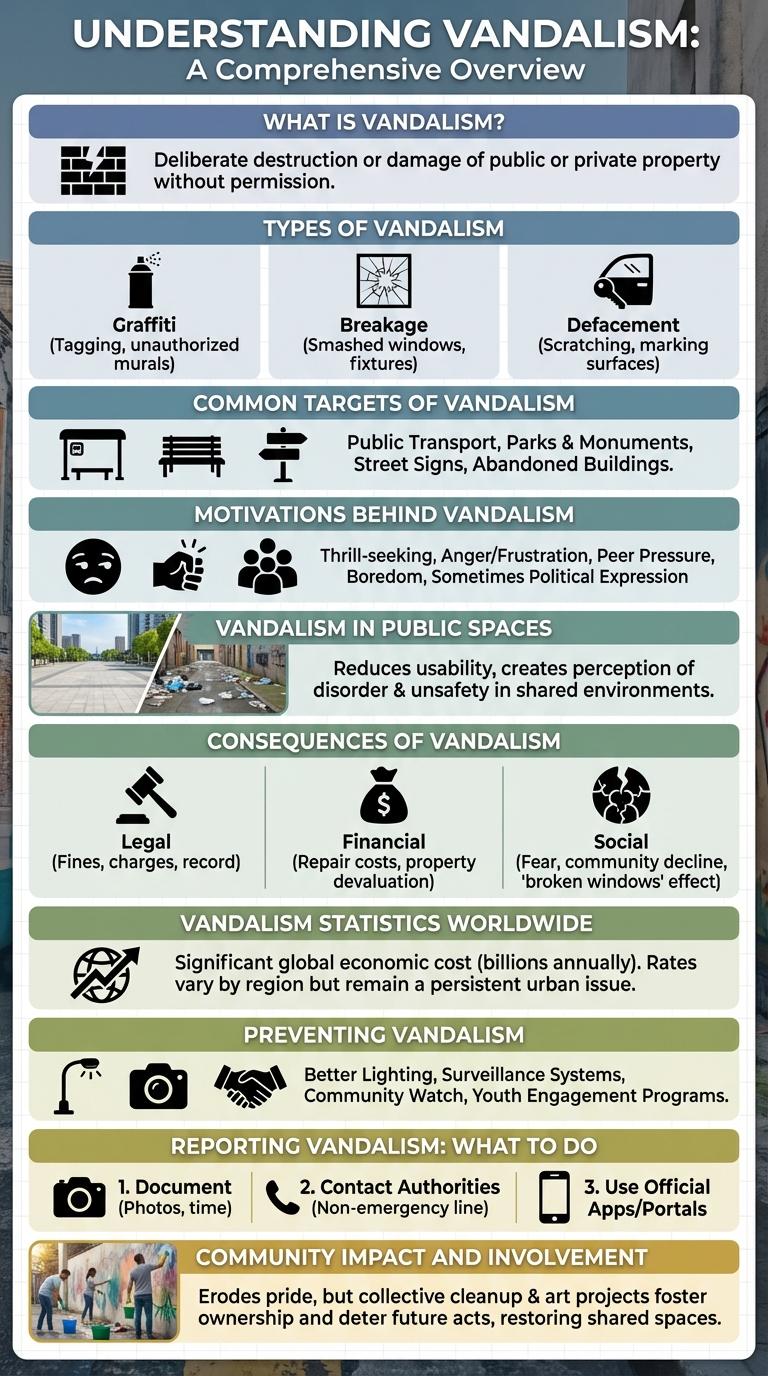
Vandalism causes significant damage to public and private property, impacting communities both economically and socially. Understanding the patterns and effects of vandalism through visual data helps raise awareness and promotes preventive measures. Infographics provide a clear and engaging way to communicate key statistics and consequences related to vandalism.
What Is Vandalism?
Vandalism refers to the deliberate destruction or damage to property without the owner's permission. It impacts communities by causing financial loss and reducing public safety.
- Definition - Vandalism involves willful acts that harm or deface property belonging to others.
- Types - Common forms include graffiti, breaking windows, and damaging vehicles or public infrastructure.
- Consequences - Vandalism leads to costly repairs, legal penalties, and diminished neighborhood appeal.
Types of Vandalism
Vandalism refers to the deliberate destruction or defacement of property. It impacts communities by causing financial loss and creating unsafe environments.
Types of vandalism include graffiti, property damage, and vehicle defacement. Each type varies in method but shares the common goal of damaging public or private spaces.
Common Targets of Vandalism
Vandalism frequently affects public and private properties, causing significant damage and financial loss. Understanding common targets helps in developing effective prevention strategies.
- Public Transportation - Buses, trains, and subway stations are often targeted due to high visibility and accessibility.
- Street Signs and Traffic Signals - These are vandalized to disrupt public order and cause confusion.
- Schools and Educational Facilities - Graffiti and property damage often occur in these locations, affecting learning environments.
Protecting these common targets reduces vandalism and enhances community safety.
Motivations Behind Vandalism
Vandalism often stems from a mix of social, psychological, and economic factors. Common motivations include frustration, desire for attention, and rebellion against authority. Understanding these underlying causes helps in developing effective prevention strategies.
Vandalism in Public Spaces
Vandalism in public spaces significantly impacts community safety and aesthetics. Public areas like parks, bus stops, and sidewalks often become targets, leading to costly repairs and decreased property values.
- High Incidence Rates - Over 70% of urban areas report frequent vandalism occurrences in public spaces annually.
- Costly Economic Impact - Municipalities spend billions each year on repairing vandalized public infrastructure and facilities.
- Reduced Public Safety - Vandalized spaces contribute to increased fear of crime, deterring community engagement and usage.
Consequences of Vandalism
Vandalism causes significant property damage, leading to costly repairs and decreased property values. It fosters an unsafe environment, affecting community well-being and local businesses.
Legal consequences include fines, community service, and potential jail time for offenders. Public resources such as police and cleanup crews are heavily impacted by vandalism incidents, straining municipal budgets.
Vandalism Statistics Worldwide
Vandalism remains a significant global issue, affecting communities and public spaces across all continents. It involves deliberate destruction or damage to property, leading to costly repairs and a sense of insecurity.
According to recent studies, over 30 million cases of vandalism occur worldwide annually, with urban areas experiencing the highest rates. Public transportation systems, schools, and parks are the most common targets. Countries with higher population densities tend to report increased incidents, emphasizing the need for effective prevention measures.
Preventing Vandalism
| Preventing Vandalism | Effective Strategies |
|---|---|
| Community Engagement | Organize neighborhood watch programs and community clean-up events to foster local pride and deter vandals. |
| Improved Lighting | Install bright, energy-efficient lighting in vulnerable areas to increase visibility and reduce vandalism opportunities. |
| Surveillance Systems | Use CCTV cameras strategically placed in high-risk areas to monitor and record suspicious behavior. |
| Rapid Repairs | Address vandalism promptly to discourage further damage and maintain a positive environment. |
| Educational Campaigns | Implement school and community programs that teach respect for property and the consequences of vandalism. |
Reporting Vandalism: What to Do
Reporting vandalism swiftly helps authorities take immediate action and prevent further damage. Provide clear details including the location, time, and description of the vandalism when contacting local law enforcement. Utilize community apps or hotlines designed for reporting such incidents to ensure your report reaches the right channels effectively.