
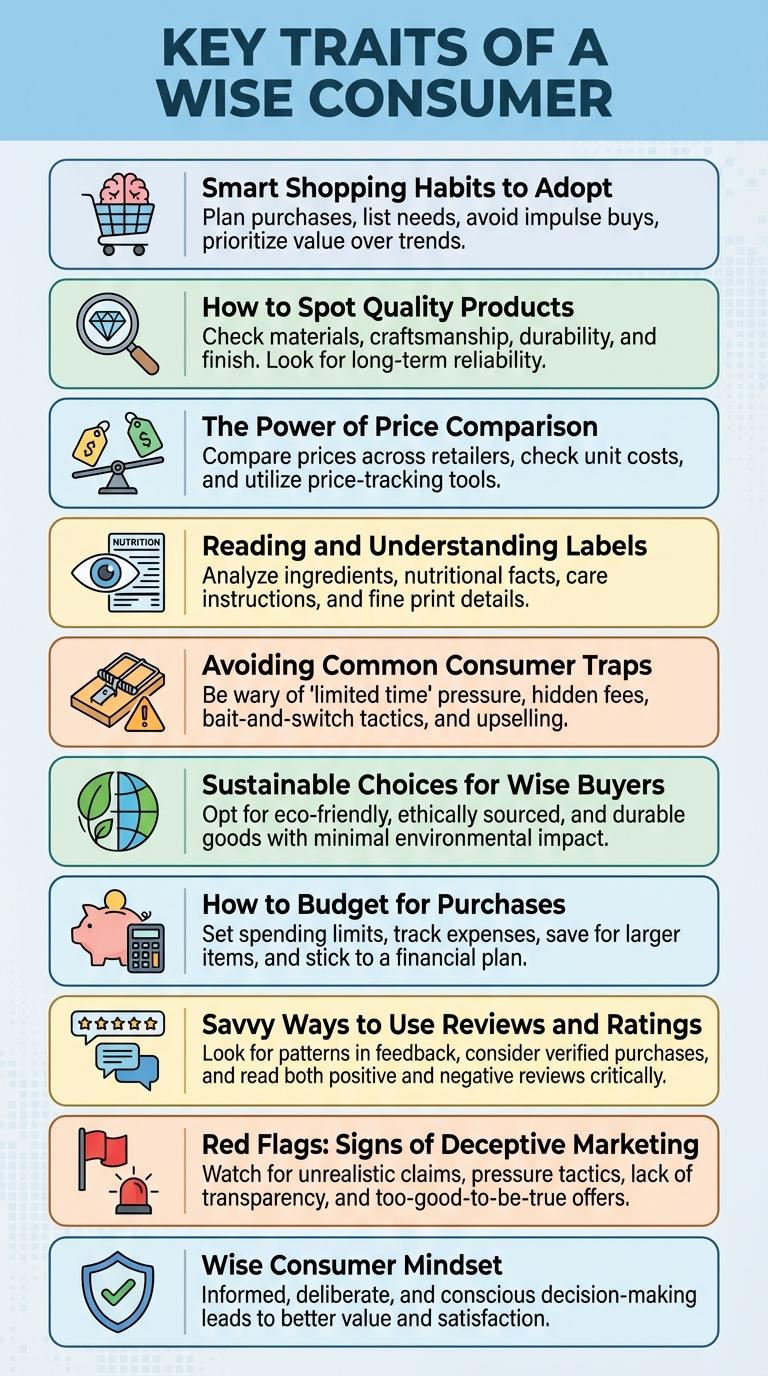
A wise consumer carefully evaluates product quality, price, and sustainability before making a purchase. They prioritize informed decisions by researching brands, comparing options, and reading reviews to avoid impulsive spending. Smart shopping habits lead to better value and contribute to responsible consumption.
Key Traits of a Wise Consumer
Wise consumers make informed decisions by evaluating product value and long-term benefits. They balance quality, cost, and sustainability in their purchasing habits to optimize satisfaction and impact.
- Research-Oriented - A wise consumer investigates product details and compares alternatives before purchasing.
- Budget-Conscious - Effective spending aligns with personal financial goals and avoids unnecessary expenses.
- Quality-Focused - Preference for durable and reliable products ensures better value over time.
Smart Shopping Habits to Adopt
| Smart Shopping Habit | Benefit |
|---|---|
| Comparison Shopping | Identify best prices and avoid impulse buys |
| Budget Planning | Control spending and prioritize essential purchases |
| Research Products | Understand features and reviews to ensure value |
| Use Coupons and Discounts | Save money on regular and big-ticket items |
| Buy Quality Over Quantity | Invest in durable products, reducing frequent replacements |
How to Spot Quality Products
Wise consumers recognize quality products by examining materials, brand reputation, and customer reviews. Authentic products often feature detailed labels and consistent packaging, which indicate reliability.
Checking for certifications and warranties ensures product durability and safety. Understanding the difference between genuine and counterfeit items helps avoid poor investments and disappointment.
The Power of Price Comparison
Price comparison empowers consumers to make informed purchasing decisions by identifying the best deals available. This practice helps save money and ensures value for every dollar spent.
- Saves Money - Comparing prices across sellers allows consumers to find lower prices and maximize their budget.
- Enhances Transparency - Access to multiple pricing options provides clarity on product value and market trends.
- Boosts Consumer Confidence - Knowing the best price builds trust and reduces buyer's remorse.
Reading and Understanding Labels
Wise consumers carefully read and understand product labels to make informed purchasing decisions. They pay attention to nutritional information, ingredients, and expiration dates to ensure product quality and safety. This practice helps avoid allergens, manage health goals, and prevent buying misleading or low-quality items.
Avoiding Common Consumer Traps
Wise consumers recognize common traps designed to mislead and exploit. Awareness of these pitfalls helps maintain financial health and satisfaction.
Always research products thoroughly to avoid impulse purchases influenced by flashy advertisements. Comparing prices and reading reviews prevents overspending and buyer's remorse.
Sustainable Choices for Wise Buyers
Wise consumers prioritize sustainable choices to reduce environmental impact and support ethical production practices. They select products made from renewable resources, minimal packaging, and fair-trade certifications. Sustainable buying habits contribute to long-term ecological balance and promote responsible consumption patterns.
How to Budget for Purchases
How can you effectively budget for your purchases? Setting a clear budget helps you control spending and avoid unnecessary debt. Tracking expenses ensures you stay within your financial limits and prioritize essential items.
What steps should be taken before making a purchase? Research prices and compare options to get the best deals. Planning ahead prevents impulse buys and supports smarter financial decisions.
Why is setting spending limits important? Spending limits keep your budget realistic and manageable. They help maintain balance between wants and needs, promoting financial stability.
How can you track your spending efficiently? Use budgeting apps or spreadsheets to monitor purchases in real-time. Consistent tracking highlights spending patterns and opportunities to save.
What role does saving play in budgeting for purchases? Allocating funds to savings ensures you have reserves for unexpected costs. It also provides a cushion for future planned purchases without compromising daily expenses.
Savvy Ways to Use Reviews and Ratings
Smart shoppers rely on reviews and ratings to make informed purchase decisions. Understanding how to effectively use this data can lead to better product choices and greater satisfaction.
Analyze multiple reviews to identify consistent pros and cons rather than focusing on outliers. Pay attention to detailed feedback and verified purchases for authenticity. Use ratings trends over time to gauge product reliability and quality improvements.