
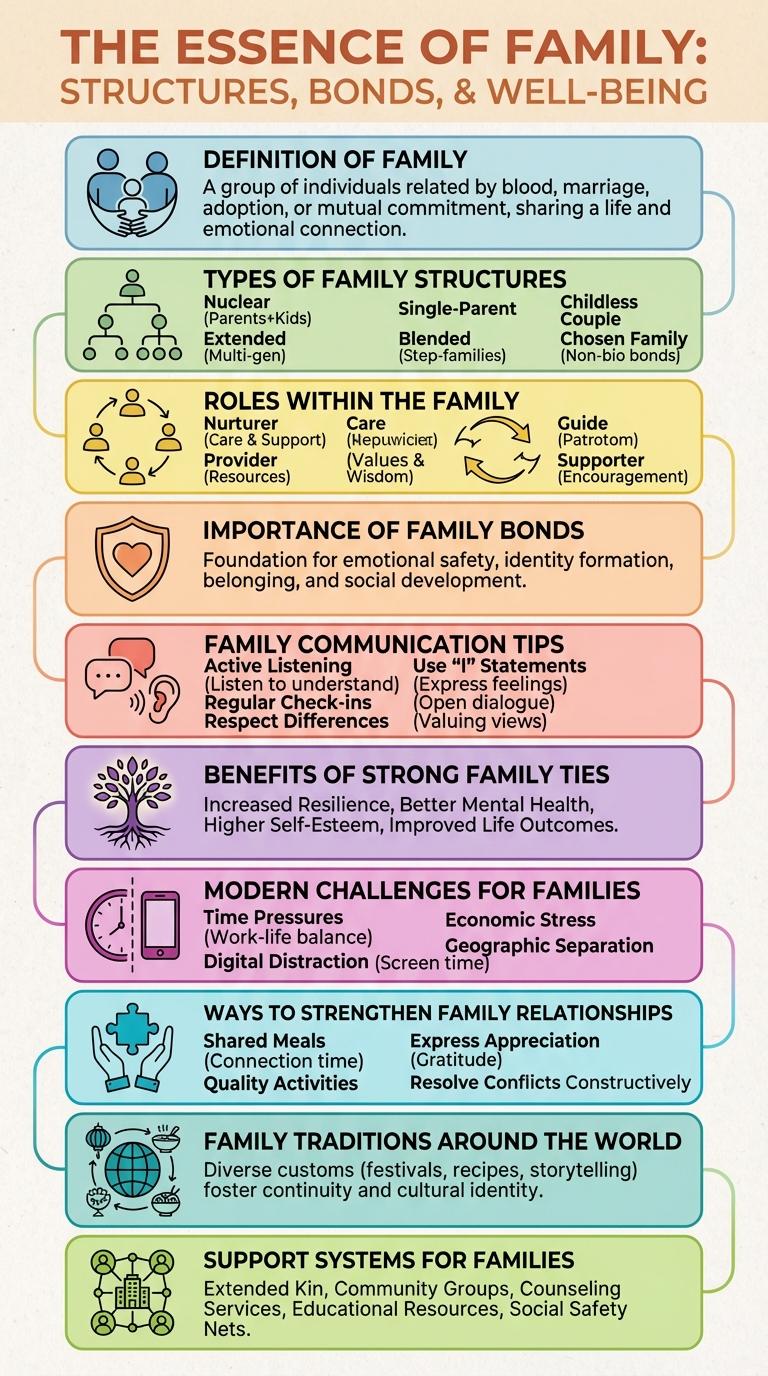
An infographic about family visually presents key information and statistics related to family structures, dynamics, and roles. It highlights trends in household composition, parenting styles, and generational relationships. The infographic offers clear, concise insights that help readers understand the evolving nature of family life.
Definition of Family
Family is a social unit consisting of individuals related by blood, marriage, or adoption. It serves as the primary structure for emotional support, nurturing, and socialization.
- Biological Family - Comprises members connected through genetic ties such as parents, siblings, and children.
- Nuclear Family - Consists of two parents and their children living together as a single household unit.
- Extended Family - Includes relatives beyond the nuclear family, like grandparents, aunts, uncles, and cousins, often sharing close bonds and support networks.
Types of Family Structures
Family structures vary widely across cultures and societies, each providing unique support systems and dynamics. Understanding these types helps in appreciating the diversity of family roles and relationships.
Nuclear families consist of two parents and their children, forming the most common household unit globally. Extended families include additional relatives like grandparents, aunts, or uncles living together or maintaining close ties.
Roles Within the Family
The family is a fundamental social unit where each member plays a unique and vital role. Roles within the family contribute to emotional support, development, and maintaining harmony.
Parents often act as caregivers, providers, and role models, guiding the family's growth and values. Children contribute by learning, supporting, and eventually taking on responsibilities as they mature.
Importance of Family Bonds
Strong family bonds provide emotional support, fostering a sense of security and belonging. These connections promote mental well-being and resilience during challenging times. Investing time in family relationships strengthens communication and trust, essential for lifelong unity.
Family Communication Tips
| Tip | Description |
|---|---|
| Active Listening | Pay full attention when a family member is speaking to foster understanding and trust. |
| Open Expression | Encourage sharing thoughts and feelings honestly without fear of judgment. |
| Regular Family Meetings | Set aside time for family discussions to address issues and plan activities together. |
| Positive Language | Use supportive and respectful words to build stronger relationships. |
| Nonverbal Cues | Recognize body language and facial expressions to better understand emotions. |
Benefits of Strong Family Ties
Why are strong family ties essential for personal well-being? Strong family bonds provide emotional support and a sense of belonging. These connections enhance mental health and foster resilience during challenging times.
How do strong family relationships impact physical health? Families encourage healthy habits and regular medical care, reducing the risk of chronic illnesses. Supportive family environments contribute to lower stress levels and improved overall health.
What role do family ties play in children's development? Strong family connections promote secure attachment, boosting children's social and cognitive skills. These relationships create a stable foundation for academic success and self-confidence.
In what ways do family bonds influence financial stability? Families often share resources and provide financial assistance during hardships. Cooperative family dynamics can improve economic security and reduce poverty risks.
How do strong family ties affect social behavior? Close family relationships teach empathy, communication, and conflict resolution skills. These social skills contribute to healthier relationships outside the family circle.
Modern Challenges for Families
Families today face unique challenges that impact their stability and well-being. Understanding these issues helps in creating supportive environments for all members.
- Work-Life Balance - Many families struggle to manage professional demands alongside quality family time.
- Financial Pressures - Rising living costs and economic uncertainty increase stress on household budgets.
- Digital Influence - Technology affects family interactions, creating both connection and communication barriers.
Ways to Strengthen Family Relationships
Strong family relationships create a foundation of trust and support. Prioritizing connection enhances emotional well-being for every member.
- Regular Communication - Open and honest conversations build understanding and resolve conflicts early.
- Quality Time - Shared activities create lasting memories and strengthen bonds within the family.
- Mutual Respect - Valuing each other's opinions fosters a positive and loving home environment.
Nurturing these practices contributes to a durable and loving family dynamic.
Family Traditions Around the World
Family traditions shape cultural identities and create lasting memories. Around the world, these customs vary widely, reflecting the rich diversity of human experience.
In Japan, families celebrate Obon by honoring ancestors with lanterns and dances. In Mexico, Dia de los Muertos includes colorful altars and festive gatherings. Meanwhile, in Italy, Sunday family lunches bring multiple generations together to share homemade meals.