
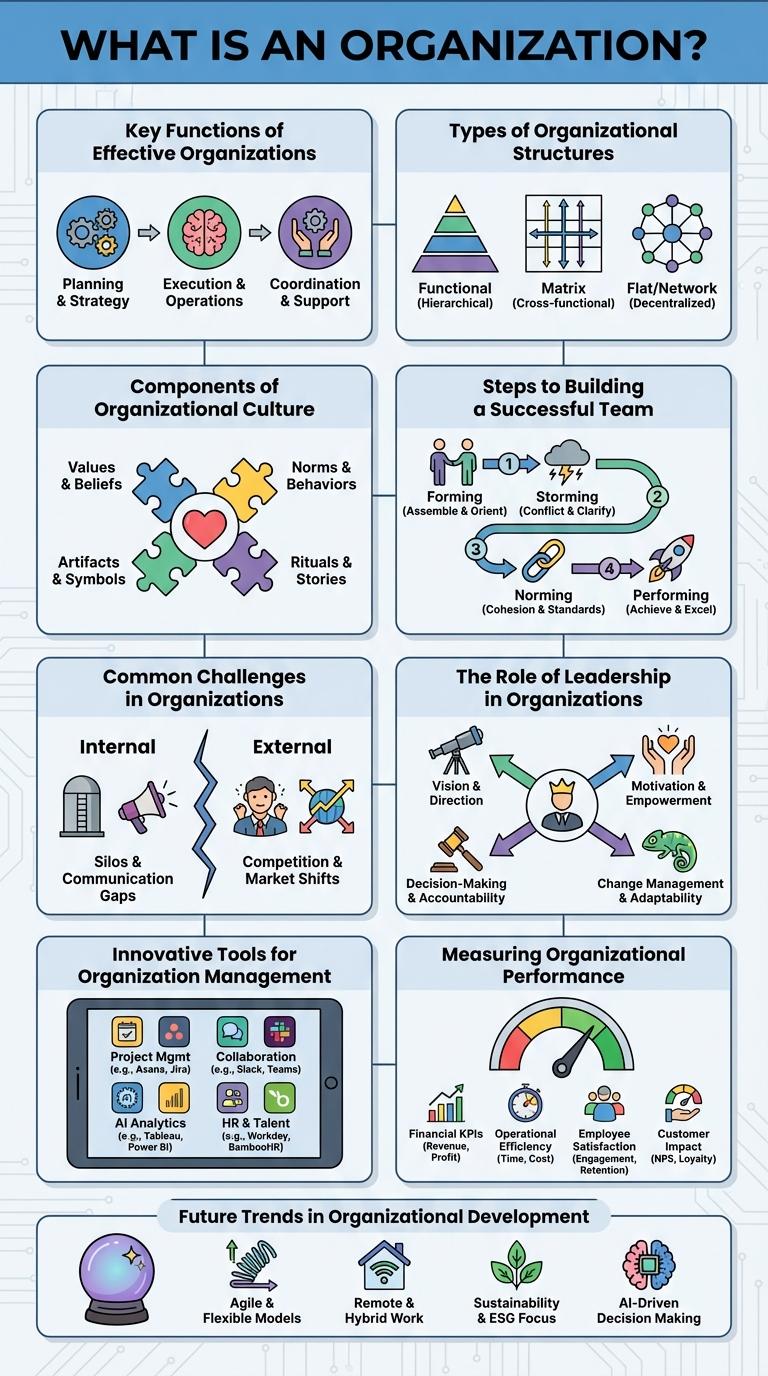
Effective organization streamlines communication, enhances productivity, and clarifies roles within a team or company. Visualizing these elements through an infographic simplifies complex structures, making it easier to understand workflows and responsibilities at a glance. This visual tool supports better decision-making and improves overall efficiency by highlighting key organizational components.
What Is an Organization?
An organization is a structured group of people working together to achieve common goals. It involves coordinated efforts and resources to fulfill specific objectives.
- Definition - An organization is a system where individuals collaborate to accomplish shared purposes.
- Structure - Organizations have defined roles, responsibilities, and hierarchies to ensure efficient workflow.
- Purpose - The primary aim of an organization is to meet targets, solve problems, or deliver services effectively.
Understanding organizations helps clarify how collective efforts drive success in diverse fields.
Key Functions of Effective Organizations
Effective organizations operate through clearly defined key functions that ensure smooth operations and goal achievement. These core functions provide structure, enhance productivity, and foster collaboration among teams.
Key functions include planning, organizing, leading, and controlling, each playing a vital role in driving organizational success. Understanding these functions helps businesses streamline processes and adapt to changing environments efficiently.
Types of Organizational Structures
| Organizational Structure | Description |
|---|---|
| Functional Structure | Groups employees based on specialized roles or functions such as marketing, finance, and operations. Enhances efficiency in specialized tasks. |
| Divisional Structure | Organizes departments according to products, markets, or geographic locations. Promotes focus on specific business units or customer groups. |
| Matrix Structure | Combines functional and divisional structures, where employees report to multiple managers. Facilitates flexible collaboration and resource sharing. |
| Flat Structure | Reduces hierarchy levels, encouraging open communication and faster decision-making. Suitable for small or agile organizations. |
| Hierarchical Structure | Features a clear chain of command with multiple management levels. Supports defined authority and accountability within large organizations. |
Components of Organizational Culture
Organizational culture shapes the behaviors, values, and beliefs within a company, guiding how employees interact and make decisions. Understanding its core components is essential for fostering a cohesive and productive work environment.
- Values - Core principles and standards that drive decision-making and behavior in the organization.
- Beliefs - Shared assumptions and perceptions about how the organization operates and the external environment.
- Norms - Informal guidelines and expectations that influence daily actions and interactions among employees.
- Symbols - Visual representations such as logos, slogans, and office design that communicate the organizational identity.
- Rituals and Ceremonies - Routine activities and events that reinforce the culture and celebrate achievements.
Steps to Building a Successful Team
How can organizations build successful teams? Effective team-building starts with clear goal setting and open communication. Aligning individual strengths with project needs fosters collaboration and productivity.
What role does trust play in team success? Trust creates a supportive environment where members feel valued and motivated. Encouraging transparency and accountability strengthens team cohesion.
How important is diversity in successful teams? Diverse perspectives drive innovation and problem-solving. Embracing different backgrounds enhances creativity and decision-making.
Which strategies improve team collaboration? Regular feedback and conflict resolution promote harmony. Utilizing collaborative tools and defining roles increases efficiency.
How does leadership influence team building? Strong leaders inspire vision and commitment. Providing guidance and recognizing achievements boosts morale and performance.
Common Challenges in Organizations
Organizations often face challenges such as communication breakdowns, resistance to change, and resource constraints. These issues can hinder productivity and employee morale. Effective strategies and clear leadership are essential to overcoming these obstacles.
The Role of Leadership in Organizations
Leadership plays a critical role in shaping organizational culture, driving innovation, and setting strategic direction. Effective leaders inspire employees, foster collaboration, and enhance productivity. Strong leadership directly impacts organizational success by aligning team efforts with company goals.
Innovative Tools for Organization Management
Innovative tools for organization management streamline workflows and enhance team collaboration. These technologies enable real-time communication, project tracking, and data integration, improving overall productivity.
Popular tools include AI-powered task managers, cloud-based document sharing platforms, and advanced analytics software. These solutions support decision-making and optimize resource allocation across departments.
Measuring Organizational Performance
Measuring organizational performance is essential for understanding a company's effectiveness in achieving its goals. Accurate performance metrics guide strategic decisions and drive continuous improvement.
- Key Performance Indicators (KPIs) - Quantitative metrics that track progress toward specific organizational objectives.
- Balanced Scorecard - A strategic tool that evaluates financial, customer, internal process, and learning growth perspectives.
- Benchmarking - Comparing organizational performance against industry standards or competitors to identify improvement areas.