
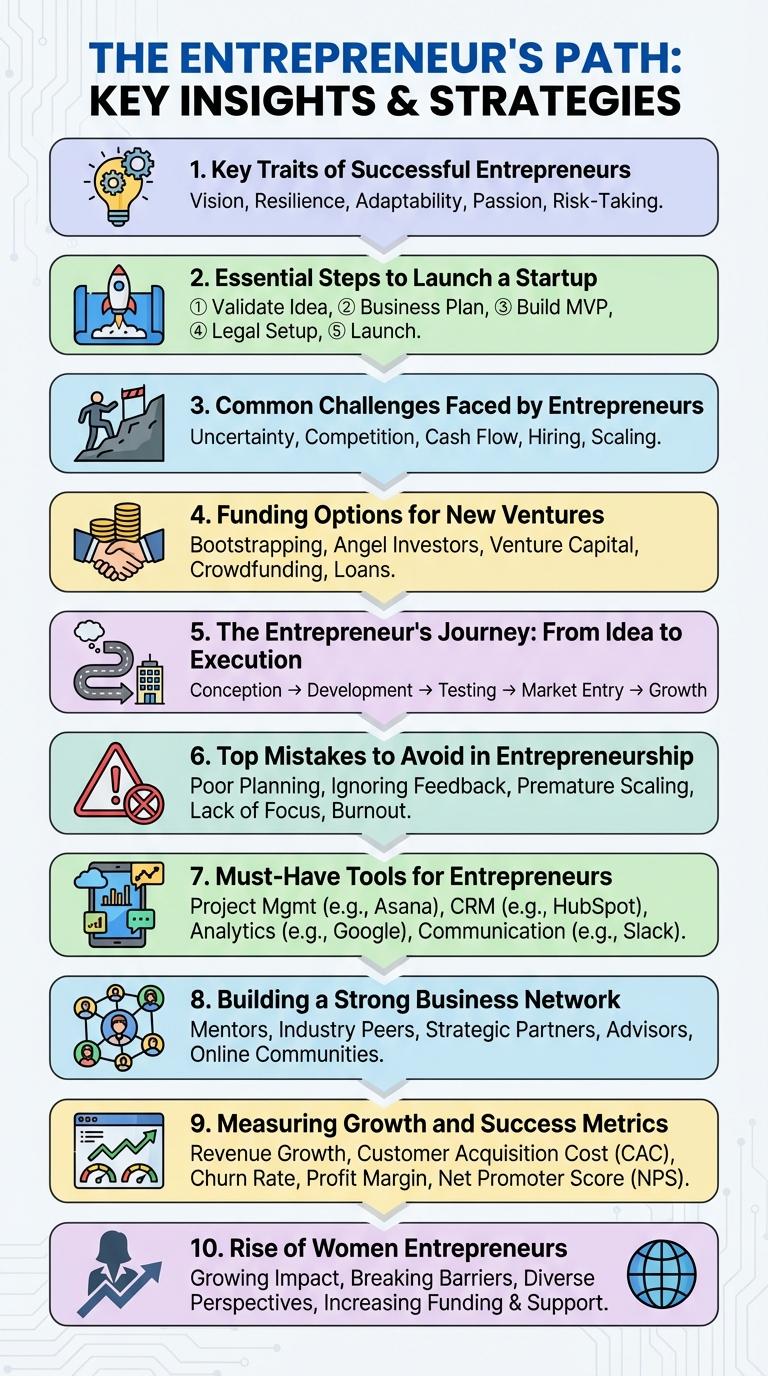
Entrepreneurship drives innovation and economic growth by transforming ideas into successful businesses. Visualizing key statistics and trends through an infographic highlights the challenges and opportunities faced by entrepreneurs. This presentation simplifies complex data, offering clear insights into the startup ecosystem and its impact on society.
Key Traits of Successful Entrepreneurs
Successful entrepreneurs possess a unique set of key traits that drive their ventures forward. These traits include resilience, creativity, and strong leadership skills.
Resilience helps entrepreneurs overcome challenges and setbacks, while creativity allows them to innovate and find new market opportunities. Effective leadership enables them to inspire teams and manage resources efficiently.
Essential Steps to Launch a Startup
Launching a startup involves careful planning and strategic execution. Entrepreneurs must navigate multiple critical steps to transform ideas into successful businesses.
- Market Research - Analyze target audiences and competitors to validate demand and refine your business idea.
- Business Plan - Develop a detailed roadmap outlining goals, strategies, financial forecasts, and operational plans.
- Funding Acquisition - Secure capital through investors, loans, or crowdfunding to support initial growth and development.
- Product Development - Create a minimum viable product (MVP) to test usability and gather customer feedback.
- Launch Strategy - Implement marketing and sales plans aimed at maximizing reach and early customer acquisition.
Following these essential steps improves the likelihood of startup success and sustainable growth.
Common Challenges Faced by Entrepreneurs
Entrepreneurs frequently encounter obstacles such as securing funding, managing time effectively, and navigating market competition. Building a strong customer base while maintaining cash flow remains a critical challenge. Overcoming these issues requires strategic planning, resilience, and adaptability.
Funding Options for New Ventures
Entrepreneurs seeking to launch new ventures can explore various funding options including bootstrapping, angel investors, venture capital, and crowdfunding. Each funding source offers distinct advantages and requirements, influencing control, equity, and business growth potential. Selecting the appropriate funding type depends on the startup's industry, scale, and long-term vision.
The Entrepreneur's Journey: From Idea to Execution
Entrepreneurship is a dynamic process that transforms innovative ideas into successful businesses. Understanding the stages of this journey helps aspiring entrepreneurs navigate challenges effectively.
The Entrepreneur's Journey: From Idea to Execution outlines key phases essential for business success.
- Ideation - Generating and refining a viable business concept based on market needs and personal passion.
- Planning - Crafting a detailed business plan including market analysis, financial projections, and strategy.
- Execution - Launching the product or service, managing operations, and adapting to feedback for growth.
Top Mistakes to Avoid in Entrepreneurship
Entrepreneurship involves navigating complex challenges that can impact business success. Awareness of common mistakes helps entrepreneurs build stronger foundations for growth.
Failing to conduct proper market research can lead to poor product-market fit and wasted resources. Underestimating financial management often results in cash flow problems and business failure.
Must-Have Tools for Entrepreneurs
| Tool Category | Essential Tools |
|---|---|
| Project Management | Trello, Asana, Monday.com |
| Accounting & Finance | QuickBooks, FreshBooks, Wave |
| Communication | Slack, Zoom, Microsoft Teams |
| Marketing & Social Media | Hootsuite, Buffer, Canva |
| Customer Relationship Management (CRM) | HubSpot, Salesforce, Zoho CRM |
Building a Strong Business Network
Building a strong business network is essential for entrepreneurial success and growth. It provides opportunities for collaboration, mentorship, and access to resources.
- Connect with Industry Leaders - Engage with experienced professionals to gain insights and open doors to new possibilities.
- Attend Networking Events - Participate in conferences and meetups to expand your contacts and stay updated on market trends.
- Leverage Social Media Platforms - Use LinkedIn and other networks to maintain relationships and showcase your expertise.
Measuring Growth and Success Metrics
Entrepreneurship thrives on clear measurement of growth and success metrics to evaluate business performance and guide strategic decisions. Tracking these metrics allows entrepreneurs to identify strengths, address weaknesses, and optimize operations.
Key growth metrics include revenue growth rate, customer acquisition cost, and monthly active users. Success metrics often focus on profitability, customer retention rate, and net promoter score (NPS). Regular analysis of these data points provides critical insights for sustainable business expansion and market competitiveness.