
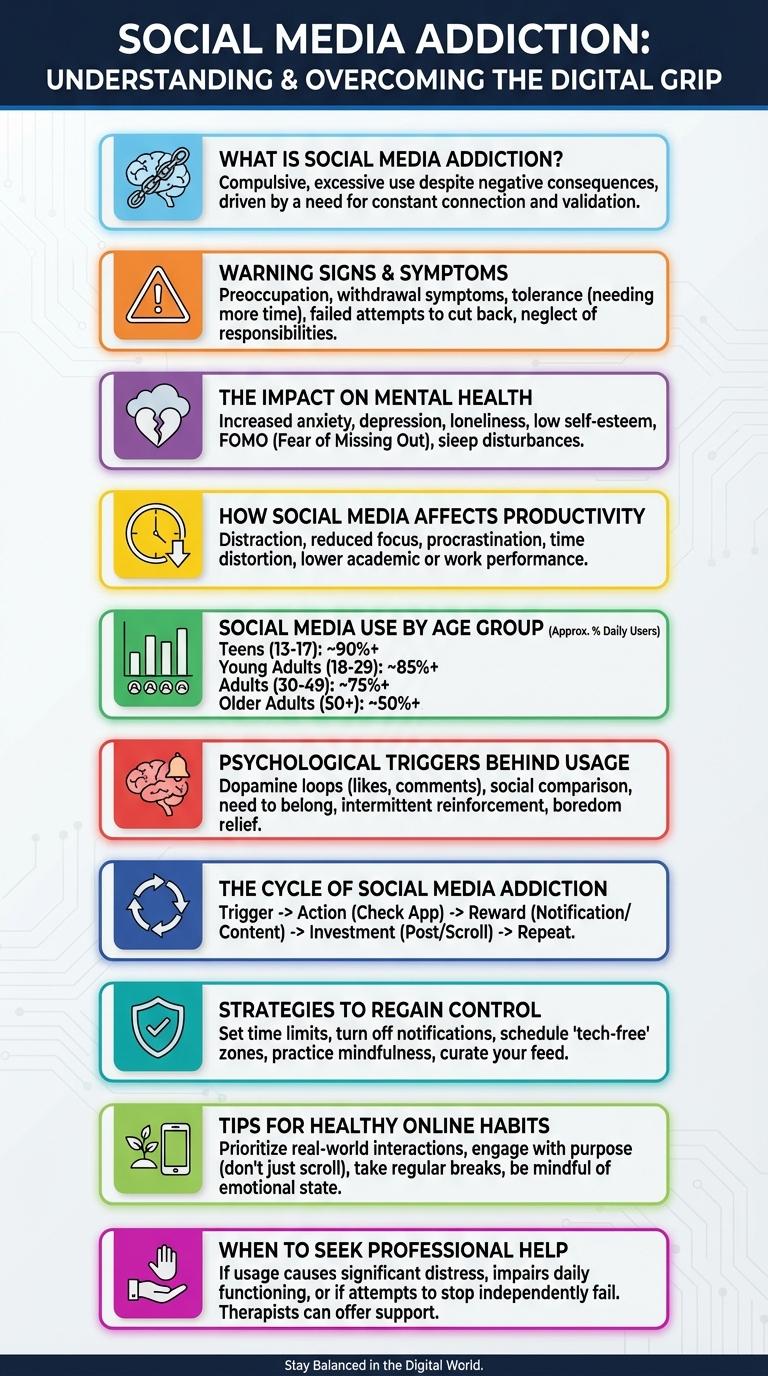
Social media addiction affects millions worldwide, impacting mental health and daily productivity. Excessive use leads to anxiety, depression, and disrupted sleep patterns. Understanding the signs and consequences helps promote healthier digital habits.
What Is Social Media Addiction?
Social media addiction is a compulsive need to check and use social media platforms despite negative consequences. It often leads to excessive time spent online, impacting daily life and mental health.
People with social media addiction experience anxiety and stress when unable to access their accounts. The constant urge to seek validation through likes and comments reinforces addictive behavior. Understanding this addiction helps in recognizing its symptoms and seeking appropriate help.
Warning Signs and Symptoms
Are you aware of the warning signs of social media addiction? Excessive time spent on social platforms can lead to diminished productivity and emotional distress. Recognizing symptoms early helps prevent negative impacts on mental health and daily life.
| Warning Sign | Symptom Description |
|---|---|
| Preoccupation | Constantly thinking about social media even when offline. |
| Withdrawal | Feeling anxious or irritable when unable to access social platforms. |
| Loss of Control | Unable to reduce time spent on social media despite attempts. |
| Neglecting Responsibilities | Ignoring work, family, or personal duties due to social media use. |
| Escapism | Using social media to avoid real-life problems or emotions. |
The Impact on Mental Health
| Aspect | Impact on Mental Health |
|---|---|
| Increased Anxiety | Frequent social media use correlates with heightened anxiety levels due to constant comparison and fear of missing out (FOMO). |
| Depression Risk | Extended screen time can intensify feelings of loneliness and depression, especially among teenagers and young adults. |
| Sleep Disruption | Excessive night-time social media use disrupts sleep patterns, reducing overall mental resilience and cognitive function. |
| Self-Esteem | Exposure to idealized images and lifestyles lowers self-esteem and contributes to body image issues. |
| Attention Span | Constant notifications and rapid content scrolling diminish attention span and increase distractibility. |
How Social Media Affects Productivity
Social media addiction significantly lowers individual productivity by causing frequent distractions. Continuous engagement with social platforms interrupts focus and reduces task efficiency.
- Decreased Attention Span - Social media notifications divert attention, leading to fragmented work patterns and reduced concentration.
- Increased Procrastination - Excessive scrolling leads to delayed task initiation and longer completion times.
- Reduced Work Quality - Frequent interruptions result in errors and lower overall performance levels.
Social Media Use by Age Group
Social media addiction affects all age groups, but usage patterns vary significantly by age. Younger users tend to spend more time on platforms compared to older adults.
Teens and young adults aged 16-24 spend an average of 3 hours daily on social media. In contrast, those aged 55 and above use social media for less than 1 hour daily on average.
Psychological Triggers Behind Usage
Social media addiction stems from deep psychological triggers influencing user behavior. Understanding these triggers helps reveal why individuals find it challenging to reduce screen time.
- Variable Reward System - Social media platforms use unpredictable rewards like likes and comments to stimulate dopamine release, reinforcing repeated use.
- Social Validation - Users seek approval and acceptance from their peers, driving continuous engagement to maintain self-esteem.
- Fear of Missing Out (FOMO) - Anxiety about missing important updates compels users to check platforms frequently, increasing dependency.
The Cycle of Social Media Addiction
Social media addiction involves a repetitive cycle of craving, usage, and temporary relief that reinforces compulsive behavior. Users often experience an urge to check notifications, leading to dopamine release and short-term satisfaction. This cycle repeats, causing increased screen time and dependency.
| Stage | Description |
|---|---|
| Trigger | Feeling bored or anxious prompts user to open social media apps. |
| Engagement | Scrolls through feeds, likes posts, or chats, releasing dopamine. |
| Reward | Experiences temporary pleasure and social validation. |
| Withdrawal | Feels restless or irritable without access to social media. |
| Relapse | Returns to social media to relieve withdrawal symptoms. |
Strategies to Regain Control
Social media addiction can significantly impact mental health and productivity. Implementing time management tools and setting daily usage limits helps regain control over screen time. Engaging in offline activities and seeking professional support strengthens the journey towards digital balance.
Tips for Healthy Online Habits
Social media addiction can impact mental health and daily productivity. Developing healthy online habits is crucial for maintaining balance and well-being.
- Set Time Limits - Allocate specific time slots for social media use to avoid excessive scrolling and distractions.
- Disable Notifications - Turn off non-essential alerts to reduce constant interruptions and compulsive checking.
- Engage in Offline Activities - Participate in hobbies, exercise, or social events to create meaningful offline experiences.
Implementing these strategies helps promote healthier digital consumption and reduces dependency on social media platforms.