
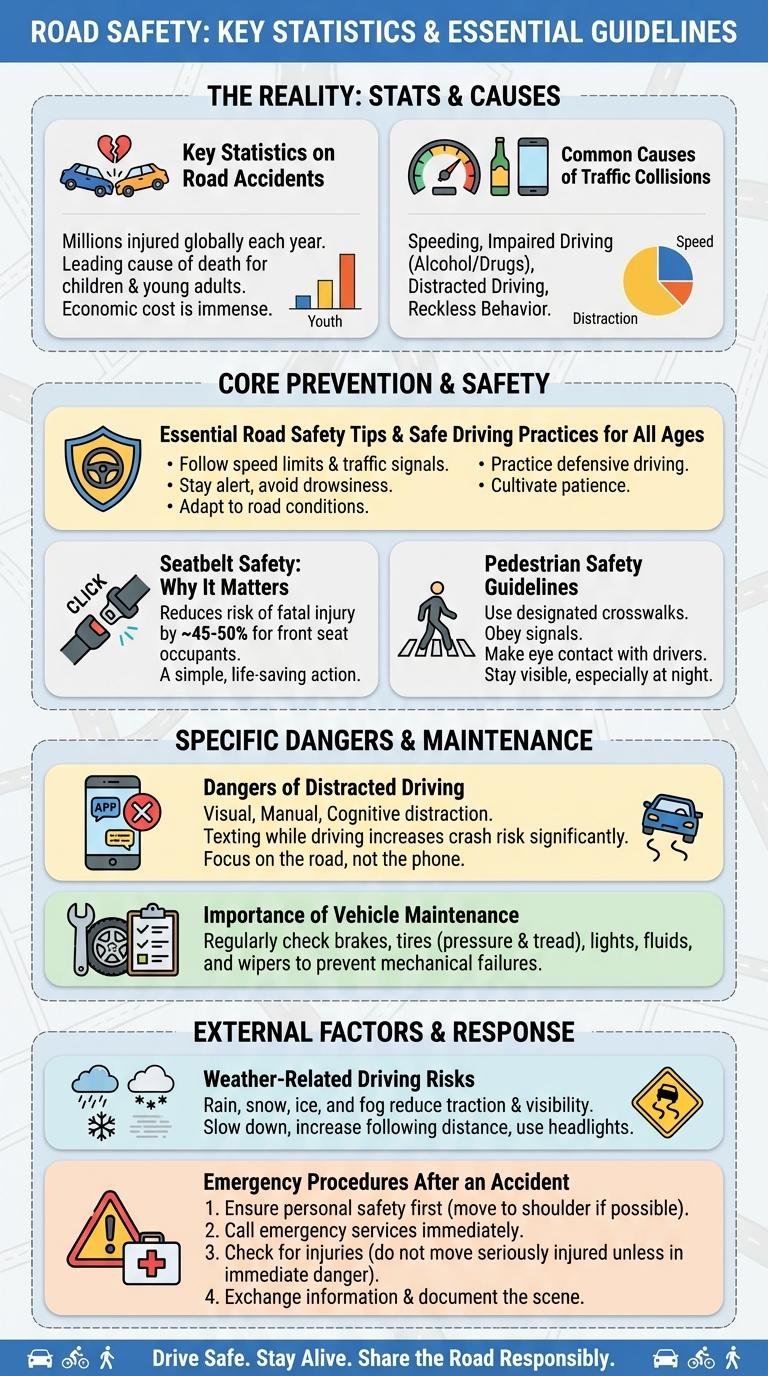
Road safety infographics visually present crucial statistics and tips to help prevent accidents and save lives. By highlighting key information such as common causes of crashes, safe driving practices, and pedestrian awareness, these graphics make complex data easily understandable. Effective road safety infographics promote awareness and encourage responsible behavior on the roads.
Key Statistics on Road Accidents
Road accidents cause over 1.3 million deaths globally each year, making them a leading cause of injury-related fatalities. Approximately 20-50 million people suffer non-fatal injuries from crashes, often resulting in long-term disabilities. Vulnerable road users like pedestrians, cyclists, and motorcyclists account for more than half of all road traffic deaths worldwide.
Essential Road Safety Tips
| Essential Road Safety Tips | Description |
|---|---|
| Wear Seat Belts | Seat belts reduce fatalities by 45% and serious injuries by 50% in crashes. |
| Obey Speed Limits | Speeding contributes to 29% of all traffic fatalities globally. |
| Avoid Distractions | Using a phone while driving increases crash risk by 4 times. |
| Use Pedestrian Crossings | Crossing at designated areas reduces pedestrian accidents by 30%. |
| Never Drive Under Influence | Alcohol-impaired driving leads to 27% of traffic deaths worldwide. |
Common Causes of Traffic Collisions
Traffic collisions often result from human errors that impair safe driving. Key factors include distraction, speeding, and impaired driving, which significantly increase accident risks.
Environmental conditions such as poor weather and road design also contribute to collisions. Understanding these common causes can help drivers take proactive measures to stay safe on the road.
Safe Driving Practices for All Ages
Road safety is essential for drivers of all ages to prevent accidents and save lives. Following safe driving practices helps reduce risks and promotes responsible behavior on the road.
Safe driving habits are necessary for young beginners, experienced middle-aged drivers, and seniors alike.
- Obey Speed Limits - Maintaining the correct speed improves reaction time and minimizes collision risks.
- Avoid Distractions - Staying focused on the road ensures better decision-making and hazard awareness.
- Use Seat Belts - Wearing seat belts significantly decreases injury severity in accidents.
Seatbelt Safety: Why It Matters
Wearing a seatbelt reduces the risk of fatal injury to front-seat passengers by 45%. Seatbelts keep occupants securely in place, preventing ejection during collisions. Consistent use of seatbelts saves thousands of lives annually and minimizes severe injuries on the road.
Pedestrian Safety Guidelines
Road safety is crucial for protecting pedestrians and reducing accidents. Following established pedestrian safety guidelines can significantly decrease injury risks.
Pedestrians must remain alert and follow traffic rules to ensure safe crossing and walking.
- Use Crosswalks - Always cross streets at marked crosswalks or intersections to increase visibility to drivers.
- Stay Visible - Wear bright or reflective clothing, especially at night or in low-light conditions, to be easily seen by motorists.
- Obey Traffic Signals - Only cross when pedestrian signals show a walk sign, ensuring it is safe to cross the road.
Dangers of Distracted Driving
Distracted driving significantly increases the risk of road accidents by diverting attention from the road. Understanding the dangers helps promote safer driving habits.
- Texting While Driving - Texting delays driver reaction time and increases the chance of crashes.
- Using Mobile Devices - Handling phones impairs focus and reduces awareness of surrounding traffic.
- Eating or Drinking - Consuming food or beverages distracts drivers from vehicle control and traffic signals.
Reducing distractions while driving can save lives and prevent injuries on the road.
Importance of Vehicle Maintenance
Regular vehicle maintenance plays a crucial role in ensuring road safety. Well-maintained vehicles reduce the risk of accidents caused by mechanical failures.
Proper maintenance checks include brakes, tires, lights, and engine performance. These checks help identify potential safety hazards before they become serious problems. Consistent upkeep extends vehicle lifespan and enhances driver confidence on the road.
Weather-Related Driving Risks
How does weather impact driving safety?
Weather conditions like rain, snow, and fog significantly increase road hazards. Reduced visibility and slippery roads raise the risk of accidents.
What are the main weather-related driving risks?
Hydroplaning on wet roads and loss of control on icy surfaces are common dangers. Fog can obscure vision, making it harder to see other vehicles and obstacles.
How can drivers prepare for adverse weather conditions?
Using proper tires and reducing speed enhances vehicle control. Maintaining a safe distance from other cars helps prevent collisions in poor weather.
Why is visibility crucial during bad weather?
Poor visibility reduces reaction time to road hazards and traffic signals. Proper use of headlights and windshield wipers improves safety during fog, rain, or snow.
What technology aids in weather-related driving safety?
Traction control systems and anti-lock brakes improve vehicle stability on slippery surfaces. Weather alerts and GPS updates inform drivers about hazardous conditions ahead.