
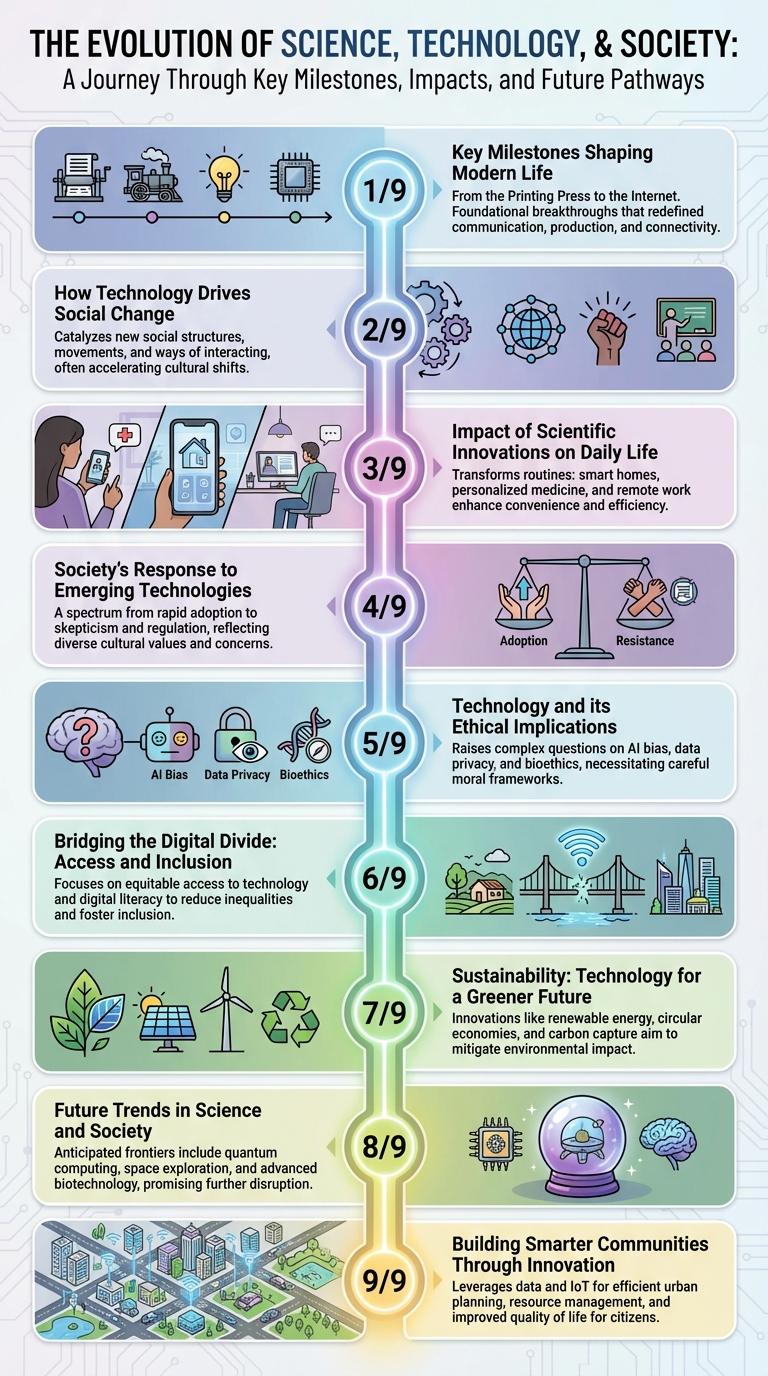
The infographic highlights the dynamic relationships between science, technology, and society, illustrating how innovations drive social change and cultural evolution. It showcases key scientific breakthroughs and technological advancements that have transformed industries and everyday life. Visual elements emphasize the ongoing impact of science and technology on global development and human interactions.
The Evolution of Science, Technology, and Society
| Era | Key Developments |
|---|---|
| Ancient Civilization | Early scientific observations, invention of tools, and basic technologies supporting agriculture and society formation. |
| Middle Ages | Advancements in medicine, astronomy, and engineering; preservation and transmission of classical knowledge. |
| Scientific Revolution | Development of the scientific method, foundational discoveries in physics, biology, and chemistry. |
| Industrial Revolution | Mass production, mechanization, and technological innovations transforming economies and social structures. |
| Information Age | Digital technology, internet, and biotechnology reshaping communication, healthcare, and society worldwide. |
Key Milestones Shaping Modern Life
Science, technology, and society are deeply interconnected, driving profound changes in how people live and interact. Key milestones have shaped the modern world through groundbreaking discoveries and innovations.
- Industrial Revolution - Marked the transition to mechanized manufacturing, transforming economies and daily life.
- Discovery of Electricity - Enabled widespread use of electrical power, revolutionizing communication and industry.
- Invention of the Internet - Created a global network that transformed information access and social interaction.
- Advances in Medical Science - Improved healthcare outcomes through vaccines, antibiotics, and diagnostic technologies.
- Space Exploration - Expanded human knowledge beyond Earth, inspiring technology development and international collaboration.
How Technology Drives Social Change
How does technology influence social change in modern society?
Technology accelerates communication, enabling faster information exchange and creating global connectivity. Innovations like the internet and smartphones reshape social interactions, work, and education.
What role do technological advancements play in shaping cultural norms?
Technology introduces new platforms for cultural expression and collaboration, transforming traditional practices. Social media and digital content influence public opinion and cultural trends worldwide.
How do emerging technologies impact economic opportunities and social mobility?
Automation and artificial intelligence create new job markets and redefine skill requirements. Access to technology bridges gaps, offering educational and entrepreneurial opportunities to diverse populations.
In what ways does technology affect social equality and inclusion?
Assistive technologies enhance accessibility for people with disabilities and marginalized groups. However, digital divides persist, requiring policies that promote equitable access and digital literacy.
How does society adapt to ethical challenges posed by technological progress?
Societal norms evolve with debates on privacy, data security, and AI ethics. Collaboration between policymakers, technologists, and communities fosters responsible innovation and governance.
Impact of Scientific Innovations on Daily Life
Scientific innovations have transformed daily life by enhancing convenience, communication, and health outcomes. These advancements drive societal progress by integrating technology into everyday routines and improving quality of life.
- Healthcare Technology - Innovations such as wearable devices and telemedicine improve disease management and increase access to medical care.
- Communication Tools - The development of smartphones and the internet revolutionizes how individuals interact and share information globally.
- Smart Home Systems - Automation technologies optimize energy use, security, and household management, promoting efficiency and comfort.
Society's Response to Emerging Technologies
Emerging technologies such as artificial intelligence, biotechnology, and renewable energy are rapidly transforming society. These innovations offer significant benefits but also raise ethical, social, and economic challenges.
Society's response includes increased public awareness, policy development, and educational initiatives to ensure responsible technology adoption. Governments and organizations strive to balance innovation with regulation to protect privacy and equity. Public engagement through forums and media plays a crucial role in shaping technology governance.
Technology and its Ethical Implications
Technology advances rapidly, transforming society's daily life and global interactions. Ethical implications arise from data privacy, artificial intelligence biases, and environmental impacts. Addressing these challenges requires responsible innovation and inclusive governance.
Bridging the Digital Divide: Access and Inclusion
Bridging the digital divide is essential for ensuring equal access to technology and information across all communities. Disparities in internet connectivity and digital literacy hinder social and economic development worldwide.
Efforts to enhance digital inclusion focus on affordable internet, accessible devices, and targeted education programs. These initiatives empower underserved populations, promoting social equity and innovation.
Sustainability: Technology for a Greener Future
Advances in science and technology drive sustainable solutions that reduce environmental impact and promote greener living. Innovations like renewable energy, smart grids, and eco-friendly materials support the transition to a low-carbon economy. Society benefits by adopting these technologies, fostering a healthier planet and sustainable development for future generations.
Future Trends in Science and Society
Future trends in science and technology are set to revolutionize society by enhancing human capabilities and transforming industries. Advances in artificial intelligence, biotechnology, and renewable energy will play pivotal roles in shaping everyday life and global economies.
Emerging technologies like quantum computing and nanotechnology promise unprecedented breakthroughs in medicine, communication, and environmental sustainability. Society must adapt to these innovations by addressing ethical considerations and promoting equitable access to technological benefits.