
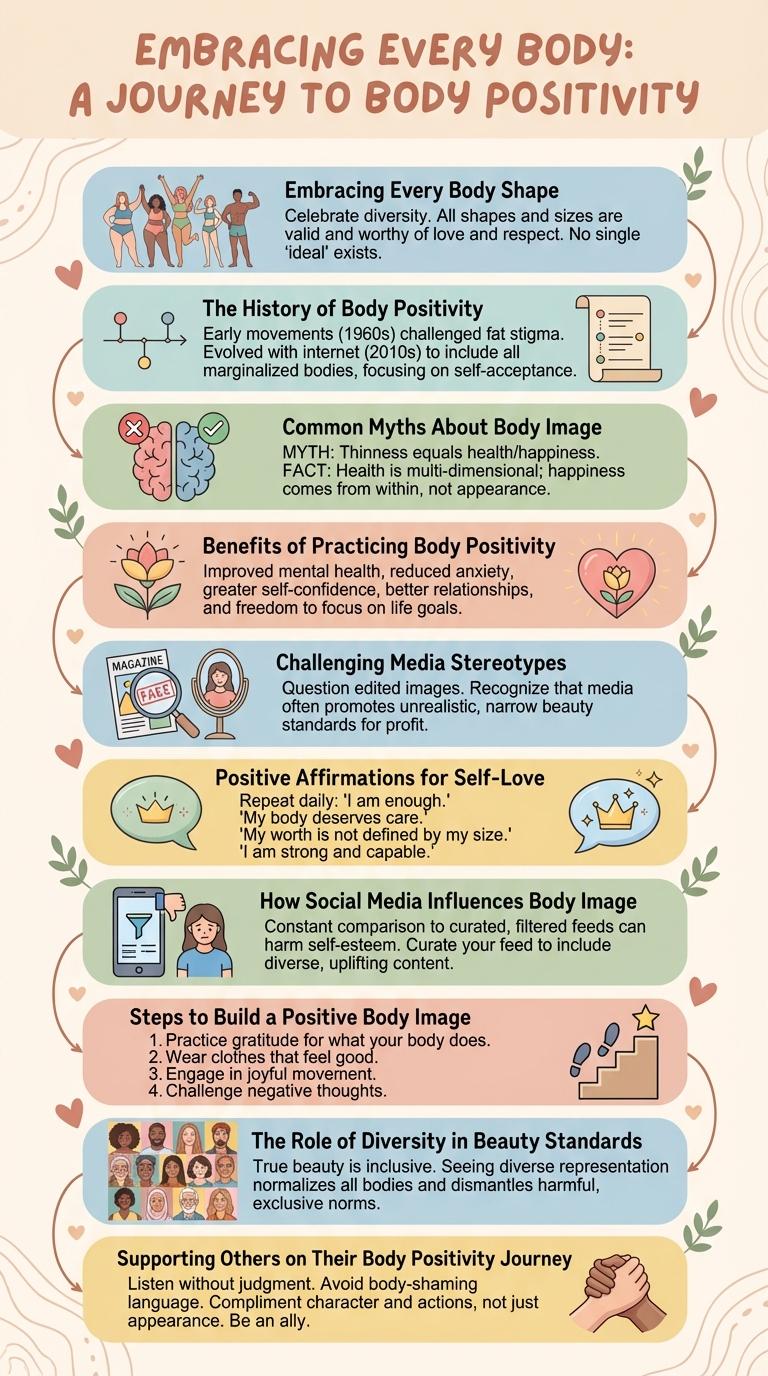
Body positivity empowers individuals to embrace their natural shapes and sizes, fostering self-love and confidence. This infographic highlights key statistics and inspiring messages that challenge unrealistic beauty standards. Embracing diversity in bodies promotes mental well-being and encourages acceptance across all communities.
Embracing Every Body Shape
Body positivity encourages embracing every body shape by promoting self-love and acceptance beyond societal standards. It highlights diversity as a strength, celebrating all forms, sizes, and appearances without judgment. This inclusive mindset fosters confidence and mental well-being, empowering individuals to appreciate their unique beauty.
The History of Body Positivity
What is the history of body positivity? The body positivity movement began in the 1960s as a response to societal beauty standards that excluded diverse body types. Early activists challenged media portrayals and promoted self-acceptance and inclusivity.
Who were key figures in the development of body positivity? Influential individuals like Marilyn Wann and the founders of the Fat Acceptance Movement played crucial roles in advocating for size diversity and fighting weight discrimination. Their work paved the way for today's broader understanding of body positivity.
How has body positivity evolved over time? The movement has expanded from focusing solely on weight to embracing all aspects of physical appearance, including skin color, disability, and gender identity. Social media platforms have greatly amplified voices promoting self-love and dismantling harmful beauty norms.
What milestones mark the progress of body positivity? Important events include the 1990 launch of the National Association to Advance Fat Acceptance and the rise of body-positive campaigns by major brands in the 2010s. These milestones reflect growing cultural acceptance and dialogue surrounding diverse bodies.
Why is understanding the history of body positivity important? Knowing its origins helps highlight the ongoing struggle against discrimination and the significance of representation. It also inspires continued efforts for equity and confidence in all body types.
Common Myths About Body Image
Body positivity challenges harmful misconceptions about body image and promotes self-acceptance. Understanding common myths helps foster a healthier mindset towards diverse body types.
Recognizing these myths is essential for improving mental health and self-esteem for individuals of all sizes.
- "Thinness Equals Health" - Health is determined by various factors beyond body size, including nutrition and activity levels.
- "Only Attractive People Are Confident" - Confidence comes from self-acceptance rather than appearance.
- "Weight Loss Always Improves Happiness" - Mental well-being depends on multiple elements, not just physical changes.
Benefits of Practicing Body Positivity
Body positivity promotes self-acceptance and improves mental health. Embracing diverse body types fosters confidence and reduces social stigma.
Practicing body positivity enhances emotional well-being by reducing anxiety and depression related to appearance. It encourages healthier lifestyle choices without the pressure of unrealistic ideals. This mindset cultivates a supportive community that values individuality and inclusivity.
Challenging Media Stereotypes
Body positivity promotes self-love and acceptance beyond conventional beauty standards. Challenging media stereotypes helps diversify representation and foster inclusivity.
- Media Representation Bias - Mainstream media often showcases unrealistic body types, limiting public perception of beauty.
- Diversity in Advertising - Inclusive campaigns featuring varied body shapes encourage broader societal acceptance.
- Impact on Mental Health - Reducing stereotypical portrayals lowers body image issues and improves self-esteem.
Rethinking media portrayals is essential to cultivate a culture that embraces all body types equally.
Positive Affirmations for Self-Love
| Positive Affirmation | Impact on Self-Love |
|---|---|
| I am worthy of love and respect. | Builds self-esteem and encourages self-acceptance. |
| My body is strong and capable. | Promotes appreciation for physical abilities over appearance. |
| I embrace my unique beauty. | Fosters confidence and reduces comparison to others. |
| I deserve kindness from myself. | Encourages self-compassion and emotional resilience. |
| Every part of me is valuable. | Supports holistic body acceptance and positive self-image. |
How Social Media Influences Body Image
Social media platforms play a significant role in shaping individuals' perceptions of body image. Exposure to curated and edited images often impacts self-esteem and body satisfaction.
- Idealized Beauty Standards - Social media frequently promotes unrealistic body ideals, influencing users to compare themselves to edited images.
- Peer Comparison - Users tend to compare their bodies with others online, which can lead to negative self-assessment and body dissatisfaction.
- Body Positivity Movements - Positive campaigns on social media encourage diverse representations and promote acceptance of all body types.
Steps to Build a Positive Body Image
Building a positive body image starts with practicing self-compassion and embracing your unique features. Surround yourself with supportive people and consume media that promotes diverse and realistic body types. Regularly engage in activities that make you feel confident and celebrate your body's abilities.
The Role of Diversity in Beauty Standards
Body positivity embraces the uniqueness of all body types, challenging traditional beauty standards that often favor a narrow range of appearances. Diversity in beauty standards encourages acceptance and representation of varied shapes, sizes, colors, and abilities.
Inclusive beauty standards promote mental health and self-esteem by validating different identities and experiences. Celebrating diversity helps deconstruct harmful stereotypes and expands societal definitions of beauty.