
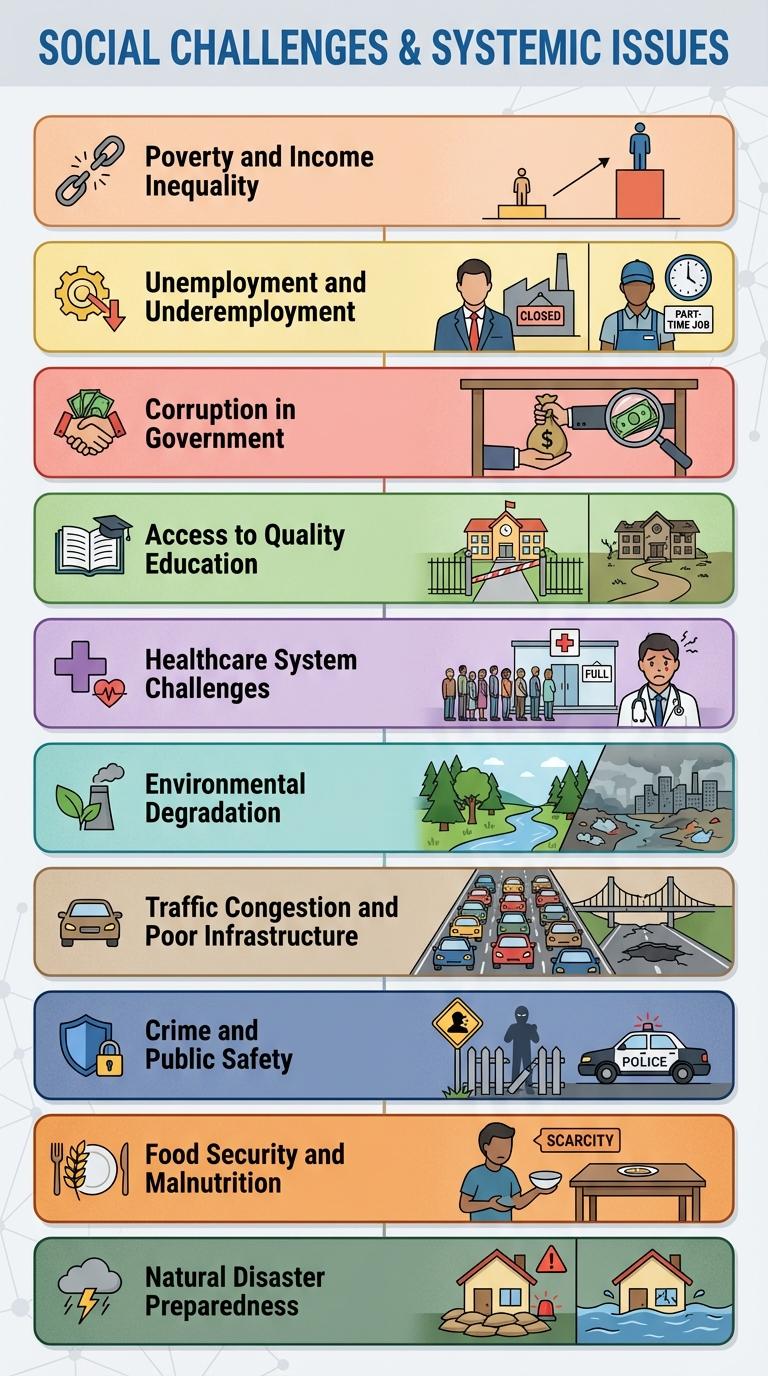
The Philippines faces a range of critical issues spanning economic, social, and environmental sectors. Challenges such as poverty, natural disasters, and inadequate healthcare impact millions across the archipelago. Understanding these problems through visual data helps highlight urgent areas for reform and community action.
Poverty and Income Inequality
Poverty in the Philippines affects nearly 18% of the population, with many families struggling to meet basic needs. Income inequality remains a critical challenge, as the wealthiest 10% control more than 40% of the country's total wealth. These disparities limit access to education, healthcare, and economic opportunities, perpetuating the cycle of poverty.
| Indicator | Value |
|---|---|
| Poverty Rate | 18% |
| Gini Coefficient | 0.44 |
| Wealth held by top 10% | 40%+ |
| Population below food threshold | 10% |
Unemployment and Underemployment
The Philippines faces significant challenges in unemployment and underemployment, impacting economic growth and social stability. Unemployment rates remain high, particularly among the youth and recent graduates.
Underemployment affects millions, with many workers unable to secure full-time employment or adequate income. This leads to increased poverty levels and limits opportunities for career advancement in the country.
Corruption in Government
What is the impact of corruption in the Philippine government?
Corruption undermines public trust and hampers economic development in the Philippines. It leads to inefficient allocation of resources and increases poverty levels nationwide.
Access to Quality Education
Access to quality education in the Philippines remains a significant challenge, particularly in rural and impoverished areas. Many schools face shortages of qualified teachers, learning materials, and adequate facilities.
Approximately 22 million Filipino children are enrolled in basic education, yet nearly 1 in 5 do not complete elementary school. Efforts to improve access focus on increasing funding, teacher training, and infrastructure development.
Healthcare System Challenges
The healthcare system in the Philippines faces significant challenges, including limited access to quality medical services and insufficient funding. Rural areas particularly suffer from a shortage of healthcare facilities and professionals.
Many Filipinos experience long wait times and inadequate care due to overcrowded hospitals. The government allocates less than 5% of GDP to health, far below the WHO recommended level. Additionally, disease outbreaks and poor infrastructure worsen healthcare delivery across the country.
Environmental Degradation
The Philippines faces significant environmental degradation affecting biodiversity and human health. Rapid urbanization and industrial activities contribute to the ongoing decline of natural resources.
- Deforestation - The country loses approximately 1.2% of its forest cover annually due to logging and land conversion.
- Water Pollution - Over 70% of major rivers are contaminated by industrial waste and household garbage.
- Air Quality - Urban centers experience high levels of air pollution, with PM2.5 concentrations often exceeding WHO standards.
Traffic Congestion and Poor Infrastructure
Traffic congestion and poor infrastructure are significant challenges in the Philippines that affect daily life and economic growth. These issues contribute to longer travel times, increased pollution, and hindered development in urban and rural areas.
- Traffic Congestion - Metro Manila experiences some of the worst traffic jams globally, with average speeds dropping below 10 km/h during peak hours.
- Economic Impact - Traffic delays cost the Philippines billions of pesos annually in lost productivity and fuel expenses.
- Poor Infrastructure - Many roads, bridges, and public transportation systems are outdated or insufficient, limiting connectivity and safety.
Crime and Public Safety
The Philippines faces significant challenges related to crime and public safety that affect communities nationwide. Understanding these issues is vital for effective policy-making and community protection.
- High Crime Rate - The Philippines experiences a high incidence of theft, robbery, and violent crimes, particularly in urban areas.
- Drug-Related Offenses - Illegal drug trade and drug-related crimes remain a persistent problem impacting public safety and health.
- Law Enforcement Challenges - Police resources and training are often stretched thin, limiting the effectiveness of crime prevention and response.
Efforts to improve public safety focus on strengthening law enforcement, community engagement, and addressing socio-economic factors driving crime.
Food Security and Malnutrition
The Philippines faces significant challenges in food security, with around 13.8 million Filipinos experiencing moderate to severe food insecurity in 2023. Malnutrition remains a critical issue, affecting approximately 30% of children under five, contributing to stunted growth and developmental delays. Government programs and international aid efforts focus on improving agricultural productivity and nutrition education to combat these persistent problems.