
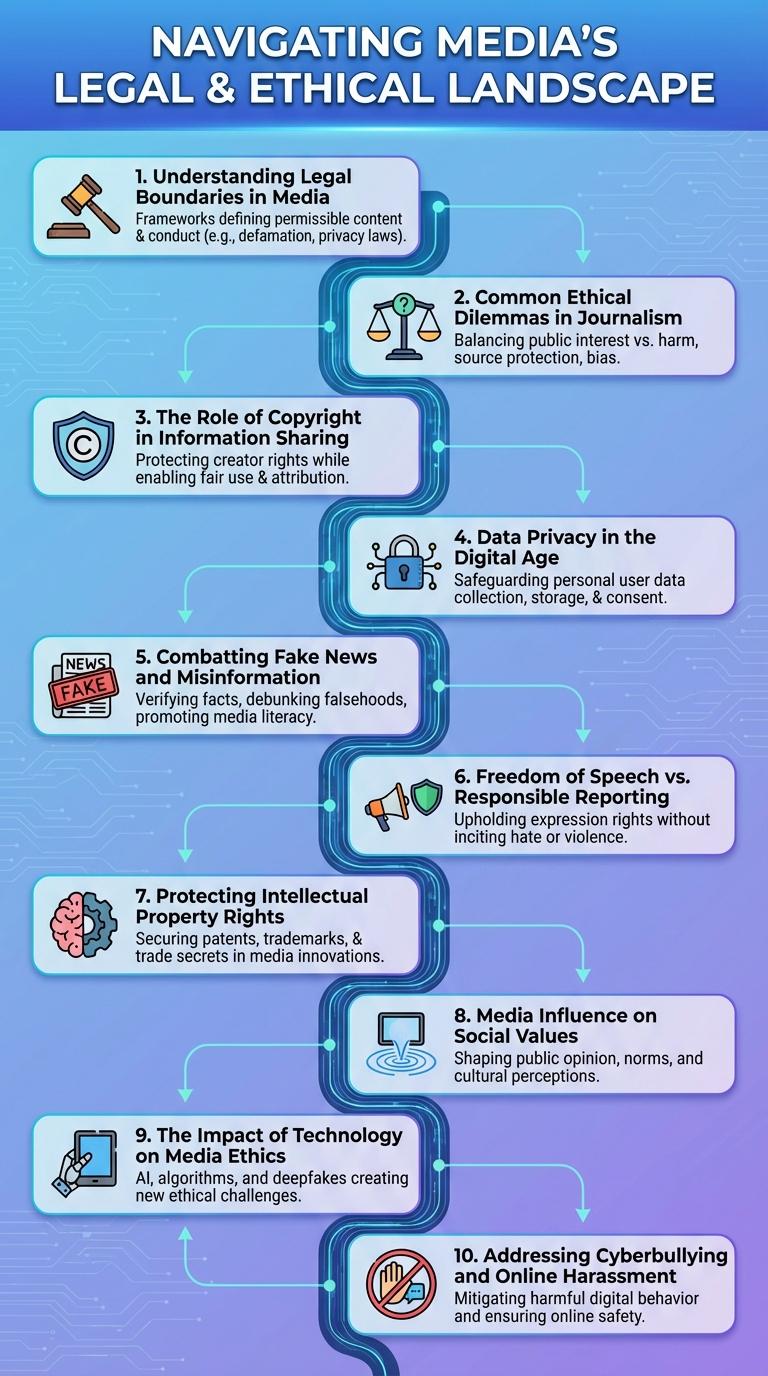
Legal, ethical, and societal issues in media and information shape how content is created, distributed, and consumed in today's digital landscape. Understanding intellectual property rights, privacy concerns, and misinformation impacts both creators and audiences. This infographic highlights key challenges and responsibilities essential for navigating media ethically and legally while fostering informed communities.
Understanding Legal Boundaries in Media
Understanding legal boundaries in media ensures content creators respect laws related to copyright, defamation, and privacy. Media professionals must navigate these regulations to avoid legal repercussions and maintain public trust.
Ethical considerations complement legal rules by promoting honesty, fairness, and accountability in information dissemination. Societal impacts include shaping public opinion and protecting individual rights through responsible media practices.
Common Ethical Dilemmas in Journalism
Journalists often face ethical dilemmas such as balancing the public's right to know with respecting individuals' privacy. Conflicts arise when reporting sensitive topics that may cause harm or distress to those involved. Maintaining accuracy while avoiding bias is crucial to uphold trust and credibility in media.
The Role of Copyright in Information Sharing
Copyright plays a critical role in regulating the use and sharing of media and information to protect creators' rights. Understanding legal, ethical, and societal issues related to copyright helps maintain fair use while promoting creativity and innovation.
- Protection of Original Works - Copyright law grants creators exclusive rights to reproduce, distribute, and display their works.
- Encouragement of Creativity - Copyright incentivizes innovation by ensuring creators can benefit financially from their work.
- Balance Between Access and Ownership - Copyright laws aim to balance public access to information with the rights of content owners.
Data Privacy in the Digital Age
Data privacy in the digital age is a critical concern involving the protection of personal information from unauthorized access and misuse. Legal, ethical, and societal challenges arise as technology advances and more data is collected online.
- Legal Regulations - Laws like GDPR and CCPA set standards for data collection, usage, and user consent to safeguard privacy rights.
- Ethical Responsibility - Media companies and information providers must ensure transparent data handling and respect for individual privacy.
- Societal Impact - Public awareness and trust are affected by data breaches and surveillance, influencing digital behavior and policy demands.
Combatting Fake News and Misinformation
What are the core legal challenges in combatting fake news and misinformation? Laws against defamation, copyright infringement, and false advertising shape accountability for online content. Platforms and creators face increasing regulation to prevent the spread of harmful false information.
How do ethical considerations impact efforts to curb misinformation? Media professionals must balance freedom of expression with responsibility to truth and public trust. Ethical journalism standards encourage verification and transparency to reduce the spread of fake news.
What societal issues arise from the proliferation of fake news? Misinformation erodes public trust in institutions and polarizes communities. It can influence elections, public health, and social cohesion, causing widespread harm.
How can technology aid in combatting misinformation? Artificial intelligence and algorithmic fact-checking help identify and flag false content rapidly. Collaborative platforms engage users in verifying news and reporting inaccuracies effectively.
What role do education and awareness play in addressing fake news? Media literacy programs equip individuals to critically evaluate information sources. Increased public awareness reduces susceptibility to misleading or false online content.
Freedom of Speech vs. Responsible Reporting
| Aspect | Details |
|---|---|
| Freedom of Speech | Fundamental right protected by law that allows individuals and media to express opinions without censorship or restraint. |
| Responsible Reporting | Ethical obligation for media professionals to provide accurate, unbiased, and verified information to avoid misinformation and harm. |
| Legal Issues | Includes defamation laws, privacy rights, and regulations against hate speech that limit free speech to protect individuals and society. |
| Ethical Challenges | Balancing truthful reporting with respect for subjects' privacy, avoiding sensationalism, and maintaining public trust. |
| Societal Impact | Responsible media fosters informed public discourse, while unchecked speech can lead to misinformation, social division, and harm. |
Protecting Intellectual Property Rights
Protecting intellectual property rights is essential to safeguard original content in media and information industries. Copyright laws prevent unauthorized use, ensuring creators receive recognition and financial benefits. Ethical media practices promote respect for intellectual property, reducing plagiarism and fostering innovation.
Media Influence on Social Values
Media plays a crucial role in shaping social values by influencing public opinions and cultural norms. Understanding the legal, ethical, and societal issues in media is essential to ensure responsible information dissemination.
- Legal Boundaries - Media must adhere to laws related to copyright, defamation, and privacy to maintain trust and avoid legal repercussions.
- Ethical Standards - Journalists and media producers are expected to follow ethical guidelines promoting accuracy, fairness, and transparency.
- Social Responsibility - Media influences social behavior and values, making it important to promote positive content that supports diversity and inclusion.
Balancing media freedom with accountability helps protect society from misinformation and harmful stereotypes.
The Impact of Technology on Media Ethics
Technology has transformed media landscapes, raising new ethical challenges for content creators and distributors. The rapid spread of information demands heightened responsibility to maintain accuracy and respect privacy.
Advancements like AI and social media platforms amplify both the reach and potential harm of misinformation and bias. Media professionals must balance innovation with accountability to uphold ethical standards. Society's trust in media depends on transparent practices and respect for digital rights.