
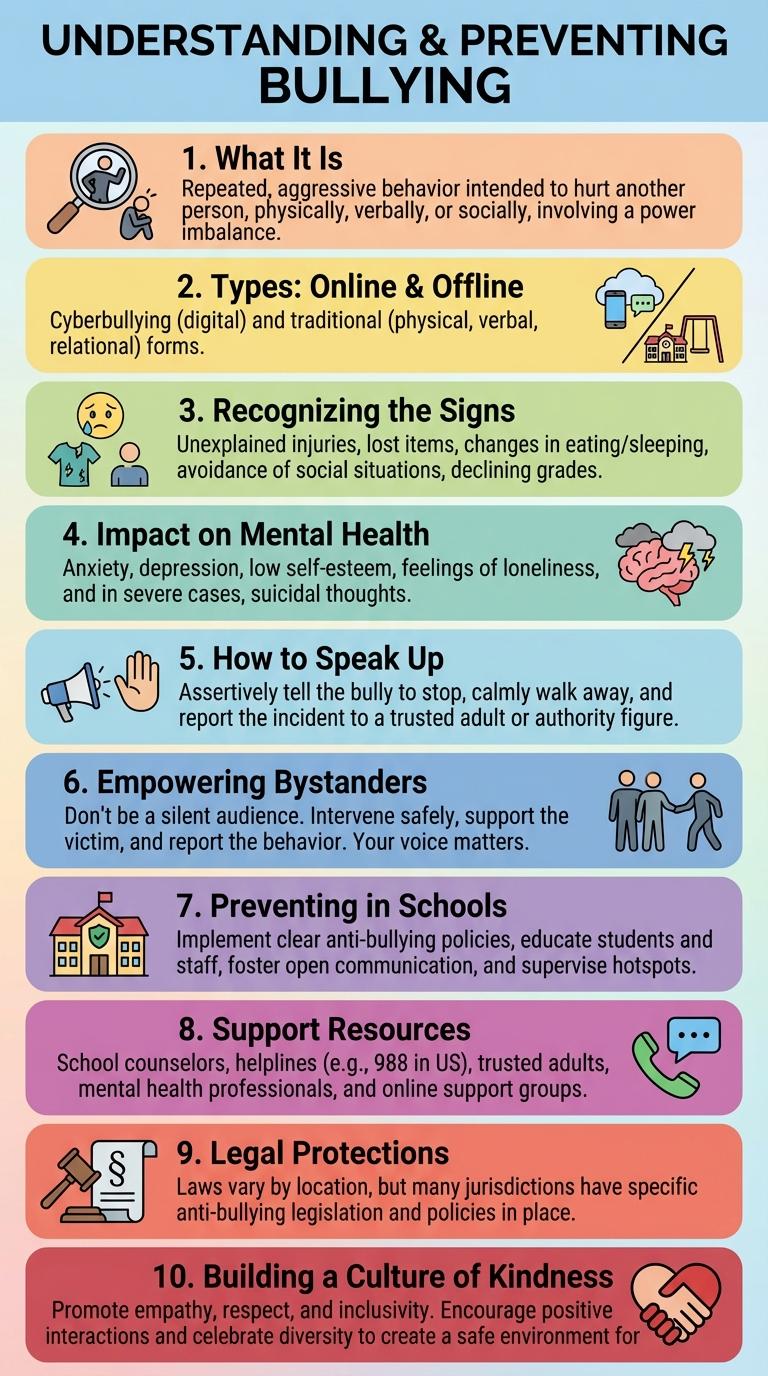
The infographic highlights key statistics and impactful strategies in the fight against bullying, raising awareness about its harmful effects on individuals and communities. It visually presents data on bullying prevalence, types, and the importance of fostering empathy and inclusion in schools and workplaces. This powerful tool aims to inspire action and promote a culture of respect and kindness.
Understanding Bullying: What It Is
Bullying involves repetitive aggressive behavior intended to harm or intimidate others. It can occur physically, verbally, or through social exclusion, affecting individuals of all ages.
Recognizing bullying is essential to address its impact on mental health and well-being. Awareness helps create safer environments and supports victims in seeking help.
Types of Bullying: Online and Offline
Bullying manifests in various forms, primarily categorized as online and offline bullying. Online bullying, or cyberbullying, involves harassment through digital platforms such as social media, emails, and messaging apps. Offline bullying includes physical violence, verbal abuse, and social exclusion occurring in school, home, or public environments.
Recognizing the Signs of Bullying
Recognizing the signs of bullying is crucial for timely intervention and support. Bullying can manifest physically, emotionally, or online, affecting victims in various ways.
Common signs include unexplained injuries, frequent absences, and sudden changes in behavior or mood. Victims may appear anxious, withdrawn, or exhibit a drop in academic performance. Awareness of these indicators enables parents, teachers, and peers to take action and create a safer environment.
Impact of Bullying on Mental Health
How does bullying affect mental health?
Bullying significantly increases the risk of anxiety, depression, and low self-esteem among victims. Persistent exposure to bullying can lead to long-term psychological trauma and emotional distress.
How to Speak Up Against Bullying
| How to Speak Up Against Bullying | Key Actions |
|---|---|
| Recognize Bullying | Identify verbal, physical, and cyberbullying behaviors. |
| Support the Victim | Offer words of encouragement and stand beside the person targeted. |
| Report Incidents | Inform trusted adults, teachers, or use anonymous reporting tools. |
| Use Assertive Communication | Express disapproval calmly and clearly without aggression. |
| Promote Positive Behavior | Encourage kindness and inclusivity in social settings. |
Empowering Bystanders to Take Action
Empowering bystanders plays a critical role in the success of anti-bullying campaigns. Educating and motivating individuals to act creates a safer and more supportive environment for everyone.
By empowering bystanders, communities can significantly reduce bullying incidents and promote positive social behavior.
- Recognize Signs - Teach bystanders how to identify bullying behaviors early to intervene effectively.
- Provide Tools - Equip bystanders with communication strategies and resources to support victims confidently.
- Encourage Reporting - Promote safe and anonymous channels for bystanders to report bullying without fear of retaliation.
Preventing Bullying in Schools
Preventing bullying in schools requires a comprehensive approach involving students, teachers, and parents to create a safe and inclusive environment. Anti-bullying campaigns promote awareness, teach empathy, and establish clear policies to address and reduce bullying incidents. Early intervention and continuous education help foster respect and kindness among students, significantly decreasing bullying behaviors.
Support Resources for Victims
Support resources for victims of bullying provide crucial guidance and assistance to help individuals cope and recover. Access to these resources encourages a supportive environment where victims feel safe and empowered.
- Helplines - Confidential phone lines staffed by trained professionals offer immediate emotional support and advice.
- Counseling Services - Licensed counselors provide therapy sessions tailored to address the trauma caused by bullying.
- Online Support Groups - Virtual communities connect victims, fostering peer support and shared experiences in a safe space.
Awareness of these support options plays a key role in reducing the long-term effects of bullying on victims.
Legal Protections Against Bullying
Legal protections against bullying provide a framework to safeguard individuals in schools and workplaces. These laws and policies ensure accountability and promote safe environments for everyone.
- Federal Anti-Bullying Laws - These laws prohibit bullying that involves discrimination based on race, gender, disability, or other protected characteristics.
- State Legislation - Many states have enacted specific anti-bullying statutes requiring schools to develop prevention and intervention plans.
- Workplace Protections - Employment laws address bullying and harassment, ensuring a safe and respectful work environment.