
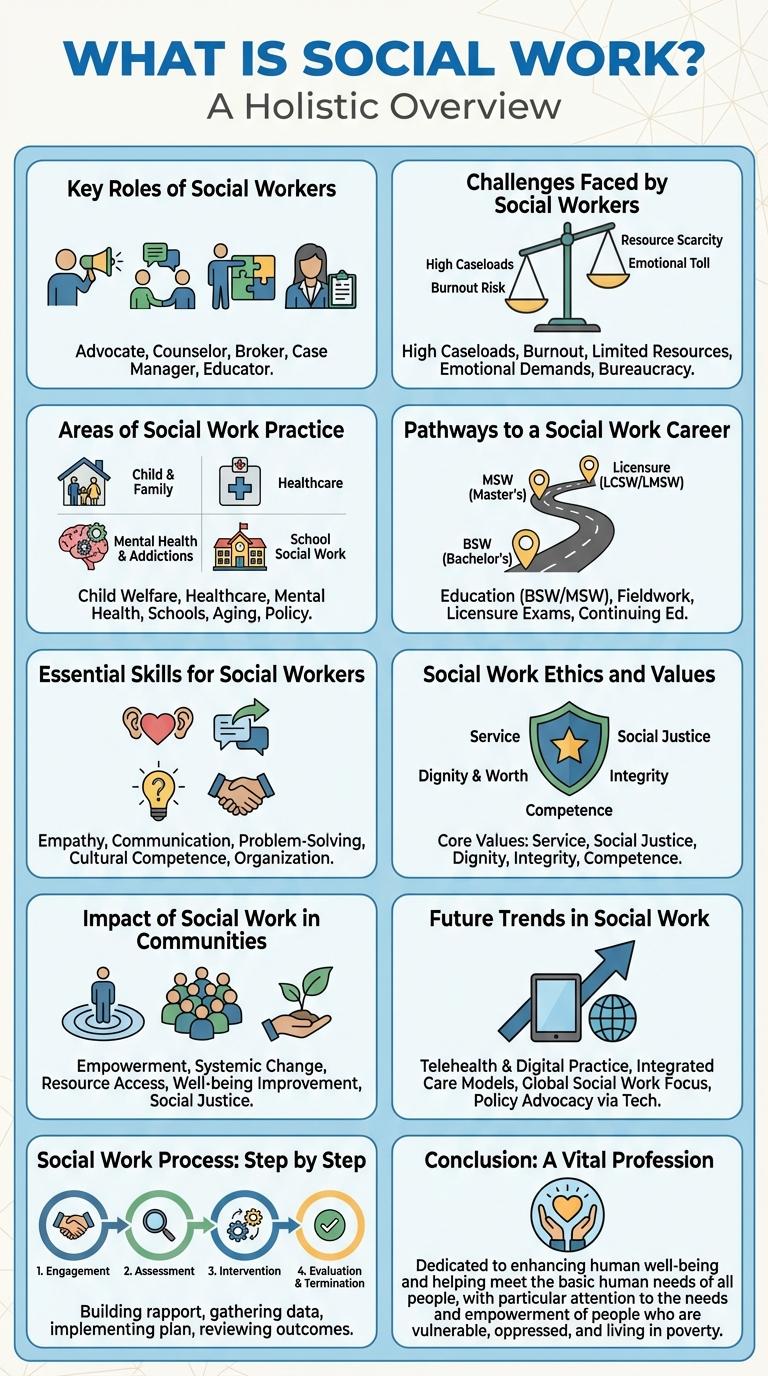
Social work empowers individuals and communities by providing essential support and resources to overcome challenges. By addressing social issues such as poverty, mental health, and education, social workers play a crucial role in fostering well-being and social justice. This infographic highlights key statistics, roles, and impacts of social work to deepen understanding and appreciation of this vital profession.
What Is Social Work?
Social work is a professional field dedicated to helping individuals, families, and communities enhance their well-being. It addresses social issues such as poverty, abuse, and mental health challenges.
Social workers provide support, advocacy, and resources to those in need. They work in various settings, including schools, hospitals, and government agencies. Their goal is to promote social justice and improve quality of life for vulnerable populations.
Key Roles of Social Workers
Social workers play a vital role in supporting individuals and communities facing challenges such as poverty, addiction, and mental health issues. They assess clients' needs, develop intervention plans, and connect them with essential resources. Through advocacy and counseling, social workers promote social justice and improve overall well-being.
Areas of Social Work Practice
What are the main areas of social work practice? Social work encompasses diverse fields aimed at improving individual and community well-being. Key areas include child welfare, mental health, healthcare, school social work, and community development.
| Area | Description |
|---|---|
| Child Welfare | Protects children and supports families through services like foster care and adoption. |
| Mental Health | Offers counseling and support for individuals facing psychological challenges. |
| Healthcare | Assists patients and families coping with illness, disability, and hospital systems. |
| School Social Work | Supports students' social and emotional development to enhance academic success. |
| Community Development | Works to improve community resources and promote social justice initiatives. |
Essential Skills for Social Workers
Social work requires a diverse set of skills to effectively support individuals and communities. Mastering these essential skills enables social workers to navigate complex social issues with empathy and professionalism.
- Active Listening - Enables social workers to fully understand clients' needs and build trust.
- Empathy - Helps in relating to clients' experiences and fostering supportive relationships.
- Problem-Solving - Critical for developing effective intervention plans and finding practical solutions.
- Communication - Essential for clearly conveying information and advocating for clients.
- Cultural Competence - Ensures respectful, informed interactions with diverse populations.
Impact of Social Work in Communities
Social work plays a vital role in strengthening communities by addressing social injustices and promoting well-being. Professionals in this field provide support, advocacy, and resources to vulnerable populations.
Impact includes improved mental health, reduced poverty, and enhanced access to education and healthcare. Social workers collaborate with local organizations to create sustainable change and empower individuals.
Social Work Process: Step by Step
| Step | Description |
|---|---|
| Engagement | Building trust and rapport with clients to understand their needs and establish a collaborative relationship. |
| Assessment | Collecting comprehensive information about the client's situation, strengths, challenges, and environment. |
| Planning | Developing a strategic action plan with clear goals and interventions tailored to the client's needs. |
| Implementation | Executing the action plan through coordinated services, support, and advocacy for the client. |
| Evaluation | Reviewing progress, measuring outcomes, and adjusting the plan as necessary to ensure client well-being. |
Challenges Faced by Social Workers
Social workers encounter numerous challenges that impact their ability to provide effective support. High caseloads and limited resources often hinder their capacity to address client needs thoroughly.
Emotional burnout and exposure to traumatic situations affect social workers' mental health. Navigating complex legal and bureaucratic systems adds layers of difficulty to their daily responsibilities.
Pathways to a Social Work Career
Social work offers diverse pathways for individuals committed to helping communities and improving lives. Numerous educational and professional routes lead to rewarding careers in this impactful field.
- Bachelor of Social Work (BSW) - An undergraduate degree providing foundational skills for entry-level social work positions.
- Master of Social Work (MSW) - Advanced graduate education offering specialization and eligibility for clinical licensure.
- Licensing and Certification - Requirements vary by region but typically involve supervised practice and exams to ensure professional standards.
Social Work Ethics and Values
Social Work Ethics and Values guide professionals in delivering compassionate and fair support to individuals and communities. These principles ensure respect, integrity, and accountability in all social work practices.
- Respect for Dignity and Worth - Social workers honor the inherent value of every person, promoting self-determination and human rights.
- Integrity - Professionals maintain honesty and transparency, fostering trust with clients and colleagues.
- Social Justice - Advocacy for equitable access to resources and opportunities is central to social work ethics.
Adherence to these core ethics strengthens the impact and credibility of social work interventions.